What Defines the 2026 Super El Niño Event?
The tropical Pacific has seen heat build for months as a "super" El Niño takes shape. This year’s iteration of El Niño has been on a tear of daily records and is forecast to reach unprecedented strength this winter. While the phenomenon is characterized by hotter-than-normal waters in the eastern tropical Pacific, it remains a global problem due to its impact on atmospheric circulation.
Data shows this El Niño has already set multiple all-time daily heat records, including a recent peak of 3.4 degrees Celsius. The US National Oceanic and Atmospheric Administration (NOAA) is forecasting 100 percent odds of an extremely strong El Niño through December, and above 80 percent odds that it stays that way through February. NOAA issues its El Niño forecast as a three-month rolling average; the agency predicts heat could peak at 2.7 degrees Celsius above normal for the period from October to December. It is not out of the question that heat could surpass 3 degrees Celsius. If the forecast holds true, it would smash the previous record of 2.4 degrees Celsius, which was set during the 1982-1983 event.
The resulting shifts in weather are expected to be generationally intense. El Niño’s added ocean heat affects the atmosphere, causing weather patterns around the world to shift. Experts describe this process as a domino run, where one tile starts a chain reaction. In this instance, such a major slug of heat in the Pacific will act more like a shove than a light flick on the atmosphere.
How Does Climate Change Influence El Niño?
There is a growing body of evidence that climate change is likely playing at least some role in influencing El Niño. Francisco Estrada, coordinator of the Climate Change Research Program at the National Autonomous University of Mexico, notes that the magnitude and frequency of the phenomenon has increased over the past 60 years. He also observes increases in variability and how the effects are distributed around the world.
Estrada argues that there shouldn’t be a debate framed as a choice between a "natural El Niño" and an "El Niño caused by climate change," but rather as an interaction between the two processes. "You can’t separate El Niño from global warming—they’re inextricably linked," he explains. Modeling also indicates that El Niño is likely to strengthen as the planet warms, though researcher Christopher Callahan from Indiana University notes that many models struggle to accurately represent long-term temperature trends in the eastern tropical Pacific. This difficulty in modeling provides a point of caution for researchers even as other evidence suggests climate change is "juicing" the phenomenon.
Evidence from Modeling and Paleoclimate Data
The claim that El Niño is becoming more active is supported by both modern models and ancient history. "The majority of climate models say that El Nino amplitude shall go up in a warming climate, and all of our paleoclimate records say that we're currently in a more active period of El Niño than the last several 1,000 years," says Callahan.
This 1,000-year perspective is bolstered by research published in August using data collected from ancient coral. The study found an uptick in El Niño amplitude that neatly mirrors when humans started pumping greenhouse gases into the atmosphere. While the scientists behind that specific study did not attempt to attribute the shift directly to climate change, the correlation provides a vital data point. This year’s 2026 event will serve as another critical piece of evidence to help researchers suss out these complex relationships.
How Does El Niño Layer onto Existing Climate Change?
A central question for researchers is how El Niño layers on top of a warming climate. Even if the sea surface temperature (SST) anomalies themselves were to remain within totally natural bounds, their presence in a climate already changed by global warming might produce unprecedented impacts, according to Callahan. The baseline temperature of the ocean is higher, meaning the total heat available to drive atmospheric changes is greater.
El Niño’s impacts on weather—known as teleconnections—are well documented. These include increasing the odds of drought in the Amazon and Indonesia, increasing precipitation in the Southwest US, and lowering the odds of Atlantic hurricanes. However, as the background climate shifts, the reliability of these patterns is called into question. "We can no longer place as much confidence in the knowledge we’ve gathered from data regarding how El Niño manifests in terms of weather and climate in different parts of the planet," says Estrada. The interaction between the extreme event and the warmed baseline could make these teleconnections even more intense or unpredictable.
What Risks Emerge from the Combined Event?
From a risk perspective, the concern is not merely the intensity of the El Niño itself, but the combination of an exceptional event with a significantly warmed climate. "Surprises are the last thing you want when you’re trying to manage risk," says Estrada.
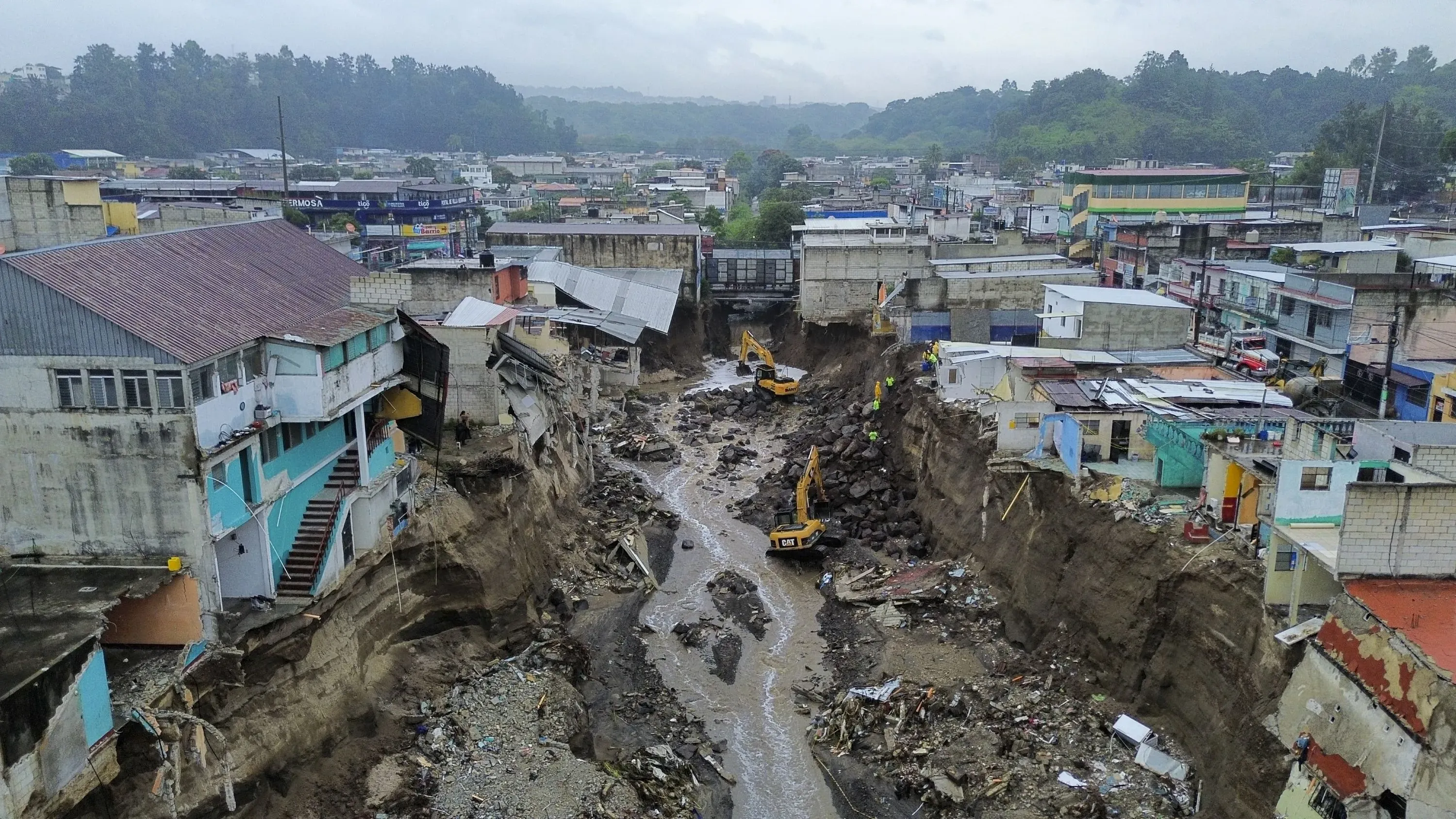
The societal and ecological costs are substantial. Callahan’s work shows that the most severe El Niño events can knock trillions of dollars off the global GDP. Ecosystems are also under threat; coral reefs, in particular, are facing mass bleaching events due to the thermal stress. In the eastern Pacific, fishermen are already feeling the impact as El Niño forces several species to migrate to deeper waters, leaving nets half-empty. UN Secretary-General António Guterres warned last month that El Niño conditions will "pour fuel on the fire of a warming world," noting that impacts will hit harder, travel farther, and cross borders with devastating speed.
How Are Adaptation Measures Being Implemented?
Because of these escalating risks, the United Nations and other international organizations have called for urgent adaptation measures to safeguard at-risk populations and ecosystems. Some regions are already taking preemptive steps. For example, California declared a state of emergency last month in anticipation of the coming conditions.
The focus of these measures is to mitigate the damage caused by shifting precipitation and temperature patterns. As the relationship between El Niño and climate change becomes more complex, the ability of societies to prepare for "surprises" becomes a critical component of global risk management.
Frequently asked questions
What is the forecast peak strength of the 2026 El Niño?
NOAA predicts the heat could peak at 2.7 degrees Celsius above normal for the period from October to December. While it is possible the heat could surpass 3 degrees Celsius, this would still be a record-breaking event, smashing the previous 2.4 degree record set in 1982-1983.
Has climate change made El Niño stronger?
Researchers see an interaction between the two. While the exact degree of influence is an area of active research, evidence shows increased magnitude, frequency, and variability over the last 60 years, and paleoclimate data suggests we are in a more active period than the last 1,000 years.
Will El Niño impacts be worse because of climate change?
Yes, potentially. Even if the temperature anomalies are natural, having those anomalies occur in a warmer climate can produce unprecedented impacts and more intense weather shifts.
Which regions and sectors face the most risk?
Fisheries in the eastern Pacific are already seeing species migrate to deeper waters. Globally, the economic impact can reach trillions of dollars in GDP losses, and ecosystems like coral reefs face mass bleaching.
What is being done to prepare?
International organizations are calling for urgent adaptation. Some areas, like California, have already issued preemptive state of emergency declarations.
Key takeaways
- The 2026 El Niño is forecast to be extremely strong, with a potential peak of 2.7°C above normal.
- Climate change and El Niño are inextricably linked, with warming likely increasing the phenomenon's amplitude and frequency.
- Paleoclimate records from ancient coral suggest current El Niño activity is higher than in the last 1,000 years.
- The combination of El Niño and global warming can intensify weather teleconnections and produce unprecedented impacts.
- Economic risks include trillions of dollars in global GDP losses, while ecological risks include mass coral bleaching.
Conclusion
The 2026 super El Niño serves as a critical real-world laboratory for understanding the intersection of natural climate variability and anthropogenic warming. With ocean temperatures already hitting record highs and the potential for unprecedented atmospheric shifts, the event highlights the growing difficulty in predicting weather patterns using historical data alone. As the global community faces the dual challenge of extreme natural cycles and a warming planet, the lessons learned from this year's intensity will be vital for future risk management and adaptation.