What are the details of the alleged security breach at OpenAI?
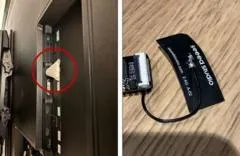
The security incident at OpenAI involved the discovery of a hidden audio recorder intended to capture sensitive discussions within a corporate conference room. On 30 September, OpenAI staff identified a device that had been plugged into the rear of a television set in a meeting room. To avoid immediate detection, the device was reportedly concealed using toilet paper.
Following the discovery, the company implemented surveillance measures to identify the perpetrator. On 5 October, security footage captured Alfozan entering the specific room and appearing to inspect the area behind the television where the recording equipment had been installed. This footage became a central piece of evidence in the subsequent investigation led by the FBI.
The timeline of the discovery and arrest
The sequence of events moved rapidly from detection to law enforcement intervention. After the device was found on 30 September, the internal investigation and subsequent camera placement allowed for the identification of the suspect. The FBI officially arrested Alfozan on 9 October, leading to the immediate termination of his employment contract with OpenAI. The engineer had been with the artificial intelligence company for approximately one year prior to the incident.
Why are US prosecutors alleging Saudi government involvement?
US prosecutors have introduced claims in a California court filing suggesting that Abdulrahman Alfozan acted with significant backing from the Saudi state. The filing asserts that the engineer maintained frequent communication with a member of the Saudi royal family during his tenure at OpenAI. These allegations suggest that the breach may not have been an isolated act of individual misconduct but rather a coordinated effort.
Evidence presented by the prosecution points toward financial support from Saudi military sources to facilitate the movement of Alfozan's family. According to the court documents, a member of the Saudi military paid for a one-way, business-class flight for Alfozan's wife and son. This flight departed from San Francisco to Doha, Qatar, on 10 October, just one day after the engineer's arrest. Prosecutors argue these actions demonstrate a level of institutional coordination intended to assist the defendant in fleeing the United States.
How does this case pose a threat to US national security?
The legal filings categorize the alleged conduct as a potential danger to the national security of the United States due to the nature of the meetings held in the compromised room. OpenAI executives frequently meet with high-ranking government officials to discuss the implications and regulation of artificial intelligence technology. The presence of a recording device during these high-level discussions creates a significant vulnerability for state secrets and strategic policy planning.
The potential for foreign intelligence gathering via corporate espionage is a primary concern for federal investigators. If a foreign state can access the private deliberations of tech leaders and government regulators, it gains an asymmetric advantage in understanding US technological trajectories and regulatory frameworks. The FBI investigation is currently ongoing to determine the full extent of what may have been recorded and who else might have been involved in the operation.
What is the legal status of Abdulrahman Alfozan?
Abdulrahman Alfozan is currently being held in custody after being deemed a significant flight risk by a US district judge. On Monday, Judge Alex Tse denied a request from Alfozan's legal team for bail, citing a substantial risk of non-appearance. The prosecution's argument for denying bail rested heavily on the planned departure of Alfozan's family and his own intended one-way itinerary to Riyadh.
The defendant faces serious criminal charges that carry significant penalties if a conviction is secured. Under federal law, the maximum penalty for the charges involved includes five years in prison and a fine of up to $250,000. The legal proceedings are being conducted in federal court in San Francisco, where the prosecution will attempt to link the technical breach to the alleged state-sponsored motives.
The flight risk argument and family testimony
A critical component of the bail hearing involved the testimony and actions of Alfozan's wife. Following the arrest, she informed FBI agents that her US visa was nearing expiration and that she and her son intended to move permanently back to Saudi Arabia. This statement, combined with the pre-booked one-way travel, provided the basis for the judge's decision to deny release. The prosecution argued that Alfozan had virtually no incentive to remain in the US to face trial given the support structures appearing to be in place for his return to Saudi Arabia.
Frequently asked questions
What was found at the OpenAI office?
An audio recording device was discovered plugged into the back of a television in a conference meeting room. The device had been partially obscured by toilet paper to hide it from casual observation during meetings.
Who is the primary suspect in the investigation?
The suspect is Abdulrahman Alfozan, a 35-year-old Saudi national who had been employed as an engineer at OpenAI for roughly one year before his arrest by the FBI.
Why was Alfozan denied bail?
US District Judge Alex Tse denied bail because of a significant risk that Alfozan would flee the country. This decision was supported by evidence of his family's planned one-way departure to Saudi Arabia.
What are the potential legal penalties for Alfozan?
If convicted of the charges, Alfozan faces a maximum prison sentence of five years and a fine that could reach $250,000, according to the court filings.
Was there evidence of government involvement?
Prosecutors allege that Alfozan had frequent contact with Saudi royalty and that a Saudi military official paid for his family's one-way business-class flights following his arrest.
Key takeaways
- An OpenAI engineer was arrested by the FBI for allegedly planting a hidden audio recorder in a conference room.
- Prosecutors claim the suspect had considerable support from the Saudi government and royal family.
- A Saudi military official reportedly paid for the one-way travel of the suspect's family to Qatar.
- The incident is viewed as a potential national security threat due to the presence of government officials in the room.
- The defendant is currently denied bail and faces up to five years in prison if convicted.
The implications of corporate espionage in the AI era
The arrest of Abdulrahman Alfozan highlights the growing intersection between private artificial intelligence development and international statecraft. As AI companies become central to national economic and security strategies, they become primary targets for sophisticated espionage efforts. This case underscores the necessity for heightened physical and digital security protocols within tech firms that host high-level government interactions. The outcome of the trial in San Francisco will likely provide further insight into the methods used in modern corporate intelligence operations and the extent to which state actors utilize private sector employees for strategic advantage.