
What triggered the Nikon Small World contest controversy?
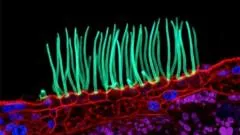
The controversy began when the winning entry of the annual Small World In Motion competition, a prestigious event celebrating microscopic imagery, faced intense scrutiny from the scientific community. The contest, which has been held by Nikon for 15 years, celebrates the intersection of science and art through high-powered microscopy. The winning submission, a short video by Dr Ning Xu from Tsinghua University, was intended to show the motion of cilia—tiny, hair-like structures—inside the airways of a child suffering from a rare medical condition.
While the video was initially celebrated for its technical achievement, several experts quickly identified what they perceived as irregularities in the footage. These observations led to a public debate regarding whether the video was a genuine recording of biological processes or a product of generative AI. The backlash has forced Nikon to launch a formal re-evaluation of the entry to ensure the integrity of the competition and the validity of the scientific data presented.
What are the specific scientific criticisms of the winning video?
Scientists have pointed to several biological and technical inconsistencies that suggest the video may not be a purely empirical recording. The primary concerns involve the behavior of the cellular structures and the physical appearance of the cilia shown in the footage.
Biological anomalies and structural concerns
Experts have noted that the movement and scale of the structures in the video do not align with known biological realities. Specifically, some observers have argued that the cilia appear disproportionately large compared to standard microscopic observations of such cells. Furthermore, the way the structures behave within the frame has been described as unnatural.
Edward Phelps, an associate professor at Florida University, commented on the visual inconsistencies, noting that certain structures within the video appeared to "pop in and out of existence." He also observed that the cilia seemed to "appear from nowhere," a phenomenon that contradicts the continuous, fluid motion expected in biological environments. These "glitches" are often characteristic of generative AI models attempting to reconstruct or hallucinate motion where data is missing or misinterpreted.
Evidence of AI generation and watermarks
Beyond the movement of the structures, there are allegations regarding the origin of the source imagery itself. Ian Donovan, a PhD student at UT Southwestern Medical Centre, stated that the source image used for the video appeared to contain a distinctive watermark, which is a common indicator that an image was produced by an AI generator. If such a watermark exists, it would suggest that the foundational visual data was not captured via traditional microscopy, but rather synthesized by an algorithm.
How has Dr Ning Xu responded to the allegations?
Dr Ning Xu has denied violating the competition's rules, though he has acknowledged the use of artificial intelligence in certain stages of the image processing workflow. In a response to Nikon on LinkedIn, Xu clarified the distinction between generative AI and the tools used for visualization.
According to Xu, AI was not employed to create the experimental movie, the cilia themselves, or their specific motion. Instead, he explained that AI was utilized "to distinguish and visualize features in the reconstructed grayscale images." This type of application is often used in microscopy to enhance contrast or to help researchers identify specific structures within complex, low-contrast datasets. The video features artificially bright colors, a practice that is standard in microscopy to make structures visible; while this is usually achieved through manual staining and dyes, Xu's use of AI for feature visualization falls into a technical gray area of the contest's regulations.
Nikon has confirmed that Xu is "respectfully complying" with their ongoing investigation and has submitted additional technical documentation to support his claims that the footage is an authentic representation of biological activity.
What are the rules regarding AI in the Nikon Small World contest?
The Nikon Small World contest maintains strict guidelines to ensure that all entries are authentic captures of the microscopic world. The rules are designed to protect the scientific validity of the images and to ensure a level playing field for all participants.
The competition explicitly prohibits the use of generative AI to produce content. There is a clear distinction between using software for image enhancement—such as adjusting brightness, contrast, or color to make a sample more visible—and using generative models to create or alter the fundamental content of the image. Dr Patrick Hickey, a fifth-place finisher in the 2026 contest, emphasized that the rules are vital for maintaining the contest's purpose. He noted that the competition requires images to be taken under a microscope and strictly forbids the use of generative AI to produce the subject matter.
The current investigation hinges on whether Xu's use of AI for "visualizing features" crossed the line from enhancement into the territory of generative synthesis. If the AI contributed to the creation of shapes, movements, or structures that were not present in the original microscopic capture, it would constitute a violation of the contest's core principles.
Why does the integrity of scientific photography matter?
The controversy highlights the tension between the artistic qualities of scientific imaging and the necessity for empirical accuracy. For many in the field, these images serve as a bridge between complex laboratory research and public understanding.
Dr Patrick Hickey noted that the recognition provided by the Small World contest is significant because it allows scientists to share their work with the public. He described the field as a "fusion between science and art," where abstract and artistic qualities can make scientific discoveries more accessible. However, this artistic value cannot come at the expense of truth. Hickey argued that it would be fundamentally unfair to other entrants if a winning entry was found to be unfairly altered by generative AI, as the prestige of the award relies on the authenticity of the scientific observation.
Frequently asked questions
What is the Nikon Small World In Motion contest?
The Nikon Small World In Motion contest is an annual competition that showcases high-quality videos and photos taken through powerful microscopes. For 15 years, it has celebrated the intersection of scientific discovery and artistic visualization, allowing researchers to share the hidden beauty of the microscopic world.
Did Dr Ning Xu use AI to create the winning video?
Dr Ning Xu has stated that AI was not used to generate the cilia, their motion, or the experimental movie itself. However, he did admit to using AI to help distinguish and visualize specific features within the reconstructed grayscale images, a distinction that is currently under investigation by Nikon.
What are the main criticisms against the winning entry?
Critics, including professors and PhD students, have alleged that the video contains structural anomalies, such as cilia that appear to pop in and out of existence. There are also concerns regarding the scale of the structures and claims that the source image may contain an AI-generated watermark.
What is Nikon's current stance on the investigation?
Nikon has stated that, at this time, they do not see evidence that any rules were violated. They are currently conducting a formal investigation and have noted that the participant is cooperating by providing additional technical documentation to clarify the methods used.
Can AI be used at all in microscopy competitions?
AI can be used for certain types of image processing, such as enhancing contrast or visualizing features in grayscale images, provided it does not generate new content. However, the use of generative AI to create or significantly alter the biological structures or their movements is strictly prohibited.
Key takeaways
- The Nikon Small World contest is investigating the winning video for potential generative AI use.
- Dr Ning Xu denies using AI to generate motion or biological structures.
- Scientists have reported seeing structures "pop in and out of existence" in the footage.
- Nikon's rules strictly prohibit using generative AI to produce contest entries.
- The investigation focuses on whether AI was used for enhancement or synthesis.
The future of scientific imaging in the age of AI
As generative AI becomes increasingly sophisticated, the boundary between legitimate image enhancement and artificial synthesis is blurring. The Nikon Small World controversy serves as a critical case study for the scientific community, highlighting the need for clearer regulatory frameworks and more robust verification methods. While the fusion of art and science continues to drive public engagement, the fundamental requirement for empirical truth remains the cornerstone of scientific photography. The outcome of Nikon's investigation will likely influence how similar competitions handle the integration of AI technologies in the years to come.