What is included in the Artemis II data archive?
The Artemis II data release consists of a massive collection of multimedia and textual records documenting the crewed mission to the Moon. NASA has compiled nearly 1 terabyte of information to ensure that the scientific community can perform deep-dive analyses of the lunar environment. The core of this archive is built upon direct human observation, a rarity in modern planetary science.
The specific components of the data drop include:
- 11,000 full-resolution images and video files captured by onboard cameras.
- 8.5 hours of spoken observations recorded by the astronauts.
- Handwritten and digital notes taken by the crew during the mission.
- Complete mission transcripts and photographic records from the Orion capsule.
This collection is described by NASA as a landmark event, marking the first time in more than half a century that such a substantial volume of planetary science data has been collected through direct human presence. The closest historical parallel is the Apollo program, which provided the foundation for our current understanding of the lunar surface. This new data represents the first set of planetary science data obtained outside Earth and—for the most part—directly by humans in more than fifty years.
How can researchers access the scientific findings?
NASA has centralized all technical information through the Planetary Data System (PDS), which serves as the official public repository for planetary mission data. While the data is open to anyone, the structure of the release is optimized for professional scientific use rather than casual browsing. The agency has released three specific reports to summarize the mission's learnings: the Artemis II Preliminary Lunar Science Report, the Artemis II Lunar Science Operations Report, and the Artemis II Lunar Science Data User Guide.
Navigating the Planetary Data System
For specialists requiring raw data, the Planetary Data System allows for the individual download of scientific files and their associated metadata. Users can navigate specifically to the Moon section to find the Artemis II collection, which is organized into various files and documents. This granular access is essential for researchers who need to integrate specific datasets into larger computational models or geological studies. Anyone wishing to work directly with the raw data can visit the PDS to access the scientific files and their metadata for individual download and analysis.
For those seeking a more accessible entry point, NASA has established a dedicated Artemis II science page. This secondary portal offers a curated experience, allowing users to download the three primary summary reports. This page also provides a selection of mission photographs and an audio library for a less technical exploration of the mission's achievements. This allows space and astronomy enthusiasts to engage with the mission through more accessible materials like mission transcripts and lunar photographs annotated by the astronauts themselves.
What are the immediate scientific impacts of the data?
Initial analyses of the Artemis II data have already produced significant scientific breakthroughs, most notably regarding lunar safety and environmental hazards. By reviewing the data, scientists are gaining a clearer picture of the dynamic lunar environment that future astronauts will inhabit.
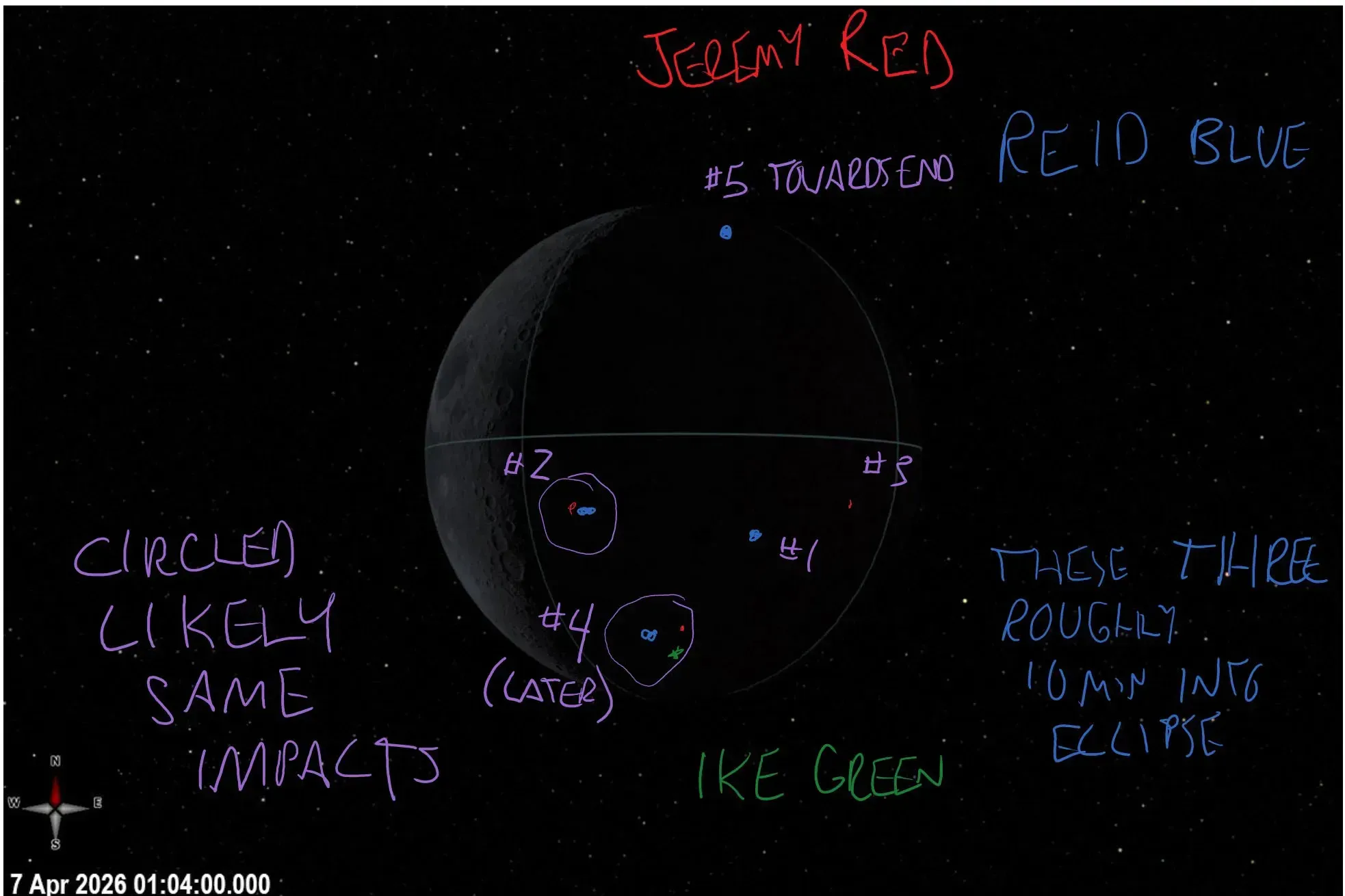
One of the most critical findings involves the detection of five small meteoroid impacts on the lunar surface. These impacts were observed during a 54-minute eclipse experienced by the Orion crew. By recording these flashes, scientists can now refine their estimates regarding the frequency of centimeter-sized fragments striking the Moon. This data is vital for calculating the risk profiles for future lunar bases, surface vehicles, and long-term human habitation.
Beyond impact monitoring, the data provides several other key insights:
- Surface Characteristics: Observations have documented variations in color, brightness, and texture across different lunar regions. These findings allow scientists to cross-reference human observations with previous orbital composition maps.
- Terminator Dynamics: Photographs taken near the terminator—the line dividing lunar day and night—offer high-detail views of how terrain visibility changes under low-angle sunlight.
- Navigation Preparation: Understanding these lighting and shadow conditions is essential for future missions to the lunar south pole, where navigation and terrain recognition will be heavily influenced by extreme light angles.
Who will benefit most from this lunar information?
The breadth of the Artemis II data ensures that it serves a wide variety of scientific disciplines. While the primary goal is to advance lunar science, the implications reach into several specialized fields of aerospace and planetary study.
Planetary geologists will find the high-resolution imagery and texture data invaluable for mapping the Moon's surface composition. Flight engineers and specialists in telecommunications can utilize the mission logs and technical data to refine the systems required for future crewed landings. Additionally, heliophysicists and experts in remote sensing can use the observations of the lunar environment to better understand the interaction between solar radiation and the lunar surface. Specialists in meteoroid impacts will also find the recorded flashes of meteoroid strikes essential for assessing environmental risks.
For the broader public, the mission transcripts and annotated photographs provide a unique window into the human experience of spaceflight. These materials bridge the gap between complex scientific data and the narrative of human exploration, making the mission's technical successes relatable to astronomy enthusiasts and students alike.
Frequently asked questions
Where is the Artemis II data stored?
The primary scientific data is stored in NASA's Planetary Data System (PDS). This is a public repository designed for planetary missions, allowing researchers to download specific files, metadata, and large datasets for detailed analysis and integration into scientific studies.
What can be learned from the meteoroid impact observations?
The detection of five meteoroid impacts during a 54-minute eclipse helps scientists estimate the frequency of small-scale lunar strikes. This information is critical for assessing the safety of future lunar infrastructure, such as habitats and vehicles, against micrometeoroid damage.
Is the data available for non-scientists?
Yes, while the Planetary Data System is designed for professionals, NASA provides an Artemis II science page for the general public. This page offers a selection of photographs, an audio library, and downloadable summary reports that are easier to navigate.
Why is the terminator data important for future missions?
The terminator is the boundary between lunar light and dark. Data from this region helps scientists understand how low-angle sunlight affects terrain visibility and shadows, which is crucial for navigating the lunar south pole in future missions.
How does this compare to the Apollo missions?
This release is the most significant collection of human-obtained planetary science data in over fifty years. It serves as the modern successor to the data gathered during the Apollo era, providing a new generation of insights into the Moon.
Key takeaways
- NASA released approximately 800GB of Artemis II mission data to the public.
- The archive includes 11,000 images and 8.5 hours of astronaut audio.
- Researchers detected five meteoroid impacts during a 54-minute lunar eclipse.
- Data is accessible via the Planetary Data System and a dedicated science page.
- Findings will assist in planning future human missions to the lunar south pole.
The future of lunar exploration through data
The release of the Artemis II data marks a pivotal transition from mission execution to scientific exploitation. By opening these nearly 800 gigabytes of findings, NASA is not just documenting a past flight, but actively building the toolkit for the next generation of lunar inhabitants. The insights gained from meteoroid impacts and terminator lighting will directly influence the engineering of safer habitats and more reliable navigation systems. As researchers worldwide begin to parse these files, the data will likely transform our understanding of the Moon from a distant celestial body into a tangible, navigable frontier for human science.