What happened during the Elon Musk Grok Lego incident?
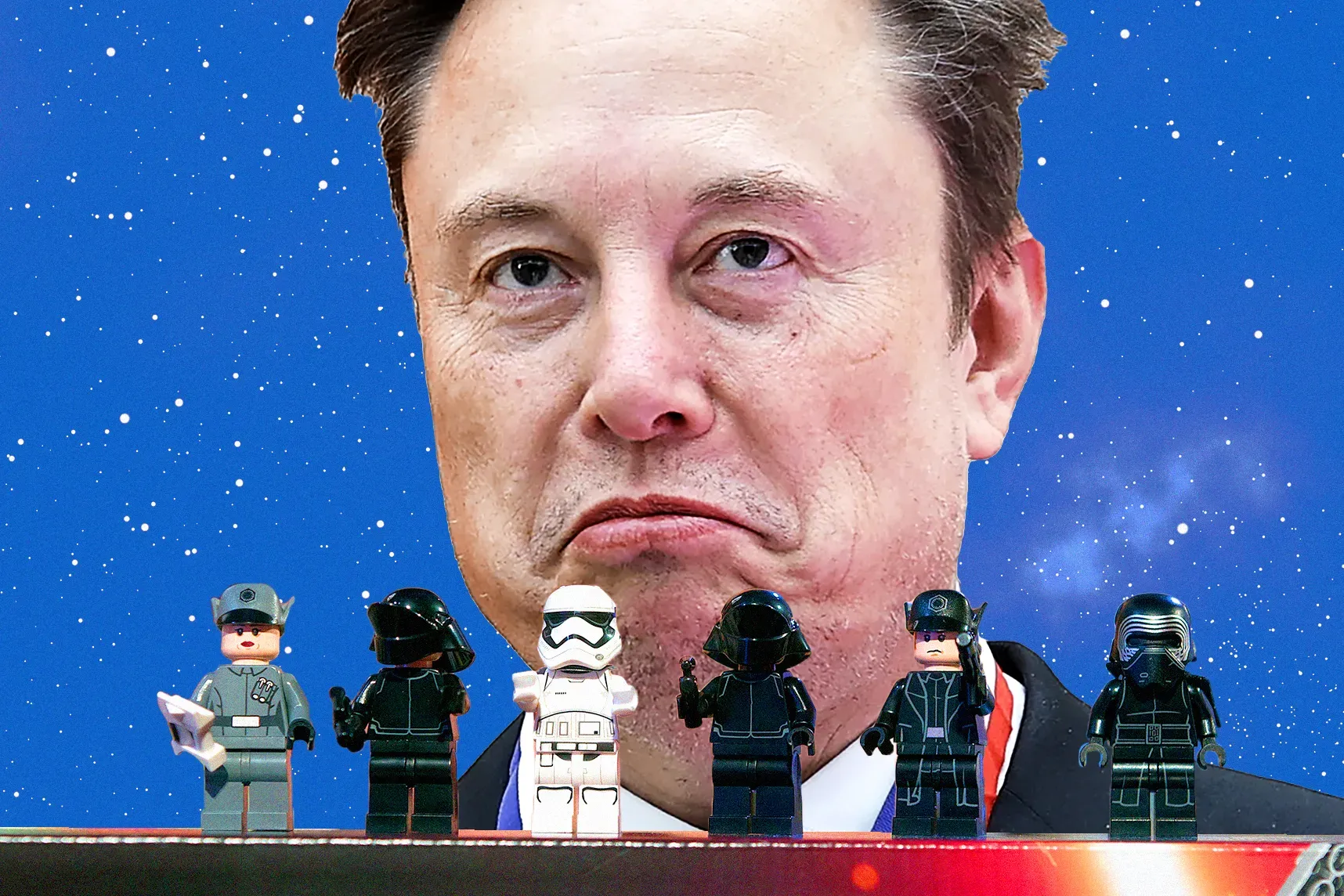
The incident began when Elon Musk used his X account to demonstrate the purchasing capabilities of Grok, his proprietary AI agent. While showcasing a successful order of Lego Star Wars kits on a Sunday, Musk inadvertently shared highly sensitive transactional data. A screenshot posted to his 240 million followers contained a 10-digit Lego order number, the total price paid, delivery and billing addresses, the last four digits of his credit card, and the specific email address used by the Grok bot to complete the transaction.
This massive data leak provided a roadmap for bad actors to interact with Lego's automated systems. Within hours, the security lapse transitioned from a private error to a public demonstration of how easily AI-enabled commerce can be disrupted by those possessing stolen or leaked credentials. The scale of the potential financial impact is immense; for context, a glance at WIRED's Spend Elon Musk’s Money tracker reveals that if one were to spend $1 trillion of Musk's cash on plastic bricks, it would be possible to purchase one billion $1,000 Death Star sets, each containing 9,023 pieces.
The sheer volume of data exposed—from the specific email used by the bot to the exact billing and delivery locations—meant that any user with an internet connection could potentially impersonate the buyer. This incident serves as a stark reminder that the more information an AI agent handles to facilitate 'seamless' commerce, the more damage a single leak can cause.
How did users exploit Lego's AI chatbot?
X users demonstrated that the information provided by Musk was sufficient to manipulate Lego's customer service chatbot, known as "Sophia." An account holder named Enderman reportedly used the leaked email and order number to interact with the chatbot, successfully prompting the system to cancel the original order. This interaction, captured in screenshots, showed that the chatbot could be convinced to terminate a transaction using only the leaked identifiers.
The exploitation did not stop at simple cancellations. Another user allegedly used the same credentials to interact with Sophia to "reopen" the delivery, but with significantly altered parameters. According to screenshots shared on X, the user managed to increase the order count to 400 sets and change the delivery address, all while utilizing Musk's original payment method. The chatbot reportedly responded to these changes with, “Perfect! I'll get your Lego adventure back on track.” While Musk replied within a couple of hours that his order had not been canceled after all, the ease with which the parameters were manipulated remains a significant point of concern.
The ability of a user to not only cancel but to fundamentally rewrite the terms of an order—changing quantities and destinations—suggests that the chatbot's authentication threshold is remarkably low. The fact that a user could purportedly increase an order to 400 sets using the original payment method highlights a gap between automated convenience and the verification of intent.
The role of automated customer service in security breaches
The ease with which these users manipulated the system suggests a lack of robust identity verification within the chatbot's workflow. While Lego declined to comment on whether these specific actions took place, the incident highlights a critical friction point in modern retail: the balance between seamless AI customer service and rigorous security protocols. If a chatbot can process significant changes to an order based solely on an order number and an email address, it creates a massive surface area for social engineering and automated fraud.
Internal safeguards for Lego's AI assistant could have flagged such unusual activity on a personal purchase, and it remains to be seen whether human employees were tasked with checking these automated changes. The incident underscores the vulnerability of "agentic" systems that prioritize user convenience over strict authentication, potentially allowing unauthorized users to hijack existing orders by mimicking legitimate customer requests.
In a traditional retail environment, changing a delivery address or a massive order quantity would typically trigger a secondary verification step, such as a phone call or a multi-factor authentication prompt. However, in the pursuit of a frictionless 'adventure,' the chatbot's willingness to accept these changes without further proof of identity represents a significant security vulnerability in the automated customer service model.
Why is Grok's shopping method considered high-risk?
Elon Musk suggested that the process for using Grok to purchase items is remarkably simple: users can reportedly upload a picture of their credit card so the bot can search for deals and then complete the purchase. While companies like Meta and OpenAI are also pushing the utility of AI agents for shopping tasks, this method bypasses many traditional multi-factor authentication steps that protect human-led transactions.
The primary risk lies in the "agentic" nature of the commerce. When an AI agent is given the authority to act on a user's behalf, it becomes a proxy that can be exploited if the user's credentials or the agent's own communication channels are compromised. In the case of the Grok incident, the attempt to simplify the experience by providing visual credit card data to an AI agent created a single point of failure that was immediately exploited once the transaction details were made public. This method of allowing an AI to handle sensitive financial imagery represents a significant departure from standard secure transaction protocols.
By encouraging users to upload images of credit cards, the workflow creates a high-value target for data harvesting. If an AI agent stores or processes these images to facilitate future 'deals,' a compromise of the agent's data or a simple mistake by the user—as seen with Musk—can expose the entirety of the user's financial identity to the public eye.
What are the broader implications for agentic commerce fraud?
The incident aligns with long-standing warnings from financial institutions regarding the rise of malicious activity in AI-driven transactions. Visa has previously identified significant risks in agentic commerce, specifically noting how bad actors can deploy fraudulent websites designed to deceive AI agents. These "malicious merchants" offer products at unnaturally low prices to entice AI bots into making purchases, allowing the merchant to harvest payment data for unauthorized future transactions.
According to Visa, there has been a measurable rise in these types of attacks. The company reported a 25 percent increase in malicious bot-initiated transactions during the latter half of 2025. In the United States, this trend is even more pronounced, with a 40 percent jump in similar fraudulent activities. The Musk-Lego event serves as a real-world case study of how leaked data can be used to manipulate the receiving end of an automated transaction, turning a tool for convenience into a vector for exploitation.
The rise in these transactions suggests that as AI agents become more autonomous, the 'attack surface' for fraud shifts from human psychological manipulation to technical exploitation of the agents themselves. As bots begin to navigate the web and make financial decisions, the speed at which fraudulent transactions can occur—and the difficulty in detecting them before they are completed—presents a growing challenge for global financial security.
Key Takeaways
- Elon Musk inadvertently leaked sensitive Lego order details, including order numbers and addresses, while demonstrating Grok's shopping capabilities.
- X users were able to use the leaked data to interact with Lego's "Sophia" chatbot, allegedly attempting to cancel or alter the order.
- The incident highlights the security risks of "agentic commerce," where AI agents act as proxies for human financial transactions.
- Visa has reported a significant rise in malicious bot-initiated transactions, with a 40 percent increase in the US during late 2025.
Frequently Asked Questions
How did Elon Musk leak his information?
Musk shared a screenshot on X to demonstrate Grok's ability to order Lego Star Wars kits, but the image contained his order number, price, addresses, and the last four digits of his credit card.
What did the Lego chatbot do?
Users allegedly used the leaked info to prompt Lego's "Sophia" chatbot to cancel the order and, in another instance, to change the order to 400 sets and a different delivery address.
What is the risk of AI shopping agents?
AI agents can be tricked by malicious merchants offering low prices, or they can be exploited if the sensitive data they use to transact is leaked or intercepted.