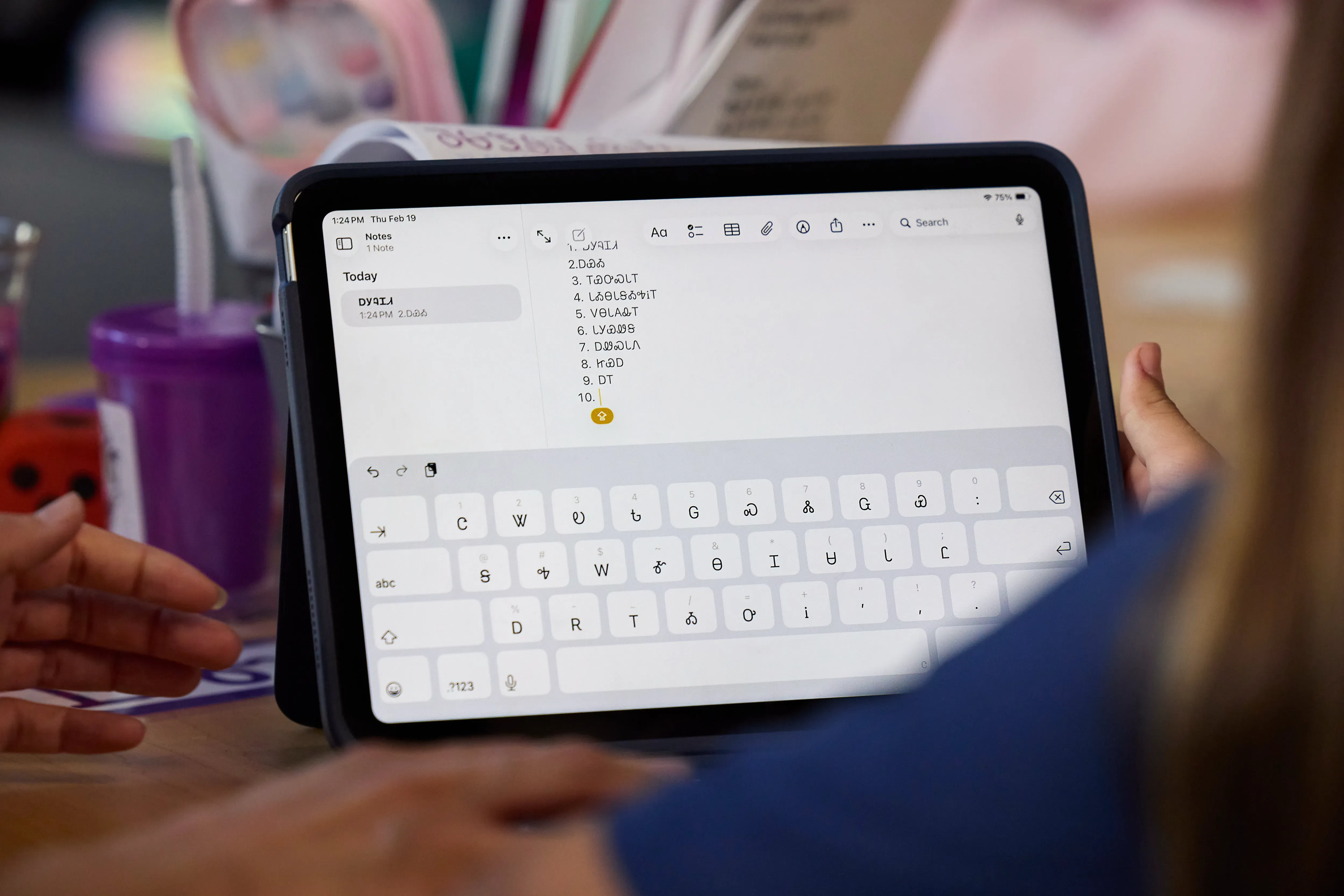
How does Unicode enable support for Indigenous languages?
Unicode serves as the essential foundation for any language to appear on digital devices. Before a user can type or read a character on a smartphone screen, it must exist as a recognized character in the Unicode Standard. This organization, which also handles emoji, time zone localization, and currency names, acts as a kind of "digital Switzerland." It is a neutral consortium where competitors like Apple, Microsoft, and Google sit at the same table alongside linguists and volunteer contributors.
Unicode CEO Toral Cowieson notes that the standard now includes more than 157,000 characters. However, the path to digital visibility is long and technical. Proposing a language, verifying it, and then encoding the character set can take between three and five years. This process is the prerequisite for all subsequent software development.
Once a script is encoded, platforms like Apple and Google must add font support. Without this specific step, a character might fail to render, appearing instead as an empty box—a phenomenon often referred to as "tofu." Following font support, the focus shifts to orthography: the set of rules and systems used for writing a language. While some languages have well-defined orthographies, others may lack standardization, leading communities to use ad hoc digital replacements. For example, some users might use a question mark to represent a glottal stop because their existing keyboards do not support the specific character for that sound. Apple works directly with communities to resolve these discrepancies and find the best digital representations for their specific sounds.
What steps does Apple follow when adding a new language?
Apple’s approach to language integration is a multi-year endeavor that goes far beyond simple translation. The process begins with Unicode approval and moves into deep research and direct collaboration with community members. Apple relies on the expertise of these community members to ensure that the digital tools accurately reflect their linguistic heritage.
Engineers and researchers must review existing writing conventions and adapt them for digital input. This includes determining how to represent unique phonetic sounds and how to structure the keyboard for ease of use. Software engineer Chirasree Mandal emphasizes that a core part of this collaboration is addressing concerns regarding data and ownership. Apple states that it does not own any of the linguistic materials and makes it clear that it is not attempting to silo any data gained during the process. The stated goal is to ensure the best possible representation of a language on their platform so that users feel comfortable and empowered using it.
The final stage of this process is the development of the keyboard layout itself. This is not a "one-and-done" project; it is an iterative process. For instance, Apple recently approached the Cherokee community regarding the implementation of adaptive vowel keys, demonstrating that the relationship between the tech company and the community is ongoing and responsive to new technical possibilities.
Keyboard layout adaptations
When implementing a new language, Apple adapts its software keyboards to meet the specific needs of the culture. Some languages, such as Osage, already have established physical keyboard layouts that Apple can adapt directly into the software. Other languages require entirely custom approaches to ensure typing is efficient and culturally accurate.
For the Nez Perce language, or Nimipuutímt, the keyboard design had to account for the fact that the language does not use capital letters. Rather than using the Shift key to toggle between lowercase and uppercase, Apple repurposed the key to reveal an accented secondary layer. This allows users to access necessary characters without the friction of holding down individual keys, which can significantly slow down the typing process.
The Cherokee language presents a different challenge because it utilizes a syllabary, where each character represents a consonant combined with a vowel sound. To facilitate this, Apple introduced adaptive vowel keys on the bottom row of the keyboard. When a user types a consonant, these keys dynamically change to show the specific vowel combinations that the consonant can form. This custom design is intended to make the digital writing experience as fluid as possible for native speakers.
Why do Indigenous communities seek digital language tools?
For many Indigenous communities, the goal of digitization is survival. The Cherokee Nation, for example, has approximately 1,500 active speakers remaining, most of whom are over the age of 70. Principal Chief Chuck Hoskin Jr. notes that the community is rapidly losing that elder generation, creating an urgent need to train second-language learners and engage children through immersion programs.
Digital tools are seen as an "accelerant" for these revitalization efforts. By placing Indigenous languages on smartphone screens, tech companies help meet young people where they already spend much of their waking hours. Hoskin Jr. recalls the impact of seeing Cherokee-dubbed media, noting that moving from rote classroom memorization to creative, digital engagement helps children become more articulate and literate in their mother tongue.
The ability to use a language in a modern context provides a sense of empowerment. For young Cherokee speakers, writing their names in the syllabary on social media platforms like Facebook serves as a "badge of honor." However, this progress remains vulnerable. Hoskin Jr. points to the threat of political rhetoric that promotes a monolithic, English-speaking America, which can bypass the history and presence of Native American cultures. Ultimately, the greatest enemies are the passage of time and the fragility of human life, making the speed of technological integration a critical factor in language preservation.
What concerns exist around language digitization?
While digital tools offer immense benefits, the process of digitizing an Indigenous culture's language is not without risk. There is a significant historical memory of dispossession and exploitation among Indigenous peoples. Genner Llanes-Ortiz, a Maya scholar at Bishop's University, notes that some communities, such as the Māori, have been very firm in protecting their linguistic materials to prevent the "extraction of knowledge" they have experienced in the past.
Māori speakers have previously rejected proposals to sell their language to tech companies, highlighting the importance of language sovereignty and data ownership. This history of exploitation means that any partnership between a tech giant and an Indigenous community must be built on trust and clear boundaries regarding who controls and stores linguistic data.
In response to these concerns, Apple has stated that it makes it explicitly clear that it does not own the data and is not trying to silo it. Google has also addressed these needs by collaborating on the integration of languages like Manx and Māori. While Google is exploring how generative AI might simplify the coding and research required for new languages, the company maintains that successful integration still requires the direct participation of native speakers to ensure the keyboard meets the specific needs of the community.
Frequently asked questions
When was Cherokee first added to iOS?
Cherokee was the first Native American language included in iOS, appearing in 2010. Since then, the keyboard has evolved, including the recent addition of adaptive vowel keys developed through community collaboration.
Which languages were added in iOS 26 and 27?
In iOS 26, Apple added languages including Haitian Creole and Nez Perce. In iOS 27, the company expanded support for other Native American languages, such as Blackfoot, Comanche, and Northern East Cree.
How long does the Unicode encoding process take?
The process of proposing, verifying, and encoding a new language script typically takes between three and five years before it is ready for implementation on digital platforms.
Does Apple own the linguistic data from these projects?
No. Apple software engineers have stated that the company does not own the data and is not attempting to silo any information gained during the collaboration; the focus is on accurate representation for the users.
Can generative AI help integrate new languages?
Google is exploring the use of generative AI to simplify the research and coding required for new languages, though they emphasize that direct participation from native speakers is still essential for a successful keyboard.
Key takeaways
Unicode encoding is the mandatory first step for any language to be supported on a smartphone, a process that can take three to five years. Apple has significantly expanded its Indigenous language support, adding languages like Blackfoot, Comanche, and Northern East Cree in iOS 27. To ensure usability, keyboard layouts are highly customized, such as the adaptive vowel keys for the Cherokee syllabary and the repurposed Shift key for Nez Perce. A major priority for these communities is language sovereignty and preventing the extraction of knowledge, with companies like Apple and Google emphasizing that they do not claim ownership of the linguistic data. For the Cherokee Nation, which has about 1,500 speakers mostly over age 70, these digital tools are vital for reaching younger generations and combating the rapid loss of native speakers.
Conclusion
The integration of Indigenous languages into modern operating systems represents a critical intersection of technology and cultural preservation. Through the foundational work of Unicode and the collaborative efforts of companies like Apple and Google, endangered languages are gaining a foothold in the digital age. While technical challenges like font rendering and keyboard orthography are significant, the deeper challenges involve ensuring language sovereignty and protecting communities from historical patterns of knowledge extraction. As the Cherokee Nation and others move toward a future where their languages are part of daily digital life, the success of these initiatives will depend on continued, respectful partnership with the people whose voices they aim to amplify.