What are the terms of the new Zambia US health deal?
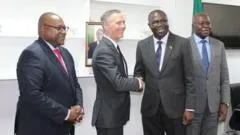
The finalized agreement establishes a five-year framework for health financing between Lusaka and Washington, designed to provide stability for essential medical services. The United States will contribute roughly $1.5bn toward the initiative, while Zambia is expected to increase its domestic spending as part of a broader $3.6bn combined package covering the period from 2026 to 2030.
The funding is specifically earmarked for several critical health sectors, including:
- HIV/AIDS and tuberculosis management
- Malaria prevention and treatment
- Maternal and child health services
- Disease surveillance and health system strengthening
- The recruitment and training of community health workers
This financial structure represents a significant shift in how American aid is distributed in the region. Following the closure of the US Agency for International Development (USAID) last year, Washington has moved toward a model of "shared responsibility." Under this approach, US funding is intended to decline gradually over the five-year term, incentivizing partner governments to take on a larger portion of the costs for their own healthcare infrastructure. This shift follows President Donald Trump's decision to close USAID after accusing the agency of wasteful spending.
How did data-sharing disputes impact the negotiations?
Months of public tension arose from a leaked draft of the agreement that civil society groups claimed granted excessive access to Zambian medical information. Human rights organisations, such as the Chapter One Foundation, warned that the government risked "signing away" the health data of its citizens. These concerns were echoed by HIV advocates from the Treatment Advocacy and Literacy Campaign, who argued that the flow of information would be strictly one-way, benefiting foreign entities rather than local populations.
The primary points of contention involved the handling of biological specimens and pathogen information. Critics feared that long-term access to these materials would undermine national sovereignty and intellectual property rights. However, Zambian Health Minister Roma Chilengi confirmed that the revised text specifically addresses these privacy concerns. According to the Minister, clauses requiring the mandatory transfer of biological specimens to the US have been removed, and the agreement no longer permits the sharing of individual patient records.
Data exchange limitations
To prevent the misuse of sensitive information, the new deal restricts data exchange to a specific, narrow scope. Officials state that any information shared will be limited strictly to what is necessary for monitoring and evaluating the specific programmes funded under this agreement. This distinction is intended to protect individual privacy while allowing for the statistical oversight required by international donors. The revised text aims to balance the need for programme evaluation with the protection of Zambian citizens' medical privacy.
Was health aid linked to Zambian mineral rights?
A major political controversy emerged when activists and opposition figures suggested that US health funding was being used as leverage to secure preferential access to Zambia’s vast reserves of copper and other critical minerals. In May, Zambian Foreign Minister Mulambo Haimbe described the data terms as "unconscionable" and accused Washington of tying the medical aid package to mineral access.
The US government has consistently denied these allegations. The then-US ambassador, Michael Gonzales, rejected the claims that health assistance was being leveraged for industrial gain. Despite these denials, the suspicion contributed to a breakdown in diplomatic trust, further complicating the path to a signed agreement. The dispute was exacerbated by an earlier incident where the US suspended drug funding following allegations of medicine theft—a claim the Zambian government disputed.
What is the broader context of US aid changes in Africa?
The Zambia agreement is part of a wider geopolitical shift in American foreign policy following the decision by President Donald Trump to close USAID. This move has fundamentally altered the landscape of humanitarian assistance across the continent, forcing many nations to renegotiate how they receive and manage international support. Washington has pursued similar deals with several African countries, arguing that partner governments should take on more of the cost.
The new model of "aligned and effective" aid is being implemented across several African nations. Kenya, Tanzania, and Uganda have already signed similar agreements. However, the approach has met with significant resistance in other countries; both Ghana and Zimbabwe have rejected agreements due to stringent conditions regarding the sharing of data and biological specimens. The transition away from the traditional USAID model marks a departure from long-standing humanitarian practices in favor of a more transactional, cost-sharing framework.
Impact on regional health crises
Critics of the USAID closure argue that the shift has had tangible consequences for regional health security. Specifically, some observers have pointed to the ongoing Ebola outbreak in the Democratic Republic of Congo (DRC) as an area where the loss of USAID’s logistical and outreach capabilities may have slowed detection and response efforts. While the US government maintains that its $270m contribution to the Ebola epidemic proves its commitment, the debate over the efficacy of the new, leaner model remains a central point of contention for humanitarian organisations. Critics emphasize that the agency was crucial to organising logistics, supplies, and local outreach.
Frequently asked questions
What is the total value of the Zambia US health agreement?
The total combined package for the period of 2026 to 2030 is estimated at approximately $3.6bn. Within this framework, the United States is providing roughly $1.5bn, while Zambia is expected to increase its domestic financial contributions over the five-year period.
Will Zambian patient records be shared with the US?
No, the revised agreement explicitly prohibits the sharing of individual patient records. Health Minister Roma Chilengi stated that data exchange is strictly limited to information required for the monitoring and evaluation of the specific health programmes funded by the agreement.
Why did civil society groups oppose the initial draft?
Civil society groups, including the Chapter One Foundation, opposed the initial draft because they believed it allowed for excessive data sharing. They were particularly concerned about the potential for long-term foreign access to Zambian pathogen information and biological specimens.
How does this deal differ from previous USAID support?
The deal shifts from a traditional donor-recipient model to one of "shared responsibility." Unlike previous years where support flowed largely through USAID, this agreement requires Zambia to increase its own spending as US funding is scheduled to decline over five years.
Is the US linking health aid to mineral access?
While Zambian officials and activists previously raised concerns that aid was tied to copper and critical mineral rights, the US government has officially denied these allegations, calling them false and maintaining that the deal is strictly for health purposes.
Key takeaways
- The US will provide $1.5bn over five years to support Zambian health programmes.
- The total combined funding package for 2026-2030 is estimated at $3.6bn.
- Revised terms prevent the sharing of individual patient records and biological specimens.
- The agreement shifts from a donor model to a shared responsibility framework.
- Funding targets include HIV/AIDS, malaria, tuberculosis, and maternal health.
Conclusion
The signing of the Zambia US health deal marks the resolution of a high-stakes diplomatic standoff concerning data sovereignty and national resources. By removing controversial clauses regarding biological specimens and individual privacy, the agreement provides a pathway for continued support for critical diseases like HIV and malaria. However, the transition away from the USAID model remains a point of intense scrutiny. As Zambia moves toward increased domestic health spending, the success of this "shared responsibility" framework will be measured by its ability to maintain robust healthcare delivery without the expansive humanitarian infrastructure previously provided by the United States.