
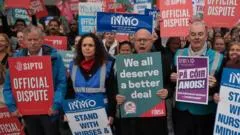
The scale of the public sector mobilization
More than 300,000 workers are currently participating in strike action across the Republic of Ireland. This figure encompasses a diverse range of essential roles, including doctors, nurses, teachers, and various civil servants. The industrial action is the culmination of an intensifying dispute regarding compensation within the public sector, which has seen a steady escalation in tactics over recent months.
The momentum for this movement was established throughout the autumn. At the end of September, over 100,000 employees, including school staff and civil servants, implemented work-to-rule measures. This was followed in early October by primary and secondary school teachers initiating similar work-to-rule actions. The strength of the labor movement is evidenced by recent voting patterns; for instance, nearly 97% of members in Fórsa, the country's largest public service union, voted in favor of industrial action during a recent ballot.
The current wave of strikes is not an isolated event but part of a broader pattern of labor unrest. With a further strike scheduled for 21 October, the workforce appears committed to maintaining pressure on the administration until a resolution is reached regarding their wage demands.
Economic and social implications of the disruption
The strike action is expected to cause significant disruption to both the national economy and daily life for citizens. Jack Chambers, the Republic's minister for expenditure, characterized the ongoing industrial action as "deeply disappointing," noting the potential for widespread societal impact. The disruption is projected to manifest in several critical areas of public life.
Impact on healthcare and education
The healthcare sector faces immediate challenges, with thousands of hospital appointments expected to be cancelled as medical professionals join the picket lines. Similarly, the education system will face major interruptions, as the 24-hour strike is anticipated to lead to widespread school closures across the country.
Broader economic consequences
Beyond the immediate loss of service in hospitals and schools, the government has expressed concerns regarding the broader economic fallout. The cessation of work by hundreds of thousands of employees creates a ripple effect that impacts productivity and public service delivery, placing additional strain on the state's ability to function effectively during the dispute period.
The drivers of industrial unrest: Cost of living and housing
At the heart of the strike is a fundamental disagreement over whether public sector wages are sufficient to meet the current cost of living. For many workers, the financial reality in Ireland has become increasingly untenable, particularly concerning the ability to secure housing. This sentiment was echoed by frontline professionals during recent interviews.
Dawn Hutchings-Walsh, a teacher at Hartstown Community School in Dublin, noted to RTÉ that current pay levels simply do not stretch as they once did. This struggle is often compounded by the extreme difficulty of entering the property market. Sinéad McCarthy, a colleague of Hutchings-Walsh, shared that she felt compelled to take a career break and relocate to Dubai for several years specifically to save enough money for a home deposit. She stated that saving for a house in Ireland is currently unfeasible given the existing salary levels and economic circumstances.
Union perspectives and government response
Labor representatives argue that the current situation is a direct result of the government's failure to engage in meaningful negotiations. Brendan O'Brien, a divisional organiser for SIPTU, which represents workers in health and administration, suggested that while worker goodwill has historically sustained public services, the lack of progress in formal talks has forced a change in strategy. According to O'Brien, the government's inability to establish a basis for formal dialogue left members with no choice but to act collectively.
Education unions have expressed similar frustrations regarding the state's handling of the crisis. Linda Kelly, the general secretary of the Association of Secondary Teachers Ireland (ASTI), remarked that teachers are struggling significantly with their compensation. Kelly criticized what she described as a "laissez-faire approach" from the government over the preceding months, suggesting that the administration has failed to take the concerns of educators seriously. She noted that despite having ample time to resolve the issue, the government's perceived inaction has led to the current state of industrial unrest.
Frequently Asked Questions
How many workers are participating in the Irish strikes?
More than 300,000 workers are currently participating in the strikes across the Republic of Ireland. This group includes a wide variety of public sector employees, such as doctors, nurses, teachers, and civil servants, all participating in a coordinated effort to address pay disputes.
What services will be most affected by the strike?
The most significant disruptions are expected in the healthcare and education sectors. Citizens should anticipate the cancellation of thousands of hospital appointments and the potential closure of many schools across the country as picket lines form during the scheduled 24-hour strike periods.
Why are public sector workers striking in Ireland?
The primary driver for the strike is an ongoing pay dispute between public sector employees and the Irish government. Workers are protesting against wages that they claim are no longer sufficient to cover the rising cost of living and the difficulty of accessing housing.
The path toward resolution
The current industrial climate in the Republic of Ireland represents a significant challenge for the government and the public service. With hundreds of thousands of workers mobilized and further strikes on the horizon, the tension between state expenditure management and the economic realities faced by employees continues to grow. The resolution of this dispute will likely depend on whether the government can move past its current approach to establish the formal, meaningful dialogue that union leaders are demanding. Until a consensus on fair compensation is reached, the disruption to essential services and the economic stability of the country is likely to persist.




