
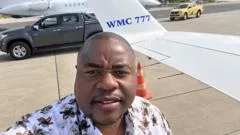
What are the known details of the helicopter crash?
The helicopter crash occurred at approximately 17:00 local time on Wednesday in the Marondera rural area, roughly 70km east of Harare. According to police spokesperson Commissioner Paul Nyathi, there were six occupants on board the aircraft, and all were killed in the accident. The aircraft reportedly went down at Kudenga Farm, about 40 minutes after taking off from Gandami in Chikomba.
The flight was intended to transport the group from the construction site of a rural home being built by Chivayo and his wife. Government spokesman Nick Mangwana confirmed the fatalities via X, stating that the helicopter was carrying the prominent businessman, three passengers, and two pilots. Emergency services were dispatched to the scene on Wednesday evening, but no survivors were found. The exact circumstances surrounding the descent of the aircraft remain under investigation by the authorities.
The flight path and location
The crash site at Kudenga Farm represents a significant loss for the family, as the group was traveling specifically to oversee development at their new rural residence. The flight had originated in Gandami in Chikomba, where Chivayo and his wife were in the process of building a rural home. The timing of the crash, occurring in the late afternoon, has left investigators focusing on the short duration between takeoff and the impact, as the aircraft went down only 40 minutes after departing.
Who were the victims involved in the accident?
The most prominent victims identified are Wicknell Chivayo and his wife, Lucy Muteke. Family spokesperson Herbert Chivayo confirmed their deaths to the state broadcaster ZBC, expressing the family's devastation. "We are at a loss for words after the tragic news," the family spokesperson told ZBC.
While the names of the other four occupants have not been immediately released by authorities, it is confirmed that two of the deceased were pilots, according to government officials. Chivayo was a figure of immense public interest in Zimbabwe, known for his high-profile lifestyle and significant presence on social media. His death, alongside his wife, leaves a void in both his business empire and his extensive network of political and social connections across the African continent.
What was Wicknell Chivayo's business background?
Wicknell Chivayo served as the managing director of Intratrek Zimbabwe, a company that secured several high-value government contracts. One of his most notable business dealings was a $172 million (£128m) solar power project in Gwanda, awarded to Intratrek by the state-owned Zimbabwe Power Company. This specific project became the subject of years of complex legal disputes.
His business operations often placed him under the scrutiny of national authorities. Chivayo was involved in the procurement of materials related to Zimbabwe's 2023 elections, a period of significant political tension. While the Zimbabwe anti-corruption commission investigated allegations concerning contracts awarded to the South African firm Ren-Form, the inquiry was closed in 2025. At that time, the commission stated it found no evidence linking Chivayo or the Zimbabwe Electoral Commission to any wrongdoing. Throughout these periods of scrutiny, Chivayo had consistently denied any allegations of wrongdoing linked to his business dealings.
The 'Sir Wicknell' persona and philanthropy
Beyond formal corporate structures, Chivayo built a unique brand through what he termed 'philanthropy.' He frequently used the moniker 'Sir Wicknell' on social media, despite never receiving an official British knighthood. He gained widespread attention by publicly distributing luxury vehicles and large sums of cash to musicians, religious figures, and other public personalities. These acts of giving were often heavily publicized on social media, contributing to his high public profile and the distinctive persona that defined his public life.
How did Chivayo influence regional politics?
Chivayo maintained an unusually high level of access to various African heads of state, a fact that often drew both admiration and criticism. He frequently shared images of himself with prominent leaders, including Zambia's Hakainde Hichilema, South Africa's Cyril Ramaphosa, and Tanzania's Samia Suluhu Hassan, as well as Eswatini's King Mswati III. These connections suggested a level of influence that extended far beyond Zimbabwean borders.
His relationship with Kenyan President William Ruto was particularly notable. Ruto had appeared publicly with Chivayo and responded to the news of the crash by describing him as a 'dear friend.' In a tribute, Ruto noted Chivayo's energy and his conviction regarding the continent's potential. However, this access was not without controversy, as Kenyan opposition figures had previously raised questions regarding the frequency and nature of Chivayo's interactions with the Kenyan State House.
What is the current status of the investigation?
The cause of the helicopter crash remains unknown as of the latest reports. Police have confirmed that formal investigations are currently underway to determine the technical or human factors that led to the impact at Kudenga Farm. Authorities have not yet released a full manifest identifying all passengers, though the presence of two pilots is confirmed.
As the investigation proceeds, the focus will likely remain on the circumstances surrounding the takeoff from Chikomba and the flight path toward Marondera. For now, the incident remains a developing story in Zimbabwe, marked by the sudden loss of one of the country's most polarizing figures.
Frequently asked questions
Who died in the Wicknell Chivayo helicopter crash?
The crash killed six people, including prominent Zimbabwean businessman Wicknell Chivayo and his wife, Lucy Muteke. According to government officials, the group also included two pilots and three other passengers. No survivors were reported from the site at Kudenga Farm.
Where did the helicopter crash occur?
The accident took place in the Marondera rural area, located approximately 70km east of Harare, Zimbabwe. The aircraft went down at Kudenga Farm roughly 40 minutes after taking off from Gandami in the Chikomba district.
What was Wicknell Chivayo's business involvement?
Chivayo was the managing director of Intratrek Zimbabwe. He was notably involved in a $172 million solar power project in Gwanda via the Zimbabwe Power Company, a deal that was subject to extensive legal challenges over several years.
Was Wicknell Chivayo under investigation for corruption?
While his business dealings attracted significant scrutiny, including investigations into election-related procurement and contracts with Ren-Form, the Zimbabwe anti-corruption commission closed its inquiry in 2025, stating no evidence of wrongdoing was found.
How did African leaders react to his death?
Kenyan President William Ruto described Chivayo as a 'dear friend' and praised his energy and conviction. Chivayo had maintained high-profile connections with various leaders, including the presidents of South Africa, Zambia, and Tanzania.
Key takeaways
- Six people, including Wicknell Chivayo and his wife Lucy Muteke, died in a Marondera helicopter crash.
- The accident occurred at Kudenga Farm approximately 40 minutes after departing from Chikomba.
- Chivayo was the managing director of Intratrek Zimbabwe and held major government contracts.
- A $172 million solar project in Gwanda was one of his most significant business ventures.
- President William Ruto of Kenya officially paid tribute to Chivayo as a close friend.
Conclusion
The death of Wicknell Chivayo in a Marondera helicopter crash marks the end of a life defined by immense wealth, public spectacle, and political proximity. While his business successes, such as the Gwanda solar project, were often shadowed by legal disputes and regulatory scrutiny, his influence on the social and political landscape of Zimbabwe and the wider region was undeniable. As investigators work to uncover the cause of the fatal accident at Kudenga Farm, the country grapples with the loss of a figure who remained a constant, if polarizing, presence in African business and media.