
Why is Volkswagen supporting the Industrial Accelerator Act?
Volkswagen is advocating for the Industrial Accelerator Act to create a level playing field for European manufacturers facing intense pressure from Chinese automotive brands. Speaking in Paris, CEO Oliver Blume emphasized that the proposed rules must prioritize and reward 'real value creation' within the European Union. The core objective of this legislation is to protect the continent's industrial base by linking public procurement and subsidies to the level of domestic production and material sourcing.
The Act aims to mitigate the impact of lower-priced Chinese manufacturers who have gained significant market share in Europe. By implementing rules that favor products with a high proportion of European-sourced materials and manufacturing processes, the EU hopes to sustain its domestic industrial strength. Blume noted that while Volkswagen believes in open markets, the EU must also defend its technological independence and economic interests to ensure long-term stability.
The mechanics of the Industrial Accelerator Act
The proposed Industrial Accelerator Act functions by creating preferential conditions for companies with a significant European footprint. Under these rules, access to government subsidies and public procurement contracts would be contingent upon how much of the product's value chain remains within the EU. This is intended to prevent a scenario where foreign companies sell products within the European market without contributing to local employment or technological development.
What challenges are facing the European automotive sector?
European carmakers are currently navigating a complex landscape of high costs, shifting consumer demand, and unprecedented international competition. Oliver Blume identified several critical hurdles that are placing the continent's industry under 'enormous competitive pressure.' These challenges are not merely related to market share but involve the very structural viability of traditional European manufacturing models.
According to Blume, the primary pressures include:
- High energy costs: Increasing operational expenses for energy-intensive manufacturing plants.
- Inflationary pressures: Lowering consumer demand as households struggle with rising living costs.
- Development speed: The urgent necessity to accelerate the research and development cycles for new vehicle technologies.
- Chinese competition: The rapid expansion of low-cost Chinese brands, particularly in the hybrid and electric segments.
The situation is further complicated by a recent landmark deal between the EU and China, which aims to 'halve' the sales of Chinese hybrid cars within the bloc. This measure was introduced following fears that the surge in hybrid sales could potentially dismantle key segments of the European automotive industry.
How is Volkswagen responding to the industry crisis?
Volkswagen is undergoing a massive structural transformation to defend its market position and improve its financial resilience. The company has initiated a significant restructuring program, which Blume described as the 'largest transformation programme in its history.' This move is a direct response to the need for increased profitability and the ability to protect its 'home turf' against global competitors.
A central component of this strategy involves aggressive cost-cutting and simplification of the company's global portfolio. Volkswagen is currently implementing several major changes:
- Job Reductions: The company has launched a plan that could result in the loss of up to 100,000 jobs.
- Model Streamlining: The total number of vehicle models offered worldwide is being reduced from 150 down to 75. This reduction spans across various brands, including Audi and Škoda.
- Operational Efficiency: By reducing the number of models, the company aims to lower complexity in both manufacturing plants and dealership networks, thereby reducing the unit cost of each vehicle produced.
Arno Antlitz, Volkswagen's Chief Financial Officer, stated that these difficult decisions are essential to increase the company's economic power and ensure it remains competitive in a changing global market.
The impact of model reduction on the supply chain
The decision to halve the number of models from 150 to 75 represents a fundamental shift in Volkswagen's manufacturing philosophy. By concentrating on a smaller, more efficient range of vehicles, the company seeks to achieve greater economies of scale. This simplification is intended to streamline the supply chain, reduce the variety of components required, and ultimately lower the cost of production for each individual vehicle. While this move aims to bolster profitability, it also necessitates a significant realignment of existing production lines and supplier relationships across the group's various brands.
What is the significance of the Paris motor show for Volkswagen?
Volkswagen's presence at the Paris motor show marks a strategic return to the event, representing the company's first exhibition there in 20 years. This return is seen as a symbolic gesture of the company's commitment to the European market and its desire to strengthen ties between major industrial powers like France and Germany. During the event, Blume hosted French Industry Minister Sébastian Martin, highlighting the importance of cross-border cooperation within the EU.
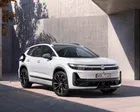
The show also served as a platform for Volkswagen to showcase its technological direction through the unveiling of the production version of the ID Tiguan. This all-electric edition of the company's bestselling family SUV is a critical component of its transition toward an electric future. The ID Tiguan represents the brand's effort to combine its traditional strengths in the SUV segment with the necessary shift toward electrification to meet both regulatory requirements and consumer demand.
Frequently asked questions
What is the Industrial Accelerator Act?
The Industrial Accelerator Act is a proposed EU policy designed to support domestic industries by favoring products with significant European manufacturing and material sourcing. It aims to ensure that companies selling within the EU contribute to local value creation and job growth, thereby countering the influence of low-cost foreign imports.
Why is Volkswagen cutting 100,000 jobs?
Volkswagen is implementing these job cuts as part of a major transformation program intended to increase profitability and economic power. The company needs to reduce costs and simplify its operations to remain competitive against rising international rivals, particularly those from China, during a period of high inflation and high energy costs.
How does the EU plan to address Chinese hybrid car sales?
The European Union has reached a landmark deal with China intended to halve the sales of Chinese hybrid cars within the European market. This measure is a response to concerns that the rapid growth of these vehicles could threaten the survival of various sectors within the European automotive industry.
What is the new ID Tiguan?
The ID Tiguan is the all-electric version of Volkswagen's bestselling family SUV. Unveiled at the Paris motor show, it represents a key part of the company's strategy to transition its most popular vehicle segments toward electric propulsion to maintain market relevance.
Why is Volkswagen reducing its number of car models?
Volkswagen is reducing its global model count from 150 to 75 to decrease manufacturing and dealership complexity. This streamlining is designed to lower the production cost of each vehicle and improve overall efficiency across brands like Audi and Škoda.
Key takeaways
- Volkswagen is supporting the EU's Industrial Accelerator Act to protect domestic manufacturing.
- The company is undergoing a massive restructuring, including potential cuts to 100,000 jobs.
- VW plans to reduce its global vehicle model count from 150 to 75.
- The new all-electric ID Tiguan was unveiled at the Paris motor show.
- The EU aims to halve Chinese hybrid car sales to protect local industry.
Conclusion
The automotive industry in Europe is at a critical crossroads, caught between the necessity of technological transformation and the pressure of intense global competition. Volkswagen's support for the Industrial Accelerator Act reflects a broader desire among European manufacturers to secure a protected industrial base that rewards domestic investment. While the company's drastic measures—including significant job cuts and model reductions—highlight the severity of the current crisis, they also signal a strategic pivot toward efficiency and electrification. As the EU works to balance open markets with industrial protection, the success of these initiatives will determine the future competitiveness of the European automotive sector.
