
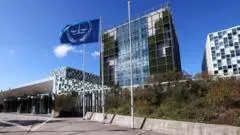
What are the specific measures in the new US sanctions on ICC?
The new sanctions target the International Criminal Court as a legal institution, moving beyond the previous targeting of 17 individual judges and officials. According to US Secretary of State Marco Rubio, the measures include a ban on US entities engaging in transactions with the ICC. This effectively prohibits American companies from providing essential goods and services, such as banking, financial software, and other operational infrastructure, to the court.
The administration's strategy is designed to collapse the court's ability to function financially. By cutting off access to the US-dominated global financial system, Washington seeks to exert maximum pressure on the institution's continuity. However, the sanctions are not being implemented with immediate effect across all sectors. The US has introduced a six-month grace period before the full weight of these measures takes hold.
The role of the six-month grace period
The inclusion of a six-month window is a strategic component of the US policy. Secretary Rubio stated that this delay is intended to allow member states time to negotiate a "solution to address" the concerns raised by Washington. This period provides a diplomatic buffer, allowing allies who are signatories to the ICC to coordinate their response or engage in discussions with the Trump administration regarding the court's mandate and its interactions with US sovereignty.
Why is the Trump administration targeting the ICC?
The Trump administration views the ICC as a "rogue" institution managed by "globalists" who pose a direct threat to American sovereignty. The primary driver of this hostility is the court's perceived overreach in seeking to prosecute American citizens and officials. Specifically, the US remains incensed by past investigations into the conduct of US soldiers in Afghanistan, despite the fact that the court has since closed that particular investigation.
Further tension stems from the ICC's issuance of arrest warrants for high-ranking Israeli officials, including Prime Minister Benjamin Netanyahu. While the new sanctions do not explicitly demand the withdrawal of these warrants as a condition for lifting the measures, Secretary Rubio has made the administration's stance clear. He stated that the US will not permit the ICC to prosecute Americans, framing the situation as a choice for the institution: "Either the ICC will end its threats, or we will end the ICC."
The administration's rhetoric suggests a fundamental disagreement with the jurisdictional reach of the court. By characterizing the ICC as a political rather than a legal body, the US seeks to delegitimize its authority to intervene in the affairs of non-member states or their allies.
What is the international reaction to the US decision?
The international community has responded with deep concern, with many leaders viewing the sanctions as a direct attack on the global legal order. UN Secretary General Antonio Guterres described the decision as a "serious blow to our collective pursuit of international criminal justice," noting that the ICC serves as a vital pillar in that pursuit. The ICC itself condemned the move, calling it an "assault on the rule of law" and asserting that the institution will not be deterred by attempts to intimidate those cooperating with justice.
Several Western allies have formally distanced themselves from the US position. The United Kingdom, alongside Canada, Denmark, Germany, France, Italy, Japan, and the Netherlands, reaffirmed their "continued and unwavering support" for the ICC. These nations expressed regret and strong disagreement with the sanctions, emphasizing the importance of holding those accused of the most serious international crimes accountable.
The pressure on the Netherlands
The Netherlands finds itself in a particularly delicate position. As the host nation for the ICC in The Hague, it must balance its role as a NATO ally of the United States with its responsibility to support the international legal institutions residing on its soil. Dutch Foreign Minister Tom Berendsen has warned that these sanctions could seriously compromise the court's functional capacity, creating a significant diplomatic challenge for the Dutch government.
How could the sanctions impact pending criminal trials?
The shift from targeting individuals to targeting the institution could lead to a systemic collapse of ongoing legal proceedings. Professor Ryan Goodman from the New York University School of Law warned that if the financial sanctions prevent the ICC from conducting fair trials or maintaining necessary operations, detainees might have to be released as a matter of law. This would create a massive vacuum in international criminal accountability.
Several high-profile cases are currently at risk. Among those awaiting trial is Rodrigo Duterte, the former president of the Philippines, who faces accusations regarding the extrajudicial killings during his administration's "war on drugs" between 2011 and 2019. Other significant cases involve senior figures accused of war crimes in Libya, Sudan, and the Central African Republic.
The human cost for victims
The potential dismissal of these cases carries a heavy emotional and social weight. According to Professor Goodman, the release of detainees due to financial constraints would be "enormously damaging" to the global effort toward justice. For the victims of these crimes, the impact is even more personal. Many participants in ICC proceedings have placed themselves at significant risk with the hope of seeing justice served; a failure of the court due to US intervention could be described as deeply traumatic.
What is the current status of the ICC's membership?
The ICC was established in 2002 with the mandate to prosecute genocide, war crimes, and crimes against humanity. Currently, it counts 125 countries as member states. However, the court's reach is limited by the fact that several major global powers remain outside its jurisdiction, including the United States, Russia, China, India, and Israel. This lack of universal membership has long been a point of contention regarding the court's ability to enforce international law globally.
FAQ: US sanctions on ICC
What is the main goal of the US sanctions?
The primary goal is to protect US sovereignty and prevent the ICC from attempting to prosecute American citizens or officials. By targeting the court's finances and its ability to procure essential services, the US aims to dismantle what it considers a rogue institution.
Will the sanctions affect the ICC's ability to function?
Yes, the sanctions are designed to disrupt the court's operations by preventing US companies from providing banking, software, and other critical services. This could eventually make it impossible for the court to conduct trials, manage detainees, or process appeals.
Which countries support the ICC despite the US move?
The UK, Canada, Denmark, Germany, France, Italy, Japan, and the Netherlands have all reaffirmed their support for the ICC. These nations have expressed regret over the US decision and emphasized the importance of international criminal justice.
Are there any exceptions to the sanctions?
The US has included certain "licenses" or carve-outs. For example, the ICC may continue to receive services necessary for the operation of facilities used to detain individuals like Rodrigo Duterte, ensuring that some basic detention functions can persist.
How long is the grace period for the sanctions?
The US administration has provided a six-month grace period. This window is intended to allow member states to negotiate with Washington to address US concerns and potentially find a diplomatic solution to the ongoing friction.
Key takeaways
- The US is sanctioning the ICC as an institution to restrict its financial and operational capacity.
- Secretary of State Marco Rubio stated the goal is to defend US sovereignty against ICC overreach.
- A six-month grace period has been established to allow for potential diplomatic negotiations.
- Legal experts warn that financial disruptions could force the release of detainees awaiting trial.
- Major allies, including the UK and France, have expressed strong disagreement with the sanctions.
Conclusion
The confrontation between the United States and the International Criminal Court represents a pivotal moment for the future of international law. By moving from individual sanctions to institutional targeting, the Trump administration has escalated a long-standing dispute into a systemic crisis. While the US seeks to safeguard its sovereignty, the move risks undermining the very mechanisms designed to prevent genocide and war crimes. The outcome of this standoff will likely determine whether the ICC remains a viable instrument of global justice or becomes an institution incapacitated by political and financial pressure.




