
Why are UK and US troops leaving Iraq now?
The departure of the remaining British and American personnel follows a formal agreement reached between the United States and the Iraqi government two years ago, which mandated a full withdrawal of foreign troops by the end of this month. This exit marks the end of Operation Inherent Resolve, a coalition mission that has been active in the country since 2014 to combat the extremist Islamic State (IS) group.
The withdrawal was a coordinated effort, with the final British contingent of approximately 100 personnel departing from the Irbil base in the northern Kurdistan region on Wednesday. This departure was timed alongside US forces, who also left the country on Wednesday. This follows the earlier departure of hundreds of NATO troops from Baghdad in March, as regional tensions escalated. The Iraqi government has signaled the importance of this moment by declaring four "Sovereignty Days" as national holidays to commemorate the end of the foreign military presence and the transition to Iraqi-led security.
What was the impact of Operation Inherent Resolve?
The coalition mission successfully achieved the territorial defeat of the Islamic State (IS) in Iraq, a goal that was officially declared by the Iraqi government in 2017. According to the UK Ministry of Defence (MoD), the mission focused on operations, training, and capacity building to ensure local forces could sustain security. The MoD stated that following more than a decade of these efforts, the Iraqi Security Forces (ISF) and the Kurdish Peshmerga are now well placed to take primary responsibility for the country's security.
The scale of the support provided by the coalition was significant and reached deep into the local security infrastructure. The MoD reported that UK personnel provided valuable support, training, and assistance to over 111,000 members of the Iraqi Security Forces (ISF), which included more than 21,000 Peshmerga forces in the semi-autonomous Kurdistan Region. Additionally, the Royal Air Force (RAF) played a critical role in combat operations, conducting thousands of sorties and striking more than 2,300 IS targets during the campaign. This extensive capacity building was intended to allow Iraq and its international partners to begin a new chapter of security co-operation under Iraqi leadership.
The evolution of the mission
While the primary objective of defeating the territorial caliphate was met, the coalition remained in the country to prevent a resurgence of the group. The mission evolved from active combat to a focus on preventing IS from regaining any significant foothold. A recent United Nations report assessed that while sustained counter-terrorism pressure from the Iraqi security forces has significantly weakened the group, IS is not entirely eradicated. The report noted that several hundred fighters remain, though they are currently described as being capable only of carrying out "unsophisticated operations."
Because of this lingering threat, the military mission in Iraq has concluded, but the regional security mission continues. The RAF is expected to continue flying missions over neighboring Syria to ensure that IS remnants do not gain a foothold there. The Pentagon has also indicated that the US will continue to provide "targeted training and intelligence support" to its Iraqi partners, even as combat troops depart. US Central Command confirmed that the coalition's joint taskforce remains operational, though it has now transitioned its base to Jordan.
How will Iraq manage its security moving forward?
Iraqi Prime Minister Ali al-Zaidi has characterized the withdrawal as a transition to a phase where the nation assumes full responsibility for its own stability and security. However, the Iraqi government now faces the monumental task of managing internal security and regional pressures without the direct presence of coalition combat forces. The transition is intended to mark a new era of sovereignty, but it occurs amidst high regional volatility.
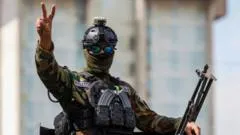
A primary challenge for the administration is the influence of Iranian-backed militias within the country. Since the conflict between the US, Israel, and Iran intensified earlier this year, these militias have frequently targeted the remaining international forces. For example, during the height of the US bombing campaign against Iran, the Irbil base faced intense pressure, with up to 28 drones and missiles targeting the site in a single day. RAF Regiment Gunners, who were among the last British personnel stationed there, reported shooting down more than 100 drones in just the first six weeks of that conflict. These attacks, often launched by Iranian-backed militias in Iraq, underscore the volatile environment the Iraqi government must now manage independently.
The challenge of militia disarmament
Prime Minister al-Zaidi, who assumed office in May, has made public vows to disarm these militias and bring all weaponry under state control following the coalition's exit. He views the centralization of military authority as essential to Iraq's stability. However, the departure of US forces may complicate these efforts significantly.
Several powerful factions have already resisted the government's disarmament plans. There are growing concerns that these groups could see their influence expand in the vacuum left by the withdrawing international coalition. The ability of the Iraqi government to enforce its will on these powerful, armed factions remains one of the most significant unsettled questions for the country's future stability.
What is the historical context of foreign intervention in Iraq?
The current withdrawal represents the third time that UK and US forces have exited the country following major military interventions. Each period of deployment has left a distinct legacy on the region's stability and a significant human cost. The historical timeline of these major interventions includes:
- 1991: Tens of thousands of US and British troops were deployed to Iraq following the invasion of Kuwait by Saddam Hussein.
- 2003: The US-led invasion, known as Operation Iraqi Freedom, was ordered by President George W. Bush to remove Saddam Hussein and eliminate purported weapons of mass destruction—which were later found not to exist. This era was marked by a fierce sectarian insurgency that cost tens of thousands of lives, including nearly 4,500 US military personnel and 179 British military personnel.
- 2014: Forces returned to Iraq to combat the rapid territorial gains of the Islamic State.
While US President Donald Trump celebrated the current withdrawal as a "victory" and a way to exit a "quagmire" caused by bad decision-making in the past, the transition remains fraught with regional complexities. The historical pattern of intervention and withdrawal continues to shape the current political and security landscape in Iraq.
FAQ: UK and US troop withdrawal from Iraq
What was the primary goal of Operation Inherent Resolve?
The primary goal was to defeat the Islamic State (IS) through military operations, training, and capacity building of local forces. The mission sought to prevent the group from maintaining territorial control and to support the Iraqi Security Forces in reclaiming their country.
Is the threat from the Islamic State completely gone?
No, the threat persists in a diminished capacity. A UN report indicates that several hundred IS fighters remain, though they are currently limited to unsophisticated operations. The RAF will continue missions in Syria to prevent them from regrouping.
What role will the US play in Iraq after the withdrawal?
The United States plans to shift from a combat role to providing targeted training and intelligence support to its Iraqi partners. While combat troops are leaving, the US Central Command remains operational and is now based in Jordan.
How has the withdrawal affected Iraqi sovereignty?
Prime Minister Ali al-Zaidi views the withdrawal as a milestone for Iraqi sovereignty, allowing the state to take full responsibility for its security. However, the government must still prove it can control domestic militias and maintain stability independently.
What are the main security risks facing Iraq now?
The main risks include the potential resurgence of IS remnants and the influence of Iranian-backed militias. These groups have previously targeted international bases and pose a challenge to the central government's efforts to centralize military authority.
Key takeaways
- The withdrawal of UK and US troops marks the official end of Operation Inherent Resolve in Iraq.
- The coalition successfully trained over 111,000 Iraqi Security Forces and 21,000 Peshmerga troops.
- Iraq faces significant challenges in disarming powerful Iranian-backed militias following the exit.
- The US will transition to providing intelligence and training support rather than direct combat operations.
- IS remnants still exist, with a UN report noting several hundred fighters remain active.
The future of regional stability
The conclusion of the coalition's military mission in Iraq represents a significant shift in Middle Eastern geopolitics. While the territorial defeat of the Islamic State is a documented achievement, the transition to Iraqi-led security is untested in the face of ongoing militia activity and regional tensions with Iran. The success of this new chapter depends on whether the Iraqi government can successfully consolidate its monopoly on force and manage the complex web of local and regional interests that have defined the country for decades.