
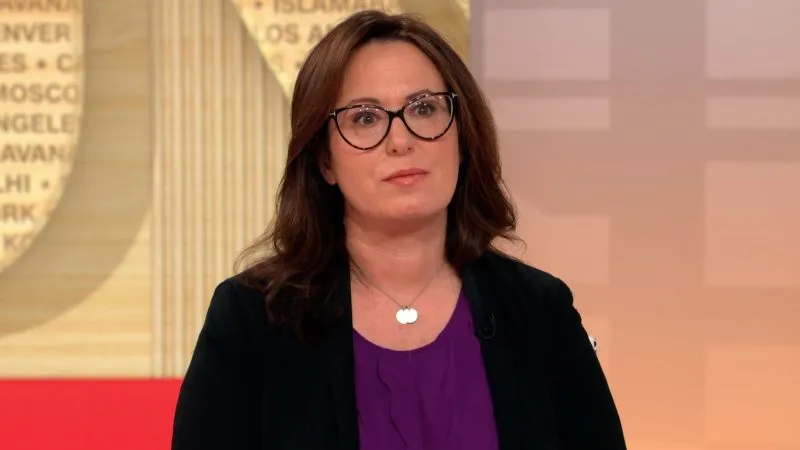
Why did Donald Trump target the judge and his family?
Donald Trump's decision to direct personal attacks toward the judge and the judge's family during his Mar-a-Lago speech was a calculated rhetorical move. According to CNN's Maggie Haberman, these attacks are not merely incidental outbursts but part of a broader strategy to undermine the perceived legitimacy of the court. By focusing on the individuals overseeing the case, the former president attempts to shift the narrative from his specific legal vulnerabilities to a broader critique of judicial impartiality.
This tactic serves several psychological and political purposes. First, it seeks to delegitimize the legal authority of the court by painting the presiding official as biased or personally invested in the outcome. Second, it creates a sense of personal grievance that resonates with his political base, framing the legal process as a personal vendetta rather than a pursuit of justice. By involving the family of the judge, the rhetoric moves from professional critique to personal confrontation, a hallmark of the former president's communication style.
The mechanics of delegitimization
The strategy of attacking the judiciary often relies on the concept of 'lawfare,' a term frequently used by Trump and his supporters to describe legal actions they claim are weaponized for political ends. By attacking the judge, Trump aims to create a cloud of doubt over any future rulings, ensuring that even if the legal process proceeds according to standard protocols, a segment of the public will view the results as predetermined and unfair.
This process of delegitimization is not just about the immediate case at hand but about the long-term perception of the legal system. By casting doubt on the neutrality of the bench, the rhetoric aims to prepare his supporters for any unfavorable verdict, framing it as an inevitable consequence of a rigged system rather than a legal finding based on evidence. This creates a defensive perimeter around his political identity, where legal setbacks are reinterpreted as political persecutions.
What was the context of the Mar-a-Lago speech?
The speech at the Mar-a-Lago resort occurred immediately following Trump's arraignment on felony charges, a pivotal moment in his legal history. The setting of the speech—his private club and residence—provided a controlled environment where he could speak directly to his supporters without the immediate interference of traditional media scrutiny. This allowed for a highly curated version of events to be broadcast to his base.
The timing of the address was crucial. By speaking shortly after the arraignment, Trump was able to seize control of the news cycle, preventing the legal details of the indictment from becoming the sole focus of public discourse. Instead, the focus shifted to his reaction and his interpretation of the proceedings. This proactive stance is a key component of his political messaging, ensuring that he remains the primary narrator of his own legal battles.
The Mar-a-Lago environment also serves a symbolic purpose. By delivering this address from his own stronghold, he reinforces a sense of normalcy and defiance, signaling to his followers that despite the legal proceedings, he remains in command of his personal and political domain. This setting transforms a moment of legal vulnerability into a moment of political strength.
How does this reaction impact the legal proceedings?
The aggressive reaction from the former president introduces significant complexities into the ongoing legal proceedings. While political rhetoric does not technically change the law, it creates a high-pressure environment for the court and the legal professionals involved. The attacks on the judiciary can lead to increased scrutiny of every procedural decision, as any ruling made by the judge will be analyzed through the lens of the perceived bias established during the Mar-a-Lago speech.
Furthermore, such rhetoric can influence the jury selection process and the overall atmosphere of the trial. If the public perception of the court is sufficiently compromised, it becomes harder to maintain the appearance of a neutral and fair trial. This tension between the political arena and the courtroom is a central theme of the current legal landscape surrounding the former president.
The pressure also extends to the legal staff and the courthouse itself. When a high-profile figure targets the individuals within the judicial system, it can create an atmosphere of intimidation or, conversely, a heightened sense of defensive scrutiny from the court's officers. This complicates the administrative and procedural aspects of the trial, as the court must navigate not just the legal arguments, but the political fallout of every motion and ruling.
Potential judicial responses
Courts often have mechanisms to address attempts to influence proceedings through public pressure. Judges may issue warnings, restrict certain types of commentary, or implement stricter gag orders to protect the integrity of the trial. However, the challenge remains that while these measures can manage the courtroom, they are often less effective at controlling the broader political narrative being played out in the media and among the electorate.
A gag order, for instance, might prevent specific legal arguments from being made in a certain way, but it cannot stop a political speech delivered at a private residence. This creates a bifurcated reality where the courtroom operates under strict rules of decorum and evidence, while the political arena operates under the rules of mass communication and emotional resonance. The judicial system is thus forced to fight a two-front battle: one against the legal merits of the case and another against the public perception shaped by political rhetoric.
What does Maggie Haberman's analysis reveal about Trump's strategy?
Maggie Haberman's analysis suggests that Trump's behavior is a consistent application of his long-standing political playbook. According to the CNN report, the attacks are designed to maintain his momentum and keep his supporters engaged. By framing the legal system as an adversary, he transforms a legal defense into a political crusade, which is a much more effective tool for fundraising and base mobilization.
Haberman highlights that this approach is not just about defending against specific charges, but about reinforcing a worldview where the legal system is an instrument of political opposition. This strategy ensures that even in the face of significant legal setbacks, the former president can maintain a position of strength within his political movement. The reaction at Mar-a-Lago was a clear signal that he intends to continue using the courtroom as a secondary political stage.
Ultimately, Haberman's insights point to a strategy where the legal process is secondary to the political narrative. The goal is not necessarily to win the legal battle in the traditional sense, but to win the political battle by using the legal proceedings as fuel for his campaign. This approach turns every indictment into an opportunity for mobilization, ensuring that the legal challenges serve the political objectives rather than hindering them.
Key takeaways
- Trump's attacks on the judge are a strategic attempt to undermine judicial legitimacy.
- The Mar-a-Lago speech allowed Trump to control the narrative immediately following his arraignment.
- Rhetoric targeting the judge's family aims to personalize the legal conflict for his supporters.
- The reaction complicates the legal process by creating intense public and political pressure on the court.
- Haberman identifies this as a method to transform legal challenges into political mobilization.
FAQ: Donald Trump indictment reaction
Why did Trump attack the judge personally?
Donald Trump attacked the judge to delegitimize the legal proceedings and frame the case as a politically motivated attack. By targeting the individual overseeing the case, he attempts to cast doubt on the impartiality of the court and the fairness of the entire judicial process.
What was the purpose of the Mar-a-Lago speech?
The Mar-a-Lago speech was intended to allow Trump to control the media narrative following his arraignment. By speaking from his own residence, he could deliver a curated message directly to his supporters and frame the legal charges as part of a wider political vendetta.
How does this affect the trial?
The aggressive rhetoric can create a highly charged atmosphere that complicates the trial. It puts pressure on the judge and may influence public perception, making it more difficult to maintain the appearance of a neutral and impartial legal proceeding in the eyes of the public.
Is this a new strategy for Trump?
According to Maggie Haberman, this is a consistent application of Trump's existing political strategy. He frequently uses personal attacks and claims of political persecution to maintain support and transform legal challenges into opportunities for political mobilization and fundraising.
Does attacking the judge have legal consequences?
While political attacks do not change the legal facts of a case, they can lead to judicial interventions. Judges may issue gag orders or other restrictions to protect the integrity of the trial and prevent the proceedings from being unduly influenced by outside political pressure.
Conclusion
The Donald Trump indictment reaction represents a sophisticated fusion of legal defense and political campaigning. Through his Mar-a-Lago speech, Trump successfully pivoted from the specifics of his felony charges to a broader critique of the American judicial system. As analyzed by Maggie Haberman, this strategy aims to delegitimize his opponents and solidify his standing with his political base. While these tactics may not alter the legal merits of the indictment, they profoundly impact the public perception of the justice system and ensure that the legal battles remain a central fixture of the ongoing political landscape.




