
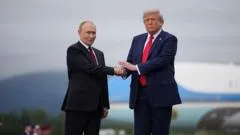
How does the Russian diesel deal impact US energy markets?
The administration's plan to import significant quantities of Russian diesel aims to reduce high fuel costs for American consumers, especially in the Midwest. President Trump announced that the US would receive hundreds of thousands of tonnes of diesel from Russia in the coming months. To facilitate this, the President ordered the Treasury Department to suspend existing restrictions that had previously blocked Russian diesel from global markets. The primary goal is to provide relief to agricultural states where diesel is essential for farm machinery and transport.
Despite the administration's optimism, the market response has been mixed. While the deal was intended to drive down prices, diesel has remained well above $6 a gallon. This suggests that the immediate relief sought by the administration has not yet materialized for the American voter. Furthermore, the deal has faced significant political opposition within the United States.
Domestic and International Backlash
The decision to import Russian fuel has triggered a bipartisan outcry in Washington. Four Republican senators joined Democrats in a formal letter demanding that the President reverse the decision immediately. The senators argued that the move violates a 2022 law passed by Congress, which explicitly banned Russian energy imports to prevent American capital from funding the war in Ukraine. This legal and political friction highlights the tension between domestic economic needs and international foreign policy obligations.
On the international stage, the deal has also drawn criticism. Canadian Prime Minister Mark Carney expressed support for the concept of an energy ceasefire but condemned the diesel agreement. Carney argued that the deal undermines European stability and provides Russia with the financial resources necessary to continue its military operations in Ukraine.
What is the reality behind the Russia-Ukraine energy ceasefire?
The announced energy ceasefire between Russia and Ukraine appears to be a highly contested development with little evidence of actual implementation. President Trump touted the agreement as a major breakthrough for global energy stability, yet the claims were quickly met with skepticism from the parties involved. Ukrainian President Volodymyr Zelensky stated that his administration received no prior notification of any such agreement.
While Zelensky indicated that Ukraine would abide by a formal ceasefire, the situation on the ground suggests otherwise. On the Sunday following the announcement, Russia launched a new series of attacks targeting Ukrainian power plants. This immediate escalation contradicts the notion of a stabilized energy truce. Zelensky noted the discrepancy between the President's social media announcements and the reality of the conflict, suggesting that the Russian leadership was not following the same communications channels.
The relationship between the US administration and the Ukrainian presidency has become increasingly strained. Trump has recently directed criticism toward Ukraine, specifically regarding strikes on Russian oil infrastructure. This tension has led to reports from CNN and the Financial Times that the US has threatened to withhold intelligence sharing and arms sales if Ukraine does not cease its attacks on Russian refineries.
Why are Middle Eastern conflicts complicating energy stability?
New violence in the Middle East is creating additional volatility in global energy markets, potentially offsetting any gains made through the Russian diesel deal. A wave of Houthi attacks targeting Saudi Arabia has escalated tensions in a region already destabilized by the ongoing US-Iran war. These attacks have targeted not only energy infrastructure but also civilian airports, leading to significant casualties.
According to Michael Ratney, a former US ambassador to Saudi Arabia, the Houthi offensive signals a shift in targeting strategy. He noted that the group is moving beyond military and energy targets to strike civilian infrastructure, which increases the risk of higher human tolls. This escalation is viewed as a direct consequence of the broader regional instability caused by the US-Iran standoff.
The potential for a wider regional conflict remains high. Experts suggest that as long as the US and Iran remain in an extended standoff, any further hostilities could lead to a rapid spike in oil prices. This regional instability presents a significant challenge to the administration's goal of maintaining low and predictable energy costs for the American public.
How does the administration view the causes of high fuel prices?
The administration has largely attributed the global energy crisis to the conflict in Ukraine and the resulting disruptions in maritime trade. President Trump has specifically pointed to increased tanker traffic through the Strait of Hormuz as a primary driver of instability. He has suggested that the military threats posed by Iran have necessitated longer, more expensive shipping routes, thereby driving up costs.
However, analysts suggest this perspective may be a strategic attempt to shift responsibility. By focusing on the Ukraine conflict and Middle Eastern maritime security, the administration can frame energy woes as the result of external geopolitical factors rather than domestic policy. This approach attempts to distance the current administration from the economic frustrations of voters who associate high prices with the current leadership.
Ultimately, the complexity of the global energy market means that no single policy can guarantee price stability. The interplay between Russian supply, Ukrainian infrastructure, and Middle Eastern security creates a volatile environment where local decisions in one region have immediate and profound consequences for the global economy and American consumers.
Frequently asked questions
Will the Russian diesel deal lower US gas prices?
The deal aims to lower prices by increasing the supply of diesel, particularly for agricultural use. However, recent market data shows that diesel prices remain high, staying well above $6 a gallon despite the announcement. The actual impact on consumer costs remains uncertain due to broader global volatility.
Is there a functional ceasefire in Ukraine?
There is currently no evidence of a functional energy ceasefire. While President Trump announced an agreement, President Zelensky stated he had no notice of it, and Russia subsequently attacked Ukrainian power plants. The situation remains highly volatile with active hostilities targeting energy infrastructure.
Why is the US government considering cutting aid to Ukraine?
The US administration has reportedly threatened to limit arms sales and intelligence sharing if Ukraine continues to strike Russian oil refineries. This pressure is part of an effort to prevent Ukrainian actions from contributing to worldwide energy shortages and to force a different approach to the conflict.
How are the Houthi attacks affecting energy markets?
Houthi attacks on Saudi Arabian infrastructure and airports increase the risk of regional escalation. Such instability can lead to sudden spikes in oil prices and disrupt supply chains, complicating efforts to stabilize energy costs globally and specifically within the United States.
What is the legal controversy surrounding Russian diesel?
The controversy stems from a 2022 law passed by Congress that banned Russian energy imports. Critics, including several Republican senators, argue that the President's decision to allow diesel imports directly violates this legislation, which was designed to prevent US funds from financing the war in Ukraine.
Key takeaways
- The administration's diesel deal with Russia faces significant bipartisan legal opposition in the US.
- Diesel prices remain high, exceeding $6 a gallon despite new supply announcements.
- The reported Ukraine energy ceasefire has been disputed by President Zelensky.
- Houthi attacks on Saudi Arabia are increasing volatility in global energy markets.
- US policy is under pressure to balance domestic fuel costs with international sanctions.
Conclusion
The administration's attempts to stabilize energy prices through a combination of Russian diesel imports and negotiated ceasefires face immense geopolitical hurdles. While the goal of lowering costs for American consumers is central to the current political climate, the reality of global energy markets is dictated by complex, often conflicting, international dynamics. From the legal challenges in Washington to the ongoing violence in Ukraine and the Middle East, the path to energy stability remains highly uncertain. As voters approach upcoming elections, the ability to manage these overlapping crises will likely be a decisive factor in the political landscape.




