
What is the current status of the Trump energy ceasefire?
The Trump energy ceasefire is currently characterized by a significant discrepancy between US presidential announcements and the reactions from the combatants on the ground. On Sunday, President Donald Trump declared that Russia and Ukraine had reached an agreement to cease strikes on energy infrastructure, effective immediately. However, this announcement has not been met with uniform acceptance from the parties involved.
In Kyiv, President Volodymyr Zelensky expressed surprise, stating the announcement was "news for me." While Ukraine has indicated a willingness to adhere to such a ceasefire, this is contingent upon Russia doing the same. Conversely, the Kremlin has maintained a policy of strategic silence. When asked by journalists about the agreement, Russian President Vladimir Putin's spokesperson, Dmitry Peskov, stated only that "contacts are continuing" and promised to inform the public once there was something concrete to report.
This lack of official Russian confirmation creates a vacuum of certainty. While the US administration presents the ceasefire as a diplomatic breakthrough, the absence of a bilateral signature or a joint statement from Moscow suggests the agreement may be unilateral in its current presentation.
Why does Moscow view the ceasefire as a strategic advantage?
Moscow appears to view the Trump energy ceasefire as a "one-way deal" that provides significant tactical benefits to the Russian Federation while restricting Ukrainian capabilities. Although the Kremlin has not issued a formal endorsement, pro-government media outlets have been vocal about the perceived benefits of the arrangement.
According to the pro-government news outlet Moskovsky Komsomolets, the deal functions as a "gift" for Moscow. The outlet argues that the agreement would effectively prevent Ukraine from targeting the extensive network of Russian oil refineries, while leaving Ukraine's own struggling energy infrastructure vulnerable. The publication noted that Ukraine's remaining oil refineries are already barely functioning after repeated attacks, yet the ceasefire would protect Russia's vast energy assets from similar Ukrainian drone strikes.
The asymmetry of the energy deal
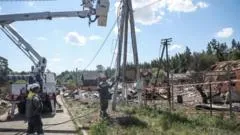
The primary concern for military analysts is the asymmetry of the proposed cessation of hostilities. If Ukraine is prohibited from striking Russian energy production, it loses a key tool used to mitigate Russian war financing and cause domestic fuel shortages. Meanwhile, if Russia does not strictly adhere to the ceasefire, it can continue to degrade Ukraine's power grid and refining capacity, which Zelensky claims has already been targeted throughout the early hours of Monday.
By remaining silent rather than rejecting the deal, Moscow avoids the diplomatic fallout of a direct refusal while potentially reaping the rewards of a restricted Ukrainian drone campaign. This silence allows Russia to maintain its aggressive posture while letting the Trump administration take the lead on the diplomatic narrative.
How does the Trump-Putin diesel deal impact the conflict?
The Trump energy ceasefire is closely linked to a controversial agreement involving the importation of Russian diesel into the United States. This deal forms a central pillar of the current US-Russia energy dynamic, though it remains a point of intense political and economic contention.
President Trump has defended the agreement, asserting that the influx of Russian diesel will benefit US consumers by managing fuel costs. However, widespread skepticism persists regarding whether the actual volumes of diesel involved are sufficient to have a meaningful impact on American pump prices. Beyond economics, the deal introduces a complex layer of political risk for the US administration.
The deal creates a potential flashpoint for future Ukrainian military actions. If Ukraine continues to conduct long-range drone strikes on Russian oil facilities, Russian officials are expected to frame these attacks as direct interference with US economic interests. Furthermore, such strikes could be weaponized by political opponents to claim that the Biden-era or subsequent administrations are undermining the Republican Party's interests ahead of the November midterm elections. For the Kremlin, any disruption to the diesel flow provides a pretext to demand increased restrictions on US support for Kyiv.
What are the conflicting proposals for a ceasefire?
The debate over a ceasefire is complicated by fundamentally different definitions of what constitutes a temporary halt in fighting versus a permanent resolution. While Ukraine has sought specific, time-bound pauses to facilitate democratic processes, Russia has consistently rejected these narrow windows.
President Zelensky has advocated for a 60-day ceasefire to provide the necessary stability for Ukraine to hold presidential elections. In response, the Kremlin has offered a much shorter, one-day cessation of hostilities, specifically intended to allow for the election process. This offer is widely viewed by Western leaders and Ukrainian officials as insufficient and lacking in sincerity.
Dmitry Peskov has reiterated the Kremlin's official stance, stating that Moscow does not seek short-term ceasefires but rather a "lasting peace." However, this rhetoric is contrasted by the actions of the Russian military. On Monday, Russian Foreign Minister Sergei Lavrov stated that Ukraine does not deserve the "respite" that a ceasefire would provide. This suggests that the Kremlin's long-term strategy involves maintaining high-intensity pressure on Ukraine, particularly as winter approaches, to force a settlement on Moscow's terms.
Frequently asked questions
Has Russia officially agreed to the energy ceasefire?
No, Russia has not officially confirmed the agreement. While President Trump announced the ceasefire, Kremlin spokesperson Dmitry Peskov only stated that "contacts are continuing" and that they would provide information when available. Pro-government Russian media have suggested the deal benefits Moscow, but no formal treaty has been signed.
Will the diesel deal lower fuel prices in the US?
The impact on US fuel prices is uncertain. While President Trump claims the agreement to import Russian diesel will benefit consumers, there is significant skepticism among analysts. Many doubt that the volumes of diesel being traded are large enough to significantly influence the broader US energy market.
Why is Ukraine hesitant about the ceasefire?
Ukraine is hesitant because the ceasefire appears asymmetrical. Kyiv is willing to participate only if Russia adheres to the same rules. There are concerns that the deal would prevent Ukraine from striking Russian oil infrastructure while leaving Ukrainian energy targets vulnerable to continued Russian bombardment.
What is the Kremlin's stance on a 60-day ceasefire?
The Kremlin has rejected the 60-day ceasefire proposed by President Zelensky. Instead, Russia offered a one-day cessation of hostilities for elections. Russian officials, including Foreign Minister Sergei Lavrov, have argued that Ukraine does not deserve a respite from the ongoing conflict.
How do Ukrainian drone strikes affect the ceasefire?
Ukrainian drone strikes on Russian oil facilities are a major point of tension. If these strikes continue, Russia may argue that Ukraine is undermining the Trump administration's economic interests and the diesel deal, potentially leading to reduced US military and intelligence support for Kyiv.
Key takeaways
- The Trump energy ceasefire lacks official confirmation from the Kremlin despite US claims.
- Moscow perceives the ceasefire as a strategic advantage that protects Russian refineries.
- A controversial deal to import Russian diesel into the US remains a central political issue.
- Russia has rejected Ukraine's 60-day ceasefire request in favor of a one-day proposal.
- The Kremlin appears to be prioritizing continued military pressure as winter approaches.
Conclusion
The Trump energy ceasefire currently exists more as a diplomatic assertion by the United States than a verified bilateral agreement. The stark contrast between President Trump's optimism and the Kremlin's strategic silence suggests a complex geopolitical maneuvering. While the deal aims to stabilize energy markets and potentially lower US fuel costs through Russian diesel imports, it risks creating new friction points between Washington and Kyiv. As Russia continues to maintain military pressure and Ukraine seeks to defend its remaining infrastructure, the true efficacy of this energy-focused truce remains highly questionable.




