
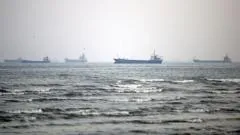
What are the specific details of the attack on the Acers?
The Acers, an oil and chemical tanker flying the flag of Antigua and Barbuda, was struck by multiple projectiles in the waters north of Qatar. According to the United Kingdom Maritime Trade Operations (UKMTO), the incident took place 51 nautical miles (94km) from Madinat al-Shamal. This location is notable because it is considered deep inside the Gulf, making it a rare site for such an engagement.
Maritime intelligence firm Vanguard identified the vessel and noted that it had been sailing toward the Strait of Hormuz waterway prior to the strike. The Strait serves as the critical link between the Gulf and the Gulf of Oman. While the specific nature of the projectiles has not been officially detailed, the UKMTO confirmed that the attack resulted in casualties among the crew. The presence of casualties in an area so far west of previous major incidents highlights the immediate danger posed to merchant crews operating in these waters.
Vessel identification and trajectory
The Acers was operating as a merchant vessel tasked with transporting oil and chemical products. Its trajectory was aimed at the Strait of Hormuz, a chokepoint that handles roughly one-fifth of the world's total oil and gas shipments. The fact that the attack occurred so far west of the typical combat zones suggests a shift in the geographic scope of maritime targeting. Instead of being confined to the immediate vicinity of the Strait or the Omani coast, the reach of these projectile attacks appears to be extending deeper into the Gulf's western reaches.
This shift in trajectory and targeting location complicates the security calculus for shipping companies. As vessels move toward the Strait of Hormuz to facilitate global energy flows, they are now encountering threats in waters previously considered more removed from the primary theater of conflict. The vulnerability of the Acers, a vessel carrying sensitive chemical and oil cargoes, underscores the high stakes involved in maintaining these maritime corridors.
How has the maritime security situation evolved since February?
Merchant vessels have faced repeated attacks in the region since the outbreak of war involving the US, Israel, and Iran in February. The scale of the violence is reflected in data provided by the United Nations' International Maritime Organization (IMO), which reports that at least 24 seafarers have been killed across 93 confirmed maritime incidents. These figures paint a picture of a sustained and lethal campaign against commercial shipping.
The frequency and location of these attacks have created a highly unpredictable environment for commercial shipping. According to Martin Kelly, head of advisory at EOS Risk Group, this latest strike is the first reported attack on a ship this far west of the Strait of Hormuz since September 9. That previous incident involved the Panama-flagged tanker El Gaia in the Strait of Hormuz, north of Oman's Musandam peninsula, which resulted in the deaths of two sailors. The gap between the El Gaia incident and the Acers attack highlights a period of relative geographic stability that has now been broken by this new strike near Qatar.
Why is the Strait of Hormuz currently a conflict zone?
The Strait of Hormuz has been effectively closed to normal commercial transit since the start of the Iran war due to a combination of Iranian missile and drone strikes and a US naval blockade of Iranian ports. Although a preliminary agreement was reached in June to end the war and reopen the waterway, the peace effort collapsed within weeks. This collapse has led to a return to high-intensity maritime friction.
The failure of the June agreement occurred following a resumption of Iranian attacks on shipping and the subsequent reinstatement of the US blockade. Iran has maintained that it will not relinquish control over the waterway. Consequently, Iran has utilized southern routes through Omani waters to target vessels, a tactic designed to bypass its own preferred transit routes through Iranian waters. This strategic maneuvering ensures that even when vessels attempt to avoid Iranian-controlled waters, they remain within the reach of Iranian-directed strikes.
The role of US naval protection
To mitigate the risks to global energy supplies, the US military has implemented a protection program for tankers. This involves providing military escorts for vessels shuttling oil through the Strait of Hormuz to ensure that exports from Gulf Arab states can continue despite the ongoing hostilities. This naval presence acts as a buffer against the direct impact of the missile and drone attacks that have characterized the conflict.
However, the effectiveness of this protection is tested by the evolving tactics of the attackers. While the US military focuses on securing the primary transit routes through the Strait, the attack on the Acers suggests that vessels may still be vulnerable in the broader Gulf area. The mission to keep exports flowing remains a critical priority for the US, but the geographic spread of the attacks presents a moving target for naval security forces.
What is the current impact on global oil exports?
Despite the volatility, crude oil exports through the Strait of Hormuz have maintained a level of stability through military intervention. According to analysts from the shipping data company Kpler, crude oil exports through the waterway have averaged 12 million barrels per day (bpd) over the past two weeks. This volume represents approximately 80% of the pre-war levels of shipping through the strait.
While the 20% reduction highlights the significant disruption caused by the conflict, the current flow suggests that the US-led protection efforts are providing a degree of continuity for the global energy market. The ability to maintain 12 million bpd amidst constant threats of missile and drone strikes is a testament to the scale of the maritime protection efforts, even as the risk to individual vessels, such as the Acers, remains acutely high.
Were there other recent maritime incidents in the region?
There were reports of a fire on another tanker in the Gulf of Oman, located approximately 40km east of Fujairah in the United Arab Emirates, but these reports were later corrected. Maritime intelligence firm Vanguard clarified that there were no indications that a fire had actually occurred on the vessel, which was identified as the Marshall Islands-flagged Dhalkut.
This clarification highlights the difficulty of monitoring and verifying real-time maritime intelligence in a high-conflict zone. The rapid spread of unverified information can create unnecessary market volatility, making the role of agencies like the UKMTO and firms like Vanguard essential for providing accurate situational awareness to the global shipping industry. In an environment where every reported incident can influence energy prices, the distinction between a confirmed attack and a false report is vital.
Frequently asked questions
What vessel was involved in the recent attack north of Qatar?
The vessel involved was the Acers, an oil and chemical tanker flying the flag of Antigua and Barbuda. The ship was struck by multiple projectiles approximately 51 nautical miles north of Madinat al-Shamal, according to reports from the UKMTO and Vanguard.
How many seafarers have died in recent maritime attacks?
According to the International Maritime Organization (IMO), at least 24 seafarers have been killed in 93 confirmed incidents since the conflict began in February. The most recent casualty-producing attack prior to the Acers incident occurred on September 9 involving the tanker El Gaia.
What is the current status of the Strait of Hormuz?
The Strait of Hormuz remains a high-risk zone following the collapse of a June peace agreement. While US naval protection helps maintain exports, the waterway is subject to Iranian missile and drone attacks and a US naval blockade of Iranian ports.
How much oil is currently moving through the Strait?
Crude oil exports through the Strait of Hormuz currently average 12 million barrels per day (bpd). According to Kpler, this figure represents about 80% of the volume that typically passes through the waterway during pre-war periods.
Why is the location of the Acers attack significant?
The attack is significant because it occurred 51 nautical miles from Madinat al-Shamal, which is much further west than recent attacks. This indicates that the geographic range of maritime targeting in the Gulf is expanding beyond the immediate vicinity of the Strait of Hormuz.
Key takeaways
- The Antigua and Barbuda-flagged tanker Acers was struck by projectiles near Qatar.
- At least 24 seafarers have died in 93 confirmed maritime incidents since February.
- Crude oil exports through the Strait of Hormuz are at 80% of pre-war levels.
- The Acers attack is the first of its kind this far west since September 9.
The evolving landscape of maritime warfare
The strike on the Acers underscores the expanding theatre of the conflict between Iran and Western-aligned forces. By moving attacks further west into the Gulf, the operational risks for commercial shipping are no longer confined to the traditional chokepoints. While the US military's efforts to protect tankers have kept exports at 80% of pre-war levels, the increasing unpredictability of projectile strikes suggests that global energy markets remain highly vulnerable to sudden escalations in maritime violence. The transition from concentrated strikes near the Strait to more dispersed attacks in the Gulf represents a challenging new reality for international shipping and maritime security.




