
The emergence of potent synthetic substances
Authorities are increasingly alarmed by the rise of cheaper, more powerful synthetic drugs that are flooding American markets. Unlike traditional narcotics, these new substances are often harder to detect and more potent in small doses. One of the most significant threats identified is an animal tranquilizer known as "tranq," which is being integrated into the illicit drug supply.
The arrival of these synthetics represents a potential acceleration of a decades-long crisis. Because these drugs are often manufactured with minimal cost, they are easily distributed, making them a pervasive threat to urban centers. The complexity of these substances complicates both law enforcement efforts and medical interventions during overdose events.
The threat of tranq
Tranq, an animal tranquilizer, has become a focal point for health officials. Its presence in the drug supply adds a layer of danger to existing addiction patterns, as its sedative effects can be much more profound and harder to reverse than many common street drugs.
Shifting overdose death statistics
National data shows a recent downward trend in drug-related fatalities, though the underlying crisis remains volatile. According to the BBC, drug overdose deaths fell from a peak of approximately 110,000 in 2022 to roughly 70,000 last year. This reduction provides a temporary reprieve in a long-standing public health emergency.
However, analysts warn that these figures may not tell the full story of the current landscape. The shift toward synthetic compounds means that even if total death counts fluctuate, the intensity and difficulty of managing addiction are increasing. The volatility of the synthetic market makes predicting future mortality rates a significant challenge for policymakers.
Political responses and cartel crackdowns
The federal response to the influx of narcotics has taken a more aggressive stance regarding the organizations responsible for distribution. President Donald Trump has pledged a significant crackdown on drug cartels, with a policy of designating many of these groups as terrorist organizations. This move aims to elevate the legal and military response to the supply chain issues.
By treating cartels as terrorist entities, the administration seeks to disrupt the international networks that facilitate the flow of synthetic drugs into the United States. This strategy marks a shift from traditional law enforcement towards a national security framework intended to strike at the root of the supply.
Frontline impacts in Chicago
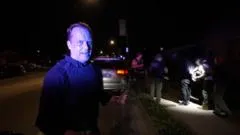
In cities like Chicago, particularly within the South Side communities, the impact of the synthetic drug wave is felt on the ground. Local residents and community leaders are battling the consequences of the crisis in real-time, dealing with the social and physical fallout of highly addictive substances.
The battle in Chicago serves as a microcosm for the broader national struggle. As new substances like tranq enter the streets, the community's ability to respond through healthcare and local policing is being tested. The intersection of high-potency drugs and urban poverty creates a cycle of crisis that is difficult to break through traditional means alone.
Frequently Asked Questions
What is tranq?
Tranq is an animal tranquilizer that has begun appearing in the illicit drug supply in the United States. Its use is particularly concerning to authorities because it is highly potent, inexpensive to produce, and can cause severe sedative effects that complicate overdose responses.
How have overdose deaths changed recently?
Drug overdose deaths in the United States have seen a recent decrease. According to the BBC, deaths dropped from a peak of around 110,000 in 2022 to approximately 70,000 last year, although the rise of synthetic drugs remains a major concern.
How is the US government responding to cartels?
The US government, under President Donald Trump, has pledged a crackdown on drug cartels. This includes a policy of proscribing many of these organizations as terrorist organizations to increase the intensity of the crackdown on the drug supply chain.




