
Why was the 2026 ice loss considered so extreme?
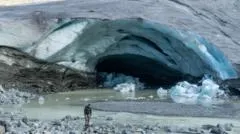
The scale of Swiss glaciers ice loss in 2026 was unprecedented, with an estimated 5.5% of the nation's remaining glacier ice disappearing within a single year. To put this in perspective, glaciologists in the Alps had previously categorized a 2% annual loss as an "extreme" event. The current rate of decline represents more than double that previous threshold, a development that Dr. Matthias Huss, director of Glacier Monitoring Switzerland, described as "disastrous."
Several environmental factors converged to create this perfect storm of melting. The glaciers entered the summer in a compromised state due to a mild winter that left them with significantly less snow cover than usual. When the intense heatwaves of May and June arrived, they struck an already vulnerable landscape. The lack of insulating snow meant the heat directly impacted the glacier ice.
The Albedo Effect and Thermal Vulnerability
A critical driver of this accelerated melting is the change in the surface reflectivity of the glaciers, known as the albedo effect. Fresh snow is highly reflective, bouncing much of the Sun's energy back into the atmosphere. However, as the thin snow layer disappeared during the early summer heatwaves, it exposed the darker glacier ice beneath. This bare ice absorbs significantly more solar radiation than snow, creating a feedback loop where the warmer ice accelerates further melting. This mechanism turned the glaciers into heat sinks, making them even more susceptible to subsequent temperature spikes throughout the summer.
How does glacier melting impact water supplies and the economy?
The melting of Swiss glaciers provides a temporary surge in water availability that masks a growing long-term deficit. Between July and September 2026, Swiss glaciers released approximately 2.2 trillion litres of meltwater. While this volume helped mitigate water shortages during the summer months, it represents the rapid depletion of a finite, frozen resource.
Dr. Matthias Huss warns that this current abundance is unsustainable. He notes that the water running off during these intense heatwaves is essentially "old water" that has been stored in the ice for decades or even centuries. Once this ancient reserve is exhausted, future heatwaves will find much smaller glaciers unable to replenish the water levels required for essential services. The economic consequences of this depletion are already becoming visible.
- Agriculture: Diminishing meltwater threatens the irrigation supplies necessary for farming during dry periods.
- Hydropower: As glacier volumes shrink, the ability to maintain consistent water levels for hydroelectric power generation decreases.
- Transport and Shipping: Low water levels in major arteries, such as the River Rhine, have already reached record lows, complicating shipping navigation and driving up transport costs.
What are the physical risks of thinning glaciers?
Beyond the loss of water, the physical degradation of the Alpine landscape poses direct safety risks. The thinning of glaciers and the thawing of permafrost—the frozen ground that acts as a structural glue for mountain slopes—can destabilize entire mountain faces. This instability increases the frequency and severity of landslides.
In extreme scenarios, these geological shifts can lead to catastrophic flash flooding. A recent precedent was observed in Nepal in August, where a massive collapse of bedrock and glacier ice triggered devastating floods. While the specific triggers in Nepal involved multiple factors, scientists emphasize that long-term glacier thinning and thawing ground significantly heighten the risk of such events globally. As the ice that supports these slopes vanishes, the structural integrity of the high Alps becomes increasingly precarious.
Why are high-altitude glaciers failing to recover?
One of the most alarming observations in the 2026 report concerns the lack of snow at extreme elevations. Even at altitudes of 3,500 metres above sea level—where temperatures are typically low enough to sustain snow cover—researchers found no remaining snow at the end of the summer. Dr. Huss reported seeing ice losses of up to four metres at these highest points, where several metres of winter snow should ideally be present.
This lack of high-altitude snow breaks the fundamental cycle of glacier survival. Snow acts as "glacier food"; under stable climatic conditions, seasonal snow accumulates and eventually compacts into new ice. Without this annual replenishment, the glaciers face a state of permanent starvation. They lose mass at lower, warmer elevations and receive no replacement from above, leading to a process of shrinking that eventually results in total disappearance.
The "Ice Cube" Analogy
Dr. Fabien Maussion, a glaciologist at the University of Bristol, simplifies the complex physics of this process. While glaciers are dynamic systems that gain mass at the top and flow downstream, the current reality is much more straightforward and grim. He compares the current situation to taking an ice cube out of a freezer and watching it melt rapidly in front of one's eyes, highlighting the speed at which the transition is occurring.
Can glacier loss be mitigated through climate action?
While some glaciers, such as the Plattalva in eastern Switzerland, have already vanished, scientists maintain that the fate of the world's remaining ice is not yet entirely sealed. The survival of many Alpine glaciers depends heavily on immediate and significant reductions in global carbon emissions.
The potential for mitigation is greatest in larger ice masses, such as those in the Himalayas and the polar regions. Dr. Huss suggests that if these massive ice reservoirs can be stabilized through aggressive climate policy, the global impact would be profound. Protecting these regions would not only preserve local ecosystems but also significantly limit the rise in global sea levels, a factor that currently threatens billions of people living in coastal areas worldwide.
Frequently asked questions
How much ice did Swiss glaciers lose in 2026?
Swiss glaciers lost an estimated 5.5% of their total remaining ice volume during 2026. This figure is considered extraordinary by scientists, as it is more than double the 2% annual loss that was previously categorized as an extreme event in the Alps.
What caused the rapid melting in 2026?
The melting was driven by a combination of a mild winter with low snow cover and intense summer heatwaves in May and June. The lack of snow exposed darker glacier ice, which absorbed more solar energy and accelerated the melting process through the albedo effect.
Does melting glacier ice help with water shortages?
In the short term, yes. In 2026, glaciers released 2.2 trillion litres of meltwater, which helped ease summer water shortages. However, this is unsustainable because it depletes the long-term frozen reserves that are needed for future droughts and dry periods.
What are the dangers of glacier thinning besides water loss?
Glacier thinning can destabilize mountain slopes and thaw frozen ground, increasing the risk of landslides. In extreme cases, these movements can trigger flash floods, similar to the catastrophic events seen in regions like Nepal when ice and bedrock collapse.
Can we still save the remaining glaciers?
Yes, scientists believe that sharp cuts to carbon emissions can protect much of the world's glacier ice. This is particularly critical for the polar regions and the Himalayas, where stabilizing these ice masses can help limit global sea-level rise.
Key takeaways
- Swiss glaciers lost 5.5% of their ice in 2026, far exceeding previous "extreme" benchmarks.
- Intense heatwaves and low snow cover triggered a feedback loop of accelerated melting.
- Glaciers released 2.2 trillion litres of meltwater, providing temporary but unsustainable relief.
- Glacier retreat threatens hydropower, agriculture, and river navigation like the Rhine.
- Stabilizing large ice masses in the Himalayas and poles can mitigate global sea-level rise.
Conclusion
The 2026 data represents a critical turning point in the stability of the Alpine environment. The transition from manageable annual melting to a 5.5% loss signifies that the thermal limits of many glaciers have been breached. While the immediate release of meltwater provides a deceptive sense of water security, the underlying depletion of these ancient frozen reserves poses a long-term threat to European infrastructure and ecosystems. Addressing this crisis requires a dual focus: managing the immediate risks of mountain instability and pursuing aggressive global decarbonization to preserve the remaining ice masses that regulate the planet's climate and sea levels.