
Why did Ukraine resume strikes on Russian oil sites?
Ukraine paused attacks on Russian oil infrastructure for three days after Donald Trump announced an energy ceasefire last week. Kyiv accused Russia of continuing strikes on Ukrainian energy targets during that period. Ukrainian President Volodymyr Zelensky stated that Russia had hit Ukrainian energy facilities 76 times since the announcement. Ukraine then restarted operations earlier in the week, citing the need to limit Moscow's war funding from oil revenues. The decision drew criticism from Trump, who had arranged a diesel supply deal with Vladimir Putin.
What damage occurred in St Petersburg during the attack?
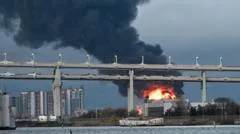
Governor Alexander Beglov confirmed fires at two oil sites that were later extinguished. Twelve apartment buildings and two homes sustained damage. Pulkovo Airport closed temporarily. Mobile internet disruptions were reported as possible. A drone struck a VKontakte data centre, though services remained operational after brief outages. An Ozon logistics centre also caught fire; staff were evacuated with no injuries recorded there, and shipments were halted at the site.
Which other Russian regions faced drone activity that night?
Russia's defence ministry reported intercepting more than 1,000 Ukrainian drones across Russian territory overnight. St Petersburg has experienced prior strikes, including one on its oil terminal in July, though areas nearer Ukraine's border face more frequent threats.
How have US-Russia energy deals affected the conflict?
Washington and Kyiv relations have strained after the US agreed to import Russian diesel to lower American energy prices ahead of midterm elections. The prices rose during the Iran war. Zelensky described the arrangement as effectively supporting Russia's war effort. Trump also suspended several sanctions on Russia, drawing criticism from some US Republicans. On Sunday, Zelensky reported discussions with Trump's negotiators Steve Witkoff and Jared Kushner about next diplomatic steps.
What is the current state of energy infrastructure on both sides?
Both countries have intensified strikes on each other's energy systems ahead of winter. Zelensky said Russia launched nearly 2,700 drones, 1,700 aerial bombs and 66 missiles in the past week, mostly against energy targets. Hundreds of thousands of Ukrainians remain without power. The UN recorded the first two weeks of October as the deadliest for Ukrainian civilians in years. Russian strikes are described by Moscow as targeting military assets.
Frequently asked questions
Has Kyiv claimed responsibility for the St Petersburg strikes?
Kyiv has not issued any comment on the overnight attack. Ukrainian officials have previously stated that strikes on Russian oil facilities aim to reduce revenue for the war effort.
Did the attack affect civilian services in St Petersburg?
Twelve apartment buildings and two homes were damaged. Pulkovo Airport closed briefly and mobile internet faced possible disruption. VK reported its services stayed available after the data centre incident.
What prompted the pause and restart of Ukrainian strikes?
Ukraine halted strikes for three days following Trump's energy ceasefire announcement but resumed after accusing Russia of continued attacks on Ukrainian energy sites.
Are further diplomatic talks planned?
Zelensky confirmed ongoing communication with Trump's negotiators and preparation of next diplomatic steps following recent conversations.
How many drones did Russia claim to intercept?
Russia's defence ministry stated it shot down more than 1,000 Ukrainian drones over its territory during the overnight period.
Key takeaways
- One person died and five were injured in the St Petersburg oil attack on two facilities.
- Ukraine resumed strikes after a three-day pause tied to a US-proposed energy ceasefire.
- Additional damage hit an Ozon logistics centre and a VKontakte data centre.
- US diesel imports from Russia and suspended sanctions have drawn criticism from Kyiv.
- Russia reported intercepting over 1,000 drones across its territory that night.
- Both sides continue targeting energy infrastructure ahead of winter.
Conclusion
The overnight attack on St Petersburg oil facilities marks a continuation of Ukrainian strikes on Russian energy assets. It coincides with renewed diplomatic activity involving US negotiators and ongoing mutual targeting of infrastructure by both sides. Civilian impacts and power shortages remain pressing concerns as winter approaches. The situation continues to evolve amid shifting US policy positions on sanctions and energy trade.




