
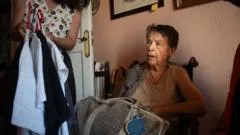
How did the eviction of Maricarmen Abascal trigger a national crisis?
The death of Maricarmen Abascal has transformed a localized housing dispute into a symbol of systemic failure within the Spanish social contract. Abascal was forcibly removed from her long-term residence in Madrid's Retiro district on 23 September, an event that served as a catalyst for mass mobilization across the country. The Madrid Tenants' Union described her situation as a "turning point in the history of this country," noting that her struggle highlighted the lethal consequences of unchecked rental speculation.
The emotional weight of her passing was felt acutely in Madrid's Puerta del Sol, where thousands of protesters had been camping to demand affordable housing. Upon news of her death, the crowd observed a minute of silence, followed by the creation of an altar featuring candles and messages such as "it's not a death, it's a killing." This collective mourning has transitioned into renewed political activism, with protesters maintaining their presence in public squares to demand systemic changes.
The symbolic weight of the Retiro eviction
The specifics of Abascal's eviction underscored the vulnerability of long-term tenants in gentrifying urban areas. Having lived in the same apartment since her parents passed away—a tenancy dating back to 1956—she represented a generation of residents protected by historical rent caps that have since been eroded by market shifts. Her removal on a stretcher, necessitated by her fragile health, became a visual manifestation of the human cost of the housing shortage.
What are the economic drivers behind the rising rents in Madrid?
Skyrocketing rental costs in Madrid are a primary driver of the current unrest, with data from property site Idealista indicating that rental prices in the capital have surged by more than 100% over the last decade. This rapid inflation has outpaced the income of many residents, particularly pensioners who rely on fixed monthly payments. The case of Abascal illustrates the extreme disparity between traditional rents and modern market rates driven by property investment firms.
The financial pressure on Abascal was exemplified by the actions of Urbagestión, the company that acquired her property in 2018. According to reports, the company increased her monthly rent from €500 to €2,650. Even a subsequent offer to reduce the rate to €1,650 remained unfeasible, as the new amount was still €300 higher than her total monthly pension. This gap between cost of living and fixed incomes is a central theme in the current national debate.
| Financial Detail | Amount (EUR) | Context |
|---|---|---|
| Original Rent (Pre-2018) | €500 | Historical rate under rent caps |
| Urbagestión Peak Rent | €2,650 | Post-acquisition increase |
| Reduced Offer | €1,650 | Still €300 above pension |
| Abascal's Pension | €1,350 | Estimated based on the €300 deficit |
How has the housing crisis impacted Spanish politics?
The inability of the Socialist-led government to pass urgent housing legislation has directly resulted in the calling of snap elections for 29 November. Prime Minister Pedro Sánchez attempted to address the crisis through two emergency decrees, but these measures were rejected by Congress. This legislative failure has left the government in a minority position, struggling to manage a diverse array of social pressures including the cost of living, immigration, and corruption allegations.
The political response to the crisis has been deeply polarized. While Sánchez argues for a "broader progressive majority" to resist the influence of economic elites, the opposition has been more critical. Alberto Núñez Feijóo, leader of the People's Party, has called for restraint in politicizing the death of Abascal, though the political right generally argues that government intervention in the housing market would inadvertently reduce supply and further drive up prices.
The path to the November elections
The upcoming elections represent a referendum on the government's handling of social stability. Current polling suggests a challenging landscape for the incumbent administration, with the conservative People's Party expected to emerge as the largest party. However, the formation of any stable government remains uncertain, as the People's Party would likely require support from the hard-right Vox party, which currently sits third in the polls. This complexity ensures that the housing crisis will remain a central campaign issue.
What are the social movements and labor responses to the crisis?
Beyond parliamentary debate, the housing crisis has sparked significant grassroots mobilization and industrial action. Tens of thousands of citizens have taken to the streets in major Spanish cities, expressing frustration not only with landlords but also with the state's enforcement mechanisms. Many protesters have directed their anger toward the police, whom they view as complicit in the execution of eviction orders mandated by the courts.
The movement has also moved into the realm of organized labor. Unions have called for a general strike on 11 November to demand comprehensive housing reforms. This intersection of tenant rights activism and labor movements suggests that the housing issue is being treated as a fundamental economic grievance rather than a niche social concern. The chants heard during marches from Puerta del Sol to Parliament, such as "we will not tolerate a single eviction more," reflect a growing intolerance for the status quo.
Frequently asked questions
Why was Maricarmen Abascal evicted?
Maricarmen Abascal was evicted because she could no longer afford the steep rent increases imposed by the property owners. After the company Urbagestión purchased her apartment, the monthly rent was raised from €500 to €2,650, a figure that far exceeded her monthly pension income.
When are the next Spanish elections scheduled?
The snap elections in Spain are scheduled to take place on 29 November. Prime Minister Pedro Sánchez called for these elections following the rejection of his government's emergency housing decrees in Congress, which left his administration unable to implement necessary reforms.
What was the role of the Madrid Tenants' Union?
The Madrid Tenants' Union has been a leading voice in defending Abascal's rights and organizing protests. They have characterized her death as a consequence of rent profiteering and have used her case to highlight the systemic failures of the Spanish housing market.
How did the opposition respond to Abascal's death?
The leader of the People's Party, Alberto Núñez Feijóo, expressed condolences and urged that the tragedy not be used for political exploitation. While the opposition disagrees with the government's interventionist housing policies, they emphasized the need for respect in the face of a person's death.
What is the current state of rental prices in Madrid?
Rental prices in Madrid have seen extreme growth, increasing by more than 100% over the last ten years according to Idealista. This trend has created significant pressure on residents, particularly those in high-demand districts like Retiro, where property values and rents have surged.
Key takeaways
- Maricarmen Abascal's death has become a symbol of the Spanish housing crisis.
- Madrid rents have increased by over 100% in the last decade.
- Snap elections have been called for 29 November following legislative failures.
- A general strike is planned for 11 November to demand housing reform.
The evolving landscape of Spanish social stability
The death of Maricarmen Abascal has acted as a catalyst, exposing the deep-seated fractures within Spanish society and its political institutions. What began as a struggle for a single pensioner has evolved into a nationwide movement that challenges the legitimacy of current housing and economic policies. As the country approaches the November elections, the tension between market-driven property interests and the social right to housing will likely define the political outcome. The ability of future governments to address these structural inequalities will determine whether the current unrest leads to lasting reform or further social fragmentation.




