
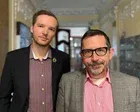
Why are same-sex couples suing the Slovakian government?
Couples are seeking legal recognition for marriages that were legally concluded in other European Union member states, specifically Austria. The plaintiffs argue that while Slovakia does not allow same-sex weddings domestically, it is legally obligated to acknowledge the marital status of citizens who exercised their right to move and reside elsewhere to establish their family life. This is not a request to change Slovakian marriage laws, but a demand for the administrative recognition of existing legal statuses achieved abroad.
Ivan Novotný, 31, and Metod Špaček, 51, both lawyers and former diplomats, are among the primary litigants. Having married in Austria in 2020, they have spent six years without formal recognition in their home country. Their case highlights a practical gap in legal protections: while individual professionals may grant certain courtesies, such as medical information sharing, these actions are discretionary rather than legally mandated. During the Covid pandemic, for example, a doctor treated Špaček and recognized Novotný's relationship by listing him as 'husband' on medical reports. However, Novotný points out that this was due to the doctor's kindness rather than a legal requirement. "If someone wanted to make trouble for us, they could do it," Novotný said. "That’s not how the rule of law should work."
How does the European Court of Justice ruling affect this case?
The legal foundation for these lawsuits rests on a November 2025 ruling by the European Court of Justice (ECJ) regarding a case involving a Polish couple, Jakub Cupriak-Trojan and Mateusz Trojan, who had married in Berlin. The Polish couple challenged the refusal of the Mazovia provincial governor to recognize their German marriage.
The ECJ determined that EU member states are required to recognize same-sex marriages performed in other member states when such marriages are a result of the couples exercising their right to freedom of movement and residence within the bloc and creating or strengthening family life there. This ruling provides the specific legal precedent the Slovakian plaintiffs are using to argue that their Austrian marriages must be acknowledged by their home authorities.
The distinction between recognition and domestic legalization
It is critical to distinguish between the scope of the ECJ ruling and the domestic laws of individual nations. The court's decision does not mandate that member states like Slovakia must allow same-sex weddings on Slovakian soil. Instead, the ruling focuses on the principle of mutual recognition: if a couple has established a family life in another EU country through a legal marriage, that status should be respected when they move or reside within the Union.
This creates a tension where a person's legal identity changes depending on which side of a national border they stand. For Marián Žáry Kukelka, a 44-year-old radio presenter for the public broadcaster STVR, the lack of recognition is a matter of personal identity and tribute. Having married his partner, Ondrej, in Hainburg an der Donau in 2023, Kukelka uses his married name on air, supported by colleagues. However, his official documents still refer to him by his birth name, Marián Kukelka. "It’s a court case for love," he said. "I don’t need that surname to live my life, but for me it’s a kind of tribute to my partner, that I can carry his surname too."
The social and political climate in Slovakia
The legal struggle is occurring against a backdrop of increasing social and political tension for the LGBTQ+ community in Slovakia. The country is described as socially conservative and predominantly Catholic, with no legal provision for same-sex marriage or civil partnerships. Under the government of Robert Fico, the atmosphere has become increasingly hostile.
Last year, the Fico government backed constitutional changes that recognize only two sexes and tightened restrictions on adoption. This political climate is underscored by the memory of the 2022 homophobic attack outside the LGBTQ+ bar Tepláreň in Bratislava, where two people were shot dead. Kukelka noted that the anti-LGBTQ+ rhetoric from many politicians, particularly within the government, contributes to this sense of hostility. He admitted that while he experiences little direct abuse, he often thinks carefully before using terms like "my husband" depending on his audience, noting that he felt more comfortable holding hands in public while visiting Switzerland.
What is the Slovakian government's legal defense?
The Slovakian authorities maintain that they are bound by the nation's existing constitutional and legal framework, which defines marriage strictly as a bond between a man and a woman. The Interior Ministry has stated that its administrative functions cannot override the decisions made by the national legislature or the constitution.
In a letter signed by Interior Minister Matúš Šutaj Eštok, the government explained that because the constitutional definition of marriage is restricted to a man and a woman, they lack the legal basis for formally recognizing foreign marriage certificates. While the ministry acknowledged the primacy of EU law, it argued that recognition for the purposes of freedom of movement does not necessarily equate to the formal administrative registration of a marriage within the national system. The ministry told the Guardian that its administrative work "cannot replace decisions by the legislature or the constitutional legislature."
Conclusion
The lawsuits brought by Novotný, Špaček, and Kukelka represent a fundamental clash between the European Union's principle of mutual recognition and the sovereign constitutional definitions of individual member states. As these cases move through the courts, they will determine whether the right to freedom of movement includes the right to have one's legally established family status recognized by all member states, or whether national definitions of marriage can remain an absolute barrier to administrative recognition.
Key Takeaways
- Slovakian same-sex couples are suing to have their Austrian marriages recognized domestically.
- A 2025 ECJ ruling requires EU members to recognize marriages performed abroad if they involve freedom of movement.
- The Slovakian government argues that its constitution, defining marriage as between a man and a woman, prevents such registration.
- The legal battle highlights the tension between EU-wide rights and national constitutional restrictions.
Frequently Asked Questions
Does the ECJ ruling require Slovakia to allow same-sex marriage?
No. The ruling does not require member states to permit same-sex weddings to take place on their own territory; it only requires them to recognize marriages that were legally concluded in other EU member states.
Why is the Slovakian government refusing recognition?
The government, through the Interior Ministry, states that the Slovakian constitution defines marriage as a bond between a man and a woman, leaving them with no legal basis to register foreign same-sex marriage certificates.
What is the practical impact of non-recognition?
Non-recognition means that legal statuses, such as being a spouse for medical information purposes or carrying a partner's surname on official documents, are not guaranteed by law and instead rely on the discretion of individuals or officials.




