
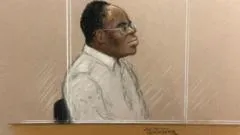
Legal charges and the defendant's background
Dr Vincent Brown, a 65-year-old resident of Islington, North London, faces a series of serious allegations stemming from the 1994 mass killings in Rwanda. The defendant, who previously used the name Dr Vincent Bajinya, is accused of "killing, directing or encouraging" the deaths of members of the Tutsi ethnic group. These charges represent a significant legal undertaking for the UK courts, as Brown is the first person in the country to be formally charged over the genocide.
The prosecution's case involves a specific set of counts that categorize the alleged actions as international crimes. According to the court proceedings, Brown is charged with one count of conduct ancillary to genocide and six separate offences of conduct ancillary to murder as a crime against humanity. These allegations are tied to a specific period in 1994 during which Brown was allegedly involved in six murders.
Before the period of violence, Brown was a prominent medical professional in Rwanda. He qualified as a doctor in the country during the 1980s and eventually rose to the position of head of the Department of Family Health in Kigali. At the time of the genocide, he was living in a Kigali suburb with his wife and young son. The transition from a high-ranking medical official to a defendant in a genocide trial highlights the complex intersection of professional status and criminal accountability during periods of civil collapse.
Trial timeline and judicial proceedings at the Old Bailey
A provisional trial date has been established for the proceedings, which are expected to take place at the Old Bailey. During a recent pre-trial hearing conducted via video link from Belmarsh prison, Mrs Justice Cheema-Grubb set the trial to begin on October 4, 2027. The judge indicated that the trial is expected to last between eight and 12 weeks, reflecting the complexity of the evidence and the nature of the crimes involved.
The legal process is currently in its preparatory stages. A plea and case management hearing has been scheduled for January 15, a date that will be crucial for determining the procedural direction of the case. While Brown has not yet entered a formal plea, he has indicated to the court that he intends to plead not guilty to all charges brought against him. He has consistently denied any wrongdoing regarding the events in Rwanda.
Financial and administrative hurdles also remain part of the legal landscape. The court heard that a bail condition of £100,000, which was imposed earlier in October, has not yet been met by the defendant. This delay in meeting bail conditions adds another layer of complexity to the pre-trial period as the legal teams prepare for the extensive evidentiary requirements of a genocide-related prosecution.
Historical context of the 1994 Rwanda genocide
The charges against Dr Brown are rooted in one of the most violent periods of the 20th century. The 1994 Rwanda genocide, which unfolded over a span of 100 days, resulted in the deaths of an estimated 800,000 Tutsis and politically moderate Hutus. The scale of the slaughter remains a central element of the prosecution's narrative regarding the gravity of the offences.
Prosecutor Bill Emlyn Jones KC provided a harrowing description of the scale of the violence to the court. According to Bill Emlyn Jones KC, the events of 1994 constituted "the most devastating wave of mass killing in modern history." He further specified the intensity of the violence in the capital, stating that 100,000 people were murdered in Kigali alone during the initial days and weeks of the genocide.
The investigation leading to these charges was an extensive international effort. The current prosecution follows a seven-year British investigation into the killings. This long-term inquiry underscores the difficulty of gathering evidence and testimony for crimes committed decades ago in a different jurisdiction, as well as the commitment required to bring such cases to trial within the UK legal system.




