
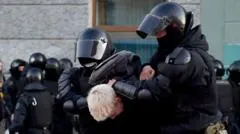
Why are Western countries deporting more Russians?
Western governments tightened immigration rules after a surge in asylum applications and irregular migration. Political pressure from rising support for populist parties contributed to the shift. Russian opposition activists became caught in the broader crackdown. Germany suspended its humanitarian visa programme for Russians last year. The United States increased overall deportations during President Donald Trump’s second term.
How do deportees describe their return to Russia?
Deportees report immediate questioning by FSB officers upon arrival in Moscow. Male returnees often receive military papers requiring registration with enlistment offices. One deportee stated that officers found material on her phone and changed their attitude within seconds. Another former soldier said he prepared for death during the flight because he feared imprisonment or deployment to Ukraine. Several returnees described ongoing police visits and surveillance after release.
Documented outcomes for specific individuals
Anti-war activist Leonid Melekhin was sentenced to six years in prison on charges of justifying terrorism after deportation from the United States. Other cases cited by the Anti-War Committee resulted in eight-year sentences. Katya, whose name was changed for safety, remains under police monitoring and says she feels constantly watched.
What data shows the scale of the increase?
US removals of Russians rose from 222 in 2023 to more than 1,200 in 2025. Germany deported seven Russians in 2023 and more than 110 in 2025. Between 2022 and 2025 more than 21,000 Russians applied for asylum in Germany. The share of positive decisions fell sharply over the same period. EU figures indicate that protection rates for Russian applicants declined from 23 percent in 2024 to around 17 percent in the first nine months of 2025.
Which organisations track the risks inside Russia?
The Nobel Prize-winning group Memorial recorded an increase in political prisoners from 803 to 1,265 during 2025. The Anti-War Committee advises dissidents that the EU is no longer a safe destination. Rights group Kovcheg assists anti-war Russians leaving the country and reports that officials often underestimate the dangers faced by activists.
Frequently asked questions
What happens to Russian army deserters after deportation?
Deserters face criminal charges and possible deployment to Ukraine. One former soldier who provided evidence of an open investigation against him was still deported and later escaped from a military detention facility.
Do all Russian asylum claims receive the same scrutiny?
Decisions are based on individual evidence of persecution. Germany’s BAMF states protection is granted only when there is a well-founded fear. Finnish authorities rejected one couple’s claim five times despite documentation of police visits to relatives.
Are deportations carried out directly to Russia?
Many removals occur via third countries such as Egypt. Activists report that immigration officials sometimes state there is no danger in Russia despite evidence presented.
How has Memorial’s list of political prisoners changed?
The list grew by 462 names during 2025, reaching a record 1,265. The increase reflects intensified repression inside Russia according to the organisation.
What advice do exile groups now give to Russians leaving?
The Anti-War Committee recommends seeking refuge outside the EU because protection rates have fallen and forced returns have risen.
Key takeaways
US deportations of Russians increased from 222 in 2023 to over 1,200 in 2025.
German deportations rose from seven in 2023 to more than 110 in 2025.
Positive asylum decisions for Russians in Germany fell to 6.8 percent in 2025.
Memorial recorded 1,265 political prisoners in Russia by the end of 2025.
Deportees report immediate FSB questioning and military registration upon return.
EU protection rates for Russian applicants declined to around 17 percent in 2025.
Conclusion
Western asylum policies tightened as overall migration pressures grew and political support shifted toward stricter controls. Russian dissidents and deserters who once received higher protection rates now face lower approval chances and rising numbers of forced returns. Data from US and German authorities confirm the scale of the change. Returnees describe surveillance, legal charges and military conscription after arrival in Russia. The trend coincides with record numbers of political prisoners documented by Memorial. Future mobilisation rumours may prompt further departures, yet current policies limit options for those seeking protection.




