
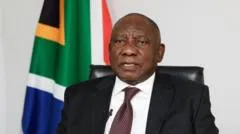
Why has President Ramaphosa ordered a national safety audit?
The decision to launch a mandatory women's safety audit stems from a series of recent murders that have heightened national fear regarding public security. President Cyril Ramaphosa announced the measure following the discovery of 12 women's bodies in a single region east of Johannesburg over a span of just two months. This specific cluster of deaths has acted as a catalyst for a broader national outcry regarding the scale of violence against women in a country that already grapples with some of the highest rates of gender-based violence in the world.
While there has been widespread public concern that these deaths might be the work of a single serial offender, the President noted that the police have not yet found evidence to confirm a single perpetrator. At present, authorities have made four arrests in connection with the recent killings, but the investigation into the exact nature of the perpetrator's identity remains a point of intense public scrutiny. The President admitted that the government has "not done enough" in recent years to protect women and girls, framing the audit as a necessary step toward accountability.
The audit is designed to move beyond reactive policing by addressing the physical environments that facilitate crime. Every municipality in South Africa is now required to begin a women's safety audit without delay. This proactive approach seeks to rectify the environmental vulnerabilities that often go unaddressed in urban and peri-urban planning, moving the focus toward prevention through infrastructural integrity.
Key environmental factors to be audited
The presidential mandate specifically targets several infrastructural and environmental issues that contribute to unsafe conditions. Ramaphosa emphasized that high-risk areas must be identified and addressed through these localized assessments. Municipalities must conduct thorough inspections of the following areas to ensure they do not place women at risk:
- Public Lighting: Identifying broken or insufficient streetlights that create dark, unmonitored zones where women are vulnerable.
- Urban Neglect: Locating overgrown public spaces and abandoned buildings that provide cover for criminal activity.
- Transport Infrastructure: Evaluating unsafe transport routes and facilities used by commuters.
- Recreational Safety: Assessing poorly secured parks and communal areas that lack adequate oversight.
By addressing these specific physical deterrents, the government aims to reduce the opportunities for gender-based violence to occur in public spaces. The mandate implies that the physical state of a municipality—its lighting, its maintenance, and its visibility—is directly linked to the safety of its female citizens.
What are the current statistics regarding violence in South Africa?
South Africa continues to face some of the highest rates of homicide and gender-based violence globally. The scale of the crisis is reflected in both general homicide figures and specific data concerning women, though the distinction in data can sometimes be difficult to parse due to how statistics are recorded.
While South African police statistics do not always differentiate victims by gender, the South African Human Rights Commission has provided critical clarity on the impact of violence during the second quarter of this year. According to the Commission, between April and June, 569 women were killed and 1,052 others survived attempted murder. This data highlights a staggering level of targeted violence against the female population.
On a broader scale, the country's homicide rate remains extremely high. In the same period between April and June, a total of 5,427 people were murdered across the nation. These figures underscore the urgency of the President's call for a multidisciplinary response, as the frequency of both lethal and attempted violence suggests a systemic crisis that extends beyond isolated incidents.
| Metric Category | Data Point (April - June) | Source |
|---|---|---|
| Total Homicides | 5,427 | Police Statistics |
| Female Fatalities | 569 | SA Human Rights Commission |
| Attempted Murders (Women) | 1,052 | SA Human Rights Commission |
How does the government plan to address alcohol-related violence?
As part of a multidisciplinary emergency response, President Ramaphosa has instructed ministers to draw up a plan for an "enforcement package" specifically aimed at reducing violence linked to alcohol consumption. The administration recognizes that while alcohol is not the root cause of gender-based violence, it serves as a significant catalyst for interpersonal aggression.
The President was careful to clarify the distinction between causation and aggravation during his address to the nation. He stated that alcohol does not cause gender-based violence and can never be used as an excuse for it, asserting that the responsibility for violence always lies with the perpetrator. However, he acknowledged that harmful alcohol use is a significant aggravating factor in interpersonal violence.
The proposed enforcement measures are intended to address this aggravating factor as part of a wider prevention effort. By targeting the role alcohol plays in escalating conflict, the government hopes to mitigate the frequency of violent outbursts that lead to gender-based crimes, even while maintaining that the moral responsibility remains solely with the individual committing the act.
What socio-cultural changes does the President advocate for?
President Ramaphosa has emphasized that legislative and policing measures alone are insufficient to solve the crisis of gender-based violence. He argued that true change must begin with a fundamental shift in societal attitudes and the way men and boys are socialized, suggesting that the roots of violence are planted long before physical assault occurs.
The administration is calling for a rejection of patriarchal attitudes that view women as inferior or as subjects to be controlled. According to the President, the cycle of violence begins with subtle behaviors and beliefs that normalize dominance. He identified several specific ways in which these attitudes manifest:
- Mistaking jealousy for love.
- Mistaking control for protection.
- Mistaking coercion for affection.
- Refusing to accept the word "no."
Ramaphosa specifically addressed the concept of gender roles, stating that the burden of male violence has historically been placed on women. He called on men and boys to take the lead in ending this cycle, famously stating that the solution to violence against women cannot be to make women less free. This call for a cultural shift targets the underlying belief systems that allow violence to be perceived as a normal part of life.
Frequently asked questions
What is the purpose of the women's safety audit?
The audit aims to identify environmental hazards that put women at risk. Municipalities must inspect street lighting, overgrown vegetation, abandoned buildings, and transport routes to ensure that public spaces are safe and well-maintained, thereby reducing opportunities for criminal activity and gender-based violence.
Has a serial killer been identified in the recent Johannesburg murders?
At this stage, there is no evidence to confirm that the 12 women found east of Johannesburg were killed by a single perpetrator. While the proximity of the deaths has caused widespread fear of a serial offender, the President stated that police have not established such a link. Four arrests have been made so far.
How many women were victims of violence in the second quarter of the year?
According to the South African Human Rights Commission, 569 women were killed and 1,052 survived attempted murder between April and June. These figures highlight the severe and ongoing threat of gender-based violence facing women in the country.
Will the government take action against alcohol-related crime?
Yes, the President has ordered an enforcement package to address alcohol-related violence. While the administration maintains that alcohol is an aggravating factor rather than the cause of violence, they intend to implement measures to reduce its role in interpersonal and gender-based crimes.
What is the President's view on the root cause of violence?
The President believes the root causes are deeply embedded in societal attitudes. He argued that violence begins with beliefs in female inferiority and the desire for male control, suggesting that cultural shifts regarding respect and consent are as vital as law enforcement.
Key takeaways
- President Ramaphosa ordered municipal safety audits to identify high-risk areas like broken streetlights and unsafe transport routes.
- Twelve women were found dead in a single region east of Johannesburg within a two-month period.
- The South African Human Rights Commission reported 569 female murders and 1,052 attempted murders between April and June.
- The government is implementing an enforcement package to address alcohol as an aggravating factor in violence.
- The President called for a cultural shift to challenge attitudes that normalize the control of women and urged men to lead the change.
Conclusion
The recent surge in violence against women in South Africa has forced a significant shift in the national policy approach. By combining immediate infrastructural audits with long-term socio-cultural advocacy, the Ramaphosa administration is attempting to tackle both the symptoms and the systemic causes of gender-based violence. While the emphasis on street lighting and alcohol enforcement addresses physical safety and immediate triggers, the call for a change in societal attitudes targets the underlying culture of dominance. The success of these multidisciplinary measures will ultimately depend on the effectiveness of municipal implementation and the ability to translate presidential mandates into lasting community safety.