
Where was the epicentre of the magnitude 7.7 earthquake?
The earthquake's epicentre was located approximately 6.2 miles (10km) from the town of Pitaloza Arriba in south-central Panama. This seismic event struck just before 15:00 local time (20:00 GMT) on Friday. The earthquake was registered as occurring at a depth of just 12km, a relatively shallow depth that significantly increases the potential for severe effects on the surface.
The proximity of the epicentre to the town of Pitaloza Arriba explains the intensity of the impact in the south-central region. According to the US Geological Survey, the effects of the quake were "likely to be widespread," a sentiment supported by the fact that approximately 4.6 million people felt moderate to severe tremors as a result of the event. The shallow nature of the quake means the energy was released closer to the crustal surface, where human infrastructure and populations are located.
The role of earthquake depth in surface damage
Geological factors play a crucial role in how much destruction a seismic event causes, and the depth of this earthquake is a primary concern. At a depth of only 12km, the magnitude 7.7 earthquake is classified as a shallow event. The shallower an earthquake is, the more likely it is to have more severe effects on the surface because the seismic waves have less distance to travel and dissipate before reaching the ground.
This shallow depth contributes to the violent ground motion felt by millions. When energy is released close to the surface, the intensity of the shaking is often much higher for those living directly above or near the epicentre. This explains why the impact was so acutely felt in the south-central regions and why the potential for structural failure in buildings was so high across the affected areas. The 12km depth is a critical metric for emergency responders, as it directly correlates to the intensity of the shaking felt by the 4.6 million people affected.
What is the extent of the structural damage reported?
Significant structural damage has been documented in several towns, most notably in Penonomé and Soná. Visual evidence shared online and via news outlets confirms that multiple buildings have collapsed. In Penonomé, verified footage shows that one side of a cathedral has collapsed, including one of its spires. In Soná, video footage has shown a local hotel that has almost completely collapsed. One harrowing video shared online captured a man calling out to anyone who might be trapped under the rubble of a collapsed building.
The damage extends into residential neighborhoods as well. In the southern Herrera province, residents have reported significant cracks in their homes, leading to fears of total collapse. Ricardo Brown, a 74-year-old resident of the Las Minas neighbourhood, told news agency Reuters that his home has cracked, leaving him and his fellow elderly resident in fear that the structure could fall on them. While no casualties have been reported so far, the full extent of the damage is not yet clear, and the situation is being complicated by several large aftershocks reported near the initial earthquake site. These aftershocks pose an ongoing risk to already weakened structures, potentially making the assessment of damage even more difficult for local authorities.
Impact on urban centers and the capital
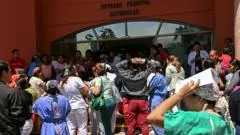
While the most severe destruction is concentrated in the south-central regions, the earthquake's reach extended to Panama City, located approximately 200km from the epicentre. In the capital, the impact appears to have been less catastrophic than in towns like Penonomé or Soná, with damage appearing to be limited to debris falling from roofs. However, the intensity of the shaking was sufficient to cause widespread alarm.
Many people in Panama City were seen evacuating buildings, taking to the streets, or sitting in nearby parks until the shaking had ceased. The psychological impact of the tremors was significant, as the earthquake occurred just three days before Panama was scheduled to hold a national evacuation drill specifically designed for dealing with a major earthquake. The timing of the event meant that the population was already nearing a period of heightened awareness regarding seismic safety, making the sudden reality of the tremors particularly jarring for residents in the capital.
How did the government and international agencies respond?
Panama's President José Raúl Mulino has stated that his entire government is mobilising in response to the earthquake. In an effort to manage the social impact of the disaster, the President added: "What happened should not be used to cause alarm or disorder." This mobilisation is intended to address the immediate needs of the affected regions and manage the ongoing risks posed by the reported aftershocks.
On an international level, the response involved monitoring for maritime threats. Tsunami warnings were initially issued for 11 countries neighbouring Panama following the quake. However, the US Tsunami Warning System subsequently confirmed that there was no tsunami threat. This rapid reassessment was critical in preventing widespread panic across the neighboring coastal nations after the initial magnitude 7.7 release of energy. The mobilization of the government and the clarity provided by international warning systems have been central to managing the immediate aftermath of the disaster.
What is the status of the Panama Canal and maritime safety?
The Panama Canal, a vital waterway linking the Atlantic and Pacific oceans, was unaffected by the earthquake. The authority that oversees marine traffic through the canal confirmed that the seismic event did not impact its operations. This confirmation is essential for global trade, as the canal serves as a primary artery for international shipping.
Despite the massive scale of the earthquake and the fact that 4.6 million people felt the tremors, the infrastructure of this critical transit point appears to have remained stable. Authorities will likely continue to monitor the area, particularly given the reported aftershocks, to ensure that the safety of the canal and its surrounding maritime environment remains uncompromised. The stability of the canal provides a degree of economic reassurance amidst the local devastation reported in the south-central provinces.
Frequently asked questions
Was there a tsunami threat following the earthquake?
Initially, tsunami warnings were issued for 11 countries neighbouring Panama. However, the US Tsunami Warning System later confirmed that there was no tsunami threat.
How many people felt the earthquake?
According to the US Geological Survey, about 4.6 million people felt moderate to severe tremors as a result of the magnitude 7.7 earthquake.
Is the Panama Canal still functioning?
Yes, the Panama Canal was unaffected by the earthquake, according to the authority that oversees marine traffic through the waterway.
What damage was seen in Panama City?
Damage in the capital appears to be limited to debris falling from roofs, though the shaking prompted many people to evacuate buildings and seek safety in streets and parks.
Are there any reported casualties?
No casualties have been reported so far, though the full extent of the damage is still being assessed following the earthquake and subsequent aftershocks.
Key takeaways
- A magnitude 7.7 earthquake struck south-central Panama at a depth of 12km.
- The epicentre was located 6.2 miles (10km) from Pitaloza Arriba.
- Significant damage includes a collapsed cathedral spire in Penonomé and a collapsed hotel in Soná.
- The US Tsunami Warning System confirmed there is no tsunami threat to neighbouring countries.
- The Panama Canal remains unaffected and operational.
- Approximately 4.6 million people felt the tremors.
Conclusion
The magnitude 7.7 earthquake has caused significant disruption across Panama, particularly in the south-central regions. While the shallow depth of the quake led to widespread shaking and notable structural damage in towns like Penonomé and Soná, the immediate threat of a tsunami has been ruled out. With the Panama Canal remaining operational and the government mobilising to respond, the focus now turns to assessing the full extent of the damage and managing the risks posed by ongoing aftershocks.




