
Why has the provincial government in Khyber Pakhtunkhwa been suspended?
The suspension of the Khyber Pakhtunkhwa provincial government was triggered by a formal declaration of a state of emergency by President Asif Ali Zardari. According to the federal government, the decision was necessitated by the provincial administration's inability to effectively manage and curb rising Islamist militancy in the region. Khyber Pakhtunkhwa, which shares a border with Afghanistan, has faced an increasing frequency of militant attacks in recent months.
The federal administration, led by President Zardari, maintains that the security situation required direct intervention to stabilize the province. Minister of Law Azam Nazeer Tarar stated that following the declaration of emergency, a provincial governor would assume control of the administration. The government's position is that the provincial leadership failed in its security obligations, a claim that has become the central justification for the takeover.
The security mandate and militant activity
The north-western border regions have become increasingly volatile, with the federal government and the military pointing to a lack of coordination from the provincial authorities. The government argues that the inability to contain these militant groups posed a direct threat to national security, necessitating the transition from provincial to federal oversight through a governor.
What is the impact of Pakistan PTI detentions on the political landscape?
The detentions of hundreds of politicians from the Pakistan Tehreek-e-Insaf (PTI) party have significantly heightened political instability across the country. Government minister Talal Chaudhry confirmed to Reuters that the provincial chief minister and several cabinet members were taken into preventive custody at the chief minister's residence in Peshawar. While Chaudhry noted that those with active legal cases would face trial, others would eventually be released.
The PTI has vehemently rejected the government's security-based justification for these actions. The party contends that the emergency rule and subsequent detentions are tactical maneuvers designed to prevent supporters from reaching the capital, Islamabad. By targeting the leadership of the provincial government, the state has effectively decapitated the PTI's regional administrative power, complicating the party's ability to organize or respond to the federal mandate.
The scale of the crackdown includes not only political figures but also the family of Imran Khan. His three sisters and hundreds of his supporters were detained prior to a planned march, signaling a broad effort to suppress the party's momentum. This widespread detention of PTI members has transformed a regional administrative issue into a national crisis of political representation and civil rights.
How has the situation escalated regarding Imran Khan's release?
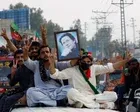
The escalation of tensions is inextricably linked to the ongoing imprisonment of former Prime Minister Imran Khan. For several weeks, PTI supporters have been mobilizing in Khyber Pakhtunkhwa, intending to march to Islamabad to demand his release and secure medical treatment for him. The imposition of emergency rule serves as a physical and legal barrier to these demonstrations.
The confrontation between the 74-year-old former cricket star and the country's military and federal leadership has reached a critical juncture. Khan's family has been vocal in their criticism; specifically, his sons have accused the Pakistani army chief of conducting a personal vendetta against their father. This rhetoric highlights the deep-seated mistrust between the PTI and the country's most powerful institutions.
The history of such protests in Pakistan is marked by volatility. A large-scale protest by the PTI two years ago resulted in fatal clashes with security forces. Furthermore, Khan's arrest in 2023 triggered nationwide riots, during which supporters targeted military installations. The current atmosphere of heavy police presence, paramilitary deployment, and the use of shipping containers to cordon off sensitive areas in Peshawar suggests that authorities are preparing for similar levels of unrest.
What were the failed attempts at negotiation between the PTI and the government?
Despite the current state of emergency, the Zardari administration and the PTI had engaged in several rounds of dialogue over the past month. These talks were aimed at finding a peaceful resolution to the planned march to Islamabad. According to Minister of Law Azam Nazeer Tarar, the federal government expressed a willingness to accommodate the PTI's demands, including granting permission for the march.
However, the negotiations reached an impasse over a specific condition set by the federal government. Tarar stated that the government requested one primary concession: the PTI must publicly condemn militant activities and join the state in its fight against insurgents. The PTI has denied the charges regarding their failure to curb violence, and the refusal to meet this condition has contributed to the breakdown of talks.
The failure of these discussions has led to the current standoff. While the government views the demand as a matter of national solidarity against terrorism, the PTI views it as a political trap designed to force the party into a position of submission. The collapse of these negotiations has paved the way for the emergency measures now being implemented in the province.
Frequently asked questions
Why was a state of emergency declared in Khyber Pakhtunkhwa?
The federal government declared a state of emergency in Khyber Pakhtunkhwa because it claimed the provincial government failed to adequately address rising Islamist militancy. President Zardari's administration argued that the security situation required the suspension of provincial rule to ensure stability in the border region.
Who is currently in custody following the PTI detentions?
Hundreds of PTI politicians, including the provincial chief minister Sohail Afridi and members of his cabinet, have been taken into preventive custody. Additionally, Imran Khan's three sisters and hundreds of his supporters were detained to prevent them from participating in planned protests.
What is the PTI's response to the government's claims?
The PTI rejects the government's claim that the emergency is a security necessity. Instead, the party argues that the suspension of the provincial government and the detentions are political tools used to stop supporters from marching to Islamabad to demand Imran Khan's release.
What role does the military play in this political crisis?
The military is a central figure in the tension, with Imran Khan's family accusing the army chief of a vendetta against the former Prime Minister. The military's influence is also evident in the security response, as paramilitary forces are involved in managing the protests and detentions.
What happened during the previous PTI protests?
Previous large-scale protests by the PTI have been highly violent. Two years ago, demonstrations ended in deadly clashes with security forces, and Khan's 2023 arrest led to nationwide riots where supporters attacked various military installations across the country.
Key takeaways
- President Zardari suspended the Khyber Pakhtunkhwa government, citing an inability to combat Islamist militancy.
- Hundreds of PTI politicians, including Chief Minister Sohail Afridi, have been detained in preventive custody.
- The PTI claims the emergency rule is a tactic to prevent marches to Islamabad for Imran Khan's release.
- The federal government requested that the PTI publicly condemn militancy as a condition for allowing protests.
Conclusion
The suspension of the Khyber Pakhtunkhwa government and the subsequent mass detentions of PTI members mark a significant escalation in Pakistan's ongoing political struggle. By invoking emergency rule, the Zardari administration has attempted to address security concerns regarding militancy, yet this move has simultaneously deepened the divide between the state and the country's largest opposition party. As the PTI continues to demand the release of Imran Khan, the standoff between civilian political demands and the security-focused mandates of the federal government and military remains unresolved, leaving the country in a state of heightened volatility.




