
What are the specific charges in the Nord Stream trial?
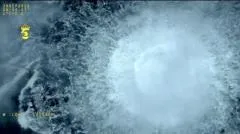
Serhii K faces prosecution in Hamburg for causing an explosion and committing a war crime by attacking civilian infrastructure. German prosecutors allege that the defendant acted on behalf of Ukrainian state agencies to execute the sabotage of the Nord Stream pipelines in September 2022. While the defendant and the Ukrainian government have denied any involvement, the German legal system is proceeding based on evidence collected during a multi-year forensic investigation.
The legal framework of the trial rests on the classification of the pipelines as protected civilian infrastructure. Under German law, sabotage of such vital energy assets is a constitutional offence. The prosecution aims to prove not only the physical act of the explosion but also the organizational link to state-level actors, a claim that remains the central point of contention in this international legal battle. The prosecution's case is built on the premise that the destruction of the Nord Stream 1 and Nord Stream 2 pipelines—the latter not yet in action but already full—constitutes a violation of international humanitarian standards, regardless of the perceived political motivations behind the sabotage.
The legal definition of the attack
The prosecution's case hinges on the argument that the destruction of the Nord Stream 1 and Nord Stream 2 pipelines constitutes a war crime. By targeting infrastructure essential to the civilian population's energy supply, the act is being treated as a violation of international humanitarian standards. Nord Stream 1 had supplied approximately half of Germany's annual demand for natural gas, and both lines have been inoperable since the blasts.
The investigation seeks to establish whether the attack was a legitimate military target or a criminal act against civilian life. This distinction is vital, as the case raises profound questions about what constitutes a legitimate target outside of an open war zone. While the physical damage is undisputed, the legal characterization of the act—whether it was a strategic military strike or a criminal act of sabotage—will be the central focus of the proceedings in Hamburg.
How did German police trace the evidence to Serhii K?
German investigators used forensic crumbs and DNA evidence to connect a rented yacht to the suspects involved in the Baltic Sea explosions. The investigation focused on the vessel 'Andromeda,' which prosecutors believe was used by a crew of four deep-sea divers to plant high-performance explosives approximately 80 meters below the sea surface. These devices, weighing up to 27kg each, were reportedly activated using timers.
The breakthrough in the case came through a combination of digital and biological tracking. Despite the saboteurs attempting to slip back into Ukraine unnoticed, investigators identified DNA left on the boat. This evidence, combined with the use of forged passports, allowed German authorities to build a profile of the suspects. Serhii K, identified in extradition documents as Serhii Kulinich or Serhii Kuznetsov, was eventually tracked to a glamping resort in Italy.
The arrest of Serhii K was a coordinated effort involving Italian authorities. After he was detected crossing into Poland in August 2025, an arrest warrant was issued, leading to his apprehension by the carabinieri at a resort on the Adriatic coast. His ability to travel widely across Europe using a forged passport—likely issued by security services—had previously allowed him to avoid detection during the year following the attacks. A copy of his real passport, seen by the BBC, showed more than two dozen stamps from countries including France, Spain, and Canada, all dated after the Nord Stream attacks.
Who are the other individuals implicated in the investigation?
Volodymyr Zhuravlyov is the only other individual named in connection with the Nord Stream investigation so far. Currently fighting extradition from Croatia, Zhuravlyov was arrested in August while working as a consultant on a film about the pipeline blasts. While he is a competent deep-sea diver, he maintains that he is a civilian and denies any role in the actual operation.
The legal status of the suspects varies significantly across European borders. For instance, a Polish judge previously refused to extradite Zhuravlyov, ruling that a Ukrainian attack on the pipelines could be considered a "just" act within the context of a "bloody and genocidal war." This highlights the difficulty German prosecutors face in securing all suspects, as different national courts interpret the legality of the sabotage through different lenses of international law and regional politics. As one source noted, the Polish stance may be influenced by complex historical feelings toward Ukrainians, Russians, and Germans alike.
The role of military versus civilian status
A critical distinction in the ongoing investigations is whether the suspects were acting as private individuals or as part of a state-sanctioned military operation. The defense for Serhii K intends to argue that his actions were part of his military duties, seeking to produce statements from superiors to support this claim. His military ID shows he was in active service when the pipelines were blown up, suggesting that someone in Ukraine's military command knew his location and activities.
One of the military superiors expected to provide sworn statements is allegedly the man widely named as the mastermind of the entire Nord Stream plot. This element of the defense aims to move the responsibility from the individual to the state, arguing that as a soldier, his actions were governed by military command rather than personal criminal intent. However, the Ukrainian government has remained silent on these specific details, leaving the individual's status in a state of legal and political limbo.
What is the political impact on Germany and Ukraine?
The Nord Stream trial has created significant political friction between Germany and Ukraine, complicating their bilateral relationship. While Germany has become a leading provider of military aid to Kyiv, the domestic political landscape in Berlin is being influenced by the investigation. The far-right AfD party has utilized the case to argue against continued support for Ukraine, framing the sabotage as a consequence of the current geopolitical trajectory.
For Ukraine, the investigation presents a dilemma. Many citizens view the destruction of the pipelines as a strategic success that reduced Russian leverage over Europe. A spokesperson for the Ukrainian foreign ministry, Heorhii Tykhyi, has redirected the focus toward the builders of the pipelines, arguing that the infrastructure itself facilitated Russian aggression by removing the need for gas to transit through Ukraine. He argued that the pipelines "untied Russia's hands" to go to war, and expressed frustration that warnings about this dependency were ignored.
The tension is further exacerbated by the perceived silence of the Ukrainian government regarding the specific individuals caught in the investigation. Contacts close to the suspects have expressed frustration that the state has not addressed the legal implications of the suspects' military status, leaving individuals like Serhii K feeling abandoned by the country they fought to defend. This creates a sense of isolation for those caught between the requirements of military service and the reach of international criminal prosecution.
Frequently asked questions
What caused the Nord Stream explosions in 2022?
The explosions were caused by high-performance explosives planted 80 meters below the Baltic Sea surface. Four devices, each weighing up to 27kg, were used to sever the Nord Stream 1 and Nord Stream 2 pipelines during the early hours of 26 September 2022.
Is Serhii K a member of the Ukrainian military?
Yes, Serhii K is a former member of the Ukrainian Special Forces. His military ID indicates he was in active service at the time of the attacks, which his legal team intends to use as a central part of his defense strategy.
Why is the trial being held in Hamburg?
The trial is held in Hamburg because the explosions are being prosecuted under German law as an offence against the German constitution and as a war crime involving civilian infrastructure within the jurisdiction of the German justice system.
What is the status of Volodymyr Zhuravlyov?
Volodymyr Zhuravlyov is currently fighting extradition from Croatia. He denies any involvement in the sabotage and claims he was in the region as a consultant for a film project related to the Nord Stream incident.
Has Ukraine admitted involvement in the sabotage?
No, the Ukrainian government has officially denied any involvement in the Nord Stream explosions. While some Ukrainian sources suggest the act was strategically beneficial, the state has not claimed responsibility for the attack.
Key takeaways
- Serhii K faces charges of war crimes and causing an explosion in Hamburg.
- Investigators linked the suspects to the 'Andromeda' yacht via DNA evidence.
- The sabotage involved four 27kg explosive devices placed 80m underwater.
- The trial is causing political tension between Germany and Ukraine.
- Volodymyr Zhuravlyov is currently fighting extradition from Croatia.
Conclusion
The Nord Stream trial represents more than a criminal proceeding; it is a high-stakes intersection of international law, energy security, and wartime ethics. As German prosecutors attempt to hold Serhii K accountable for the destruction of vital infrastructure, the case continues to test the legal boundaries of military necessity versus war crimes. The outcome will likely influence how future attacks on dual-use infrastructure are prosecuted and will further define the complex, often contradictory, diplomatic relationship between Germany and Ukraine in the years to come.




