
What are the details of the Nidal Hasan execution?
The Pentagon has scheduled the execution of Nidal Hasan, a former US Army major, for December 3 via firing squad. This event marks a significant milestone in military history, as it would be the first military execution in more than 60 years. Hasan was responsible for the 2009 attack at the Fort Hood base in Texas, an event that remains one of the most devastating incidents in the history of the US military. During that attack, Hasan killed 13 unarmed soldiers and injured 32 others.
The attack occurred in a crowded medical building where deploying soldiers were awaiting check-ups and vaccines. Because of the nature of the target and the victims, the killings on 5 November 2009 are considered the deadliest ever non-combat attack on an American military base. Hasan, who served as a US Army psychiatrist, was in a position meant to treat soldiers for mental illness and other problems, but instead, he "took them at their most vulnerable and gunned down these people where they lived," according to Vice-President JD Vance.
Hasan later admitted in court that he was the gunman and offered apologies for "any mistakes." However, during his 2013 court-martial, he clarified his motivations, stating he believed he was protecting Muslims and the Taliban in Afghanistan from the US military. The upcoming execution follows a strict legal process required by military law: the sentence must be approved by the US President and must undergo a mandatory appellate review, where a higher court inspects the decision and provides a final judgment on its legality before the execution can proceed.
Why is the proposed livestream causing political tension?
Defence Secretary Pete Hegseth announced the plan to livestream the execution to ensure the public understands that there are "serious consequences for these types of things." However, this decision has drawn intense criticism from both sides of the political aisle, with many questioning the purpose and the precedent of such a broadcast.
Republican Senator John Curtis has warned that broadcasting the event risks turning justice into a "bloody spectacle." Drawing a parallel to Rome's history, Curtis suggested that public executions can erode civilizations when they cultivate an appetite for executions as a form of entertainment. He argued that the victims deserve justice administered with solemnity, rather than a broadcast that "diminishes us" and fails to act as an effective deterrent.
Democratic Senator Chris Murphy described the proposal as "disgusting," noting that the idea is reminiscent of executions carried out by the Islamic State group. Even within the Republican party, some have expressed reservations. Georgia lawmaker Austin Scott, a Republican, stated that while he "absolutely" supports the death sentence, livestreaming the event is "what jihadists do," asserting that "America is better than that." Furthermore, former national security adviser John Bolton argued that the livestream is "unnecessary" because interested parties already have the option to view executions in person or report on them. Bolton suggested the move might be an attempt by Secretary Hegseth to please President Trump, adding that such a move is "not really appropriate for a secretary of defence."
The stance of US leadership
The White House and the Vice President have presented differing tones regarding the broadcast and the execution itself. President Trump has expressed his absolute approval of the livestream plan. When asked about the possibility of the visuals being used as propaganda for terrorists, Trump dismissed the concern, focusing on the nature of the perpetrator. "He killed 13, 14 people, badly wounded 20-some-odd people, and he's totally nuts," Trump said. He added that he does not care how Hasan goes, as long as he goes, and believes the death penalty is a "very worthy way of going for him."
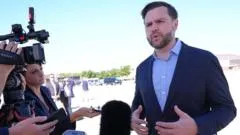
In contrast, Vice-President JD Vance has cast doubt on whether the livestream will actually take place, telling reporters, "I don't know that that's actually going to happen." Vance also expressed personal hesitation regarding the broadcast, stating, "if it's through livestream, I'm not going to be watching it." Vance's comments also touched on the gravity of the crime, condemning the attack as "the worst terrorist attack on American soil outside of 9/11" and highlighting the betrayal of trust inherent in a psychiatrist targeting his own patients.
How have religious and human rights groups responded?
The decision to broadcast the execution has met with significant condemnation from international and religious bodies, who view the move as a departure from established norms of dignity and human rights.
The US Conference of Catholic Bishops condemned the decision to publicly livestream Hasan's execution, expressing "shock and great sorrow" in a formal statement. This religious opposition highlights the moral concerns surrounding the public spectacle of death.
The United Nations human rights office has taken an even firmer stance. Speaking to AFP, the office stated that livestreaming the execution would be "tantamount to a public execution and would breach the absolute prohibition of torture." This perspective aligns with a global standard that views the public broadcasting of death as a violation of fundamental human rights. This stands in stark contrast to the Pentagon's stated intent to use the event as a deterrent. While Amnesty International notes that many nations carry out executions, public executions are increasingly rare; in 2025, only two nations were known to have carried them out publicly, specifically Iran and Afghanistan.
What impact will the livestream have on social media platforms?
The Pentagon has not yet specified the exact platforms or methods for the livestream, but the plan faces significant technical and policy-based hurdles. While the Pentagon reiterated to the BBC that the execution "will be livestreamed," they have declined to provide further details at this time. The White House has also not responded to inquiries regarding whether the execution will be shown on its official social media channels.
The challenge lies in the fact that the White House maintains accounts on major platforms—Meta, YouTube, TikTok, and X—all of which have strict prohibitions against violent or graphic content. The following summary outlines the potential conflicts with these platforms' policies:
- Meta (Instagram, Facebook, Threads): Explicitly bans any livestream of capital punishment.
- YouTube: Bans "violent or gory content intended to shock or disgust viewers." While they allow exceptions for "public interest," the application to a government-sanctioned execution remains unconfirmed.
- TikTok: Bars "extremely graphic, violent, or disturbing content," specifically including the "moment of someone's death" or the "shooting of an individual." A TikTok spokeswoman indicated that their policy against such content remains the priority regardless of the context.
- X: Prohibits content that "glorifies" violence, though moderation standards have shifted recently.
Currently, Meta, YouTube, and X have not responded to requests for comment on whether they would uphold their existing policies if the execution were broadcast by the government.
Key takeaways
- Nidal Hasan is scheduled for execution by firing squad on December 3 following his 2009 Fort Hood attack.
- Defence Secretary Pete Hegseth proposed livestreaming the event to demonstrate the consequences of terrorism.
- The UN human rights office warns that livestreaming the execution breaches the prohibition against torture.
- Major social media platforms like Meta and TikTok have strict policies against broadcasting graphic violence or death.
- The execution will be the first US military execution in over six decades.
FAQ: firing squad execution
Will the execution be broadcast on social media?
The Pentagon has confirmed the execution will be livestreamed, but has not specified the platform. Major services like Meta and TikTok have strict prohibitions against broadcasting death or graphic violence, which may prevent the event from being shown on their channels despite government sanction.
What is the legal process for a military execution?
Military law requires that any execution be approved by the US President. Additionally, the decision must undergo an appellate review, where a higher court inspects the legality of the sentence and the proceedings before the execution can move forward.
Why is the execution being performed by firing squad?
The Pentagon has announced that Nidal Hasan will be executed by firing squad for his role in the 2009 Fort Hood attack. This method is being used as part of the military's sentencing for his crimes against the US Army.
Has the government addressed concerns about terrorist propaganda?
President Trump addressed concerns that the footage could be used as propaganda by stating that the nature of Hasan's crimes makes the death penalty a worthy punishment. He expressed that the perpetrator's mental state and actions justify the sentence regardless of how it is conducted.
What is the international view on public executions?
The UN human rights office views the livestreaming of an execution as a breach of the prohibition against torture. Globally, public executions are rare; according to Amnesty International, only a few nations carried them out in 2025, such as Iran and Afghanistan.
Conclusion
The plan to livestream Nidal Hasan's firing squad execution has ignited a profound debate regarding the intersection of justice, deterrence, and human dignity. While the Pentagon and the President view the broadcast as a necessary demonstration of consequence, critics argue it risks trivialising death and violating international human rights standards. The technical challenge of navigating social media content policies adds another layer of complexity to the event. Ultimately, the decision reflects a significant tension between the desire for public accountability and the preservation of civilised legal standards in the face of extreme terrorism.




