
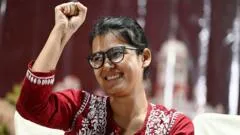
Who is Neha Bora and how did they become a prominent activist?
Neha Bora is a 29-year-old PhD student at the prestigious Jawaharlal Nehru University (JNU) and a theatre artist who currently serves as the president of the All India Students' Association (Aisa). A long-standing member of the Left-wing organisation for a decade, Bora has transitioned from campus-based politics to national visibility. Their background includes growing up in various cities due to their father's career as an army officer in Uttarakhand, followed by studies at Delhi University and Ambedkar University.
Bora's prominence in the Indian political landscape is characterized by a series of high-stakes confrontations with law enforcement. Viral footage has recently captured them being detained by female police officials, climbing barricades, and participating in street demonstrations. Despite the intense media scrutiny, Bora maintains that their actions are consistent with the traditions of Left-wing student activism, suggesting that the heightened attention is largely a product of the ubiquitous presence of cameras rather than a departure from standard activist practices. In a recent interview with BBC Bangla, they noted, "I know it happened in front of the camera so it seems like it's something different... It's just that there is a camera on me, so people think something different is happening."
The transition from campus to national stage
While Bora has been active in student politics for years, their leap into the national consciousness occurred during the summer protests led by the Cockroach Janta Party (CJP). Their involvement intensified when they joined scientist and educationist Sonam Wangchuk in a hunger strike to protest education reforms and paper leaks. Neha and Aisa had been protesting these issues for a long time, making the decision to join Wangchuk an "obvious choice," according to Bora.
The summer protests saw a shift in focus from the movement's primary figure to Bora's personal resilience. While much of the initial attention was focused on Wangchuk, whose reputation helped galvanise the movement, Bora's outspokenness and combative speeches began to draw significant notice. The commitment was most visible when, after Wangchuk and others were moved to hospital, Bora continued their fast despite having lost 8kg. Even while being hospitalised, they maintained their resolve, stating in a video: "The fight continues. Once I've recovered, we'll meet you again on the streets to continue our fight for our right." This period solidified their reputation as a leader capable of sustaining momentum even under extreme physical duress.
What are the current protests targeting in India?
The latest wave of demonstrations, scheduled for October 10 at Jantar Mantar, targets the integrity of India's electoral processes. The Cockroach Janta Party (CJP), a Gen Z-led satirical movement, is demanding the resignation of Chief Election Commissioner (CEC) Gyanesh Kumar. The core of the allegation is that the electoral rolls were manipulated to provide an unfair advantage to Prime Minister Narendra Modi's Bharatiya Janata Party (BJP).
It is important to note that both the Election Commission and the BJP have formally rejected these accusations of manipulation. However, the movement has gained momentum by tapping into broader discontent regarding electoral reforms. This current unrest follows a summer of significant disruption, including the CJP's protests over education reforms, which only concluded in July following the resignation of Education Minister Dharmendra Pradhan. Although Neha Bora is not a member of the CJP, they have stated that Aisa would participate in the upcoming protests to "protect democracy."
How does Gen Z activism challenge the Modi administration?
The emergence of Gen Z-led movements represents one of the most significant challenges to Prime Minister Narendra Modi's 12-year tenure. Unlike traditional political opposition, these movements often originate online through satirical or grassroots digital channels before manifesting in physical street protests. The CJP is a prime example of this shift, utilizing digital engagement to mobilise large numbers of young citizens around specific policy grievances.
These protests are not isolated incidents but are part of a broader landscape of political friction. While the CJP focuses on specific reforms, established opposition parties like the Congress have also taken to the streets. Recent headlines have been dominated by videos of Congress leaders, including Rahul Gandhi and Priyanka Gandhi Vadra, being shoved, jostled, and detained during demonstrations. This convergence of satirical youth movements and traditional political opposition creates a multi-fronted challenge to the current administration's authority, as the visibility of both Gen Z leaders and veteran politicians increases through viral social media content.
What are the personal and political risks faced by Bora?
Being at the vanguard of these movements has brought significant personal and legal risks to Neha Bora. Their outspoken criticism of high-ranking officials, including Prime Minister Modi and Home Minister Amit Shah, has led to direct friction with both the state and their own family. Bora has noted that their parents are staunch supporters of the BJP, leading to significant domestic disagreements over their political stances.
Legal and physical threats have also become a reality for the activist. In Uttar Pradesh, the BJP lodged at least three police complaints against Bora following what were termed "objectionable remarks" directed at the chief minister. These complaints arrived just two days after Aisa filed a police complaint alleging that Bora had received death threats. Physical hostility has also been documented; during a protest in Jharkhand, an individual allegedly threw ink at Bora, an incident that was captured and shared on social media. A photo shared by Bora on Instagram showed their face streaked with ink stains, though police did say they had detained the man involved.
The role of the street in Indian politics
For Bora, the constant cycle of protest and detention is not an anomaly but a fundamental component of Indian democracy. They argue that significant social transformations in the country have historically been driven by street-level movements rather than parliamentary proceedings. "The streets have always dictated the course of politics in this country and they will continue to do so, more so in the coming few years," they told BBC Bangla.
This perspective frames their activism not as a pursuit of fame, but as a necessary engagement with the political realities of the nation. By positioning the street as the primary site of change, Bora and the movements they support are asserting that political legitimacy is won through public demonstration and direct confrontation rather than through the halls of parliament.
Frequently asked questions
What is the Cockroach Janta Party (CJP)?
The CJP is a Gen Z-led online satirical movement that has transitioned into a significant force for street protests in India. They recently led successful demonstrations regarding education reforms and are currently campaigning for the resignation of the Chief Election Commissioner over alleged electoral roll manipulation.
Who is Gyanesh Kumar?
Gyanesh Kumar is India's Chief Election Commissioner (CEC). He is currently the target of protests led by the CJP, who allege that he has overseen the manipulation of electoral rolls to benefit the ruling BJP. The Election Commission and the BJP have both denied these claims.
What is the All India Students' Association (Aisa)?
Aisa is a Left-wing student organisation known for its active role in campus politics. Neha Bora has served as its president for the past two years. The group is frequently involved in protests regarding education reforms, paper leaks, and broader democratic rights.
Why is Neha Bora's identity significant in these protests?
Bora represents a new generation of Indian activists who use both traditional methods, like hunger strikes, and modern visibility to challenge the status quo. Their use of "they/them" pronouns and their ability to bridge the gap between student politics and national movements make them a symbolic figure for Gen Z activism.
What happened during the Jharkhand protest?
During a protest march in the state of Jharkhand, an individual allegedly threw ink at Neha Bora. The incident was documented through photos shared on social media, showing Bora with ink-stained skin, and resulted in the detention of the alleged assailant by the police.
Key takeaways
- Neha Bora is a 29-year-old PhD student and president of the All India Students' Association.
- The CJP is leading protests seeking the resignation of Chief Election Commissioner Gyanesh Kumar.
- Gen Z-led movements are presenting a significant challenge to Prime Minister Modi's administration.
- Bora has faced legal complaints from the BJP and physical attacks, including an ink-throwing incident.
- Protesters allege electoral roll manipulation, though the Election Commission denies these claims.
The shifting landscape of Indian dissent
The rise of figures like Neha Bora and movements like the CJP indicates a fundamental shift in how political dissent is expressed in India. By blending digital satire with traditional street activism, Gen Z is bypassing conventional political structures to demand accountability. While the government maintains that these allegations are unfounded, the persistence of these protests suggests that the intersection of youth disillusionment and institutional distrust will remain a defining feature of the Indian political landscape for the foreseeable future.




