
What are the new allegations regarding the Monaco bomb attack?
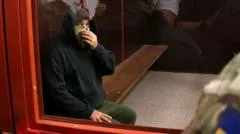
Vitalii Zhykovych, a former security services officer currently imprisoned in Kyiv, alleges that the June 2026 bombing in Monaco was an official mission sanctioned by Ukraine's military intelligence agency (HUR). Speaking in an exclusive interview facilitated by his lawyer, Zhykovych claims that Vladyslav Reut, an active-duty HUR officer he refers to as "The Boss," proposed the operation against Ukrainian-born businessman Vadym Yermolayev.
According to Zhykovych, the mission was not a rogue action but an approved task. He stated that Reut informed him the operation had been authorised and approved by superiors within the Main Intelligence Directorate of the Ministry of Defence. Zhykovych further alleges that while he initially refused to use Anastasia Berezovska—the woman caught on CCTV planting the device—for the actual bombing due to her lack of training, Reut bypassed him. Zhykovych claims Reut communicated directly with Berezovska, providing her with the explosives and instructing her to conduct reconnaissance instead.
The role of Anastasia Berezovska
Anastasia Berezovska was identified as the suspect through surveillance footage showing her leaving a bag containing the explosive device on the doorstep of the Yermolayev family in Monaco. Following the blast, Berezovska fled through Italy and Germany before returning to Ukraine by bus. However, her involvement ended in tragedy; her body was discovered a week after the bombing in a wooded area west of Kyiv, bearing fatal gunshot wounds to the head.
How do the suspects' testimonies conflict?
The investigation into the murder of Anastasia Berezovska has resulted in a direct conflict of testimony between the two men accused of her killing: Vitalii Zhykovych and Vladyslav Reut. Both men are currently facing charges for her death, but they have traded blame for the execution of the shooting.
Initially, Reut provided a confession to investigators and guided them to the shallow grave where Berezovska's body was found. However, during court proceedings, Reut retracted his statement and shifted the blame onto Zhykovych. Zhykovych, maintaining his innocence regarding the murder, has used his recent communications to paint Reut as the primary architect of the entire sequence of events, from the planning of the Monaco attack to the handling of Berezovska.
What was the motive behind the attempt on Vadym Yermolayev?
The motive for the attack remains a subject of intense speculation, with several competing theories ranging from state-sanctioned retaliation to organized crime disputes. Zhykovych has proposed a specific political motive, alleging that Reut claimed the bombing was retaliation for Yermolayev's alleged funding of the annexation of Crimea. Zhykovych suggested this meant Yermolayev was paying taxes to Russia through businesses located in occupied territories.
However, Yermolayev has consistently denied having any remaining business interests linked to Russia. Other theories investigated by authorities include:
- Organized Crime: Speculation that the attack was a result of conflicts between criminal groups involved in lucrative "offisy" (scam call-centres) in Ukraine. This theory gained traction after Yermolayev's son, Artur, was convicted in Estonia earlier this year for defrauding citizens through such networks.
- Civilian Orders: In a recent court appearance, Zhykovych made a contradictory claim, suggesting that Reut had actually told him the attack was not officially authorised by the state, but had instead been ordered by a "civilian side."
- Multiple Targets: Zhykovych also alleged that Reut had discussed a second target, though he declined to name the individual. Sources suggest this target may have been a pro-Russian blogger previously convicted of treason in Ukraine.
What is the impact on the victims and their families?
The Monaco bomb attack caused significant physical and emotional trauma to the Yermolayev family. Vadym Yermolayev and his 13-year-old son sustained serious injuries in the blast, while his partner suffered what has been described as catastrophic injuries. Yermolayev has characterized their survival as a miracle and has publicly called for justice and the truth regarding the perpetrators.
The fallout extends to Berezovska's family, who have strongly contested the characterization of her as an intelligence agent. While Zhykovych claims she was working as an agent "against Muscovy" to fight Russian aggression, Berezovska's husband has dismissed these claims as "nonsense." He believes his wife was unwittingly drawn into the criminal conspiracy. Zhykovych further alleges that Berezovska was motivated by a promised payment of $50,000, a claim that contradicts local reports that she was a refugee saving money to purchase a flat.
How have the Ukrainian authorities responded?
The Ukrainian intelligence services have maintained a cautious stance regarding the allegations of state involvement. The HUR has previously stated its commitment to a full investigation and its intention to provide comprehensive support to law enforcement agencies. The Security Service of Ukraine (SBU) has limited its public comments, referring to Zhykovych only as a "former law enforcement officer."
As the legal proceedings continue in Kyiv, the investigation must navigate the conflicting accounts of state-sanctioned assassination, rogue intelligence operations, and criminal retaliation. The outcome remains uncertain as investigators attempt to reconcile the digital evidence from Monaco with the forensic evidence found in the Ukrainian woods.
FAQ: Monaco bomb attack and investigation
Who was the target of the Monaco bomb attack?
The target was Vadym Yermolayev, a Ukrainian-born businessman with Cypriot citizenship. The attack occurred in Monaco as Yermolayev and his family were returning from a meal. The explosion seriously injured Yermolayev, his 13-year-old son, and his partner.
Who is accused of carrying out the bombing?
Anastasia Berezovska is the woman identified via CCTV as the person who planted the bomb. She was a suspected agent for Vitalii Zhykovych, though her husband denies she was involved in any intelligence activities. Berezovska was later found dead in Ukraine.
What is the connection to Ukrainian intelligence?
Vitalii Zhykovych alleges that the operation was authorized by senior members of the HUR (Ukraine's military intelligence). He claims that Vladyslav Reut, an active-duty HUR officer, proposed the mission and coordinated the logistics, including the explosives used.
Why was Anastasia Berezovska killed?
Berezovska was found dead with gunshot wounds to the head in a forest near Kyiv. Both Zhykovych and Reut are accused of her murder, with each man blaming the other for the shooting that took place after she returned to Ukraine.
What are the possible motives for the attack?
Motives include alleged retaliation for Yermolayev's business ties to occupied Crimea, potential conflicts within Ukrainian scam-call-centre criminal networks, or a rogue operation ordered by civilian entities. The official motive remains under investigation.
Key takeaways
- Vitalii Zhykovych claims the Monaco bomb attack was an authorized HUR operation.
- The suspected bomber, Anastasia Berezovska, was found murdered in a Ukrainian forest.
- Suspects Zhykovych and Vladyslav Reut are trading blame for Berezovska's death.
- Motives range from political retaliation to organized crime disputes involving scam networks.
Conclusion
The investigation into the Monaco bomb attack has evolved from a localized criminal incident into a complex geopolitical mystery involving allegations of state-sponsored assassination. The conflicting testimonies of Zhykovych and Reut, combined with the death of the suspected bomber, have created a web of uncertainty regarding the role of Ukrainian intelligence. Whether the attack was a sanctioned mission, a rogue act by intelligence officers, or a product of criminal underworld disputes remains to be determined. For the victims, the search for accountability continues amidst a landscape of shifting narratives and deep institutional scrutiny.




