
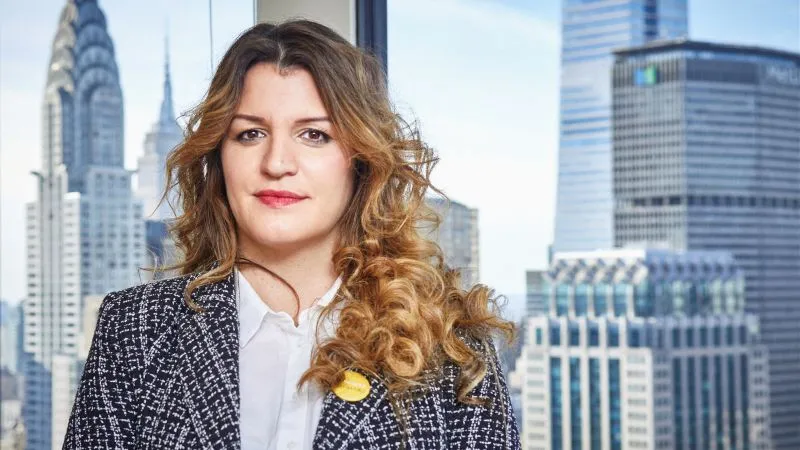
Why did the Marlene Schiappa Playboy cover spark political tension?
The appearance of Marlene Schiappa on the cover of Playboy magazine has created a significant rift within the French administration, drawing sharp criticism from high-ranking officials. While the cover was intended to frame a lengthy 12-page interview regarding women’s and LGBT rights, the choice of publication has been deemed inappropriate by several colleagues within the government. Schiappa, who has been a prominent government figure since 2017, was photographed for the cover wearing a white dress to accompany her discussion on social rights.
Prime Minister Elisabeth Borne has expressed explicit disapproval regarding the timing and nature of the feature. According to reports from the CNN affiliate BFMTV, Borne informed Schiappa that the cover was "not appropriate, especially during this period." This sentiment reflects a deep concern over the optics of a government minister appearing in a lifestyle magazine while the country faces significant internal instability and social unrest. The tension highlights a divide between personal expression and the perceived requirements of ministerial decorum during a national crisis.
The political weight of the Minister's role
Schiappa’s position as the Minister for the Social Economy and French Associations carries significant weight in the French cabinet, but her influence is rooted in her long history of advocacy. Her previous tenure as the country's first-ever Gender Equality Minister saw her lead the implementation of a landmark sexual harassment law. This legislation was a major achievement, empowering authorities to issue immediate, on-the-spot fines to men who engage in street harassment, such as catcalling, harassing, or following women on the street.
Because of this legislative history and her role as a long-time advocate for women's rights, her appearance in a magazine often associated with adult content has become a central focal point for intense debates. For critics, the choice of Playboy challenges the gravity of her previous legislative work; for supporters, it is an extension of her advocacy. The controversy leaves unsettled how a minister's personal branding intersects with their legislative legacy in the eyes of the public and their peers.
How does the Playboy controversy intersect with the French pension crisis?
The timing of the magazine feature coincides with a period of extreme social and political volatility in France. The country is currently navigating a crisis triggered by President Emmanuel Macron’s efforts to advance controversial pension reforms. Most notably, these reforms seek to push the legal retirement age from 62 to 64, a move that has met with widespread public opposition and has resulted in continuous demonstrations, strikes, and rising violence on the streets.
For some political observers, the magazine cover serves as a distraction from the more pressing issues facing the French populace. Sandrine Rousseau, a Green Party politician and fellow women's rights activist, suggested that the focus on Schiappa's appearance acts as a "smoke screen." According to Rousseau, the nation is dealing with critical, high-stakes issues including policing and "people between life and death," which she feels are being overshadowed by the media attention surrounding the minister's choice of publication.
What are the reactions from political opposition leaders?
Opposition figures have used the incident to criticize the overall direction and perceived lack of seriousness in the current French administration. Jean Luc Mélenchon, who secured third place in the 2022 presidential elections, was particularly vocal in his condemnation of both Schiappa and President Macron.
Mélenchon’s critique extended beyond the minister to include the President's own media choices. He pointed out that while Schiappa appeared in Playboy, Macron had recently given an interview to the children's magazine Pif Gadget. Mélenchon expressed his view via social media, stating that in a country where the President expresses himself in Pif and a minister in Playboy, the fundamental problem lies with the opposition, suggesting that France is "going off the rails." His comments frame the controversy not just as a matter of decorum, but as a symptom of a broader political breakdown.
How has Marlene Schiappa and her allies responded?
Marlene Schiappa has not remained silent in the face of criticism, choosing instead to frame the issue as one of bodily autonomy and female empowerment. She defended her decision to appear in the magazine by emphasizing the rights of women to have control over their own bodies and images.
In a response shared via Twitter on Saturday, Schiappa addressed her detractors by stating that defending the right of women to have control over their bodies is something that is "everywhere and all the time." She asserted that "In France, women are free," and characterized her critics as "hypocrites." This defense attempts to bridge the gap between her professional legislative achievements and her personal choices by rooting her actions in the very rights she has fought to protect.
Support for Schiappa has also emerged from within the government. Interior Minister Gérald Darmanin defended her during an interview with the news channel CNews. Darmanin described Schiappa as a "woman of character" and a "courageous female politician." While he noted that her personal style is not his own, he emphasized his respect for her, stating, "I respect [her]."
Frequently asked questions
What was the purpose of Schiappa's Playboy interview?
The interview was intended to provide a platform for Schiappa to discuss critical social issues. The 12-page feature focused on her perspectives regarding women's rights and LGBT rights, aiming to use the magazine's reach to highlight these topics.
Why is the French pension reform causing such unrest?
The unrest stems from the government's decision to increase the legal retirement age from 62 to 64. This policy has faced significant opposition from the public and various political factions, leading to widespread strikes and social instability across France.
Who criticized the minister's magazine appearance?
The minister faced criticism from several high-profile figures. Prime Minister Elisabeth Borne expressed that the cover was inappropriate for the current political climate, while Jean Luc Mélenchon used the incident to criticize the broader state of French leadership.
What law did Schiappa spearhead previously?
As the first Gender Equality Minister in France, Schiappa led the creation of a new sexual harassment law. This law allows for the issuance of on-the-spot fines for men who engage in street harassment, such as catcalling or following women.
How did Gérald Darmanin react to the controversy?
Interior Minister Gérald Darmanin defended Schiappa, calling her a courageous politician with a distinct character. He stated that while her style is not his own, he maintains respect for her as a political figure.
Key takeaways
- Marlene Schiappa appeared on the Playboy cover to discuss women's and LGBT rights via a 12-page interview.
- Prime Minister Elisabeth Borne criticized the cover as inappropriate given the current social crisis in France.
- The controversy occurs amid major French protests and strikes against pension age increases from 62 to 64.
- Schiappa defended her actions as an expression of women's freedom and the right to control their own bodies.
- Interior Minister Gérald Darmanin supported Schiappa, describing her as a courageous politician of character.
Conclusion
The controversy surrounding Marlene Schiappa's Playboy appearance highlights the complex intersection of personal expression, professional decorum, and national political stability in France. While the minister views her participation as an assertion of female agency and rights, her critics see it as a distraction from the profound social unrest caused by pension reforms. As the French government continues to navigate significant opposition and public protests, the debate over Schiappa's actions serves as a microcosm of the broader tensions defining the current political landscape in the country.




