
What happened to the medical transport aircraft missing off the US coast?
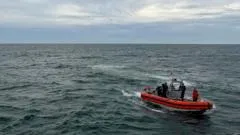
The medical transport aircraft missing off the coast of Nantucket is presumed to have crashed with all six occupants on board. On Sunday evening, the United States Coast Guard officially concluded its search for survivors, shifting the focus toward recovery efforts. The aircraft, a Gulfstream G-100 identified as Heartbeat 104, was engaged in an international medical repatriation mission when it lost contact with air traffic control.
According to a statement from Latitude Air Ambulance, the passengers included four members of the company's team, a patient, and the patient's family escort. The operator confirmed the devastating reality that all individuals on board are presumed dead. The flight was traveling from Bermuda to Boston when the incident occurred, making it a cross-border aviation emergency involving Canadian, Bermudian, and American interests. The search, which took place off the coast of Nantucket, Massachusetts, ended when authorities determined there were no more survivors to be found.
The passenger manifest and crew details
The crew and passengers represented a mix of nationalities and professional roles. According to Latitude Air Ambulance, the six individuals on board consisted of four Canadian nationals and two Bermudian nationals. The crew included two pilots and two medical staff members, both of whom were Canadian citizens. They had flown from Canada to Bermuda specifically to facilitate the medical transport of a patient and their relative back to the United States, as noted by Clarence Togeretz, the director of flight operations at Latitude.
The loss of these individuals represents a significant blow to the medical aviation community. Latitude Air Ambulance, a Canadian company that provides international medical flights for patients returning home, expressed that the loss is "unimaginable." The crew's mission was a standard part of their specialized service: providing professional care and commitment to patients during long-distance medical repatriations. The specific identities of the four Latitude team members and the patient and their escort remain central to the grief expressed by the company's leadership.
When did the flight lose contact and what was the timeline?
The aircraft lost contact with authorities just after 01:00 local time (05:00 GMT) on Saturday morning. Flight data from FlightAware indicates that the aircraft departed from Bermuda's L.F. Wade International Airport at 23:40 local time on Friday night. The flight was scheduled to arrive at Boston's Logan International Airport at 01:30 EDT (05:30 GMT) on Saturday.
The timeline of the disappearance suggests a rapid escalation of the emergency. Shortly after the scheduled arrival time, authorities realized the plane had not arrived and contact had been lost. By Saturday evening, search teams had located a debris field in the waters off the coast of Nantucket, Massachusetts, which was confirmed to be from the missing Gulfstream G-100. This discovery led to the eventual cessation of the search for living survivors by the Coast Guard on Sunday evening. The window between the loss of contact and the discovery of the debris field highlights the intense search efforts conducted over the weekend.
How did the aircraft behave before the crash?
Flight tracking data and radio transmissions indicate that the aircraft experienced significant technical and altitude issues immediately prior to its disappearance. According to FlightAware, the aircraft underwent a dramatic descent, plummeting from an altitude of approximately 7,300m (24,000ft) to roughly 3,300m (11,000ft) before communications were lost entirely. This rapid loss of altitude is a critical indicator of the severity of the situation the crew was facing in the final moments of flight.
Transmissions captured by LiveATC.net and reported by the Boston Globe provide a glimpse into the final moments of the flight. The radio traffic revealed a breakdown in communication between the pilot and the air traffic controller. The controller was heard questioning the pilot's status, asking if they were "coming in blind" and inquiring whether an emergency was being declared. While the pilot's specific response was inaudible due to poor signal strength, the air traffic controller later confirmed that an emergency had indeed been declared by the crew. These fragments of communication paint a picture of a crew attempting to manage a rapidly deteriorating situation while struggling to maintain contact with ground control.
Technical failures and emergency alerts
In addition to the altitude drop, specific technical malfunctions were reported by emergency dispatchers. An area fire dispatcher alerted emergency crews just after 01:00 EDT to prepare for an aircraft experiencing an "electrical issue." This was followed by reports that the aircraft had lost both radio and radar capabilities. The dispatcher's information suggests that the aircraft was effectively flying without its primary means of communication and navigation shortly before it disappeared.
The combination of an electrical issue, the loss of radio and radar, and a massive, sudden drop in altitude points toward a systemic failure on the aircraft. The fact that the aircraft was "coming in blind," as suggested by the air traffic controller, implies that the crew may have been operating without the necessary electronic guidance to navigate the approach to Boston. These technical details—electrical failure, loss of visibility to radar, and loss of communication—are the primary elements that investigators will need to reconcile to understand the sequence of events.
What is the impact on Latitude Air Ambulance and the investigation?
Latitude Air Ambulance is currently focusing on supporting the families of the deceased while cooperating with aviation authorities. The company, a Canadian firm specializing in international medical flights, described the event as an "unimaginable loss." Peter Byl, President of Latitude Air Ambulance, stated that the company would honor its colleagues by remembering their professionalism and commitment to patient care. The company's immediate priority is assisting the families, loved ones, friends, and colleagues of those lost on Heartbeat 104.
The investigation into the cause of the crash will be a methodical and lengthy process. Latitude Air Ambulance has stated that they will not speculate on the specific circumstances of the accident while the investigation is ongoing, emphasizing that determining the cause is a careful and methodical process. Relevant aviation authorities will be tasked with examining the debris field and the recorded transmissions to determine whether the crash was caused by mechanical failure, such as the reported electrical issues, or other factors. The company has committed to continuing its cooperation with all relevant authorities during the ongoing recovery and investigation efforts.
Frequently asked questions
Who were the passengers on the missing aircraft?
The six people on board included four members of the Latitude Air Ambulance team, one patient, and one family escort. The group comprised four Canadian nationals and two Bermudian nationals. The crew specifically included two Canadian pilots and two Canadian medical professionals who were tasked with the medical transport.
Where did the aircraft go missing?
The aircraft went missing in the waters off the coast of Nantucket, a Massachusetts island. The flight was traveling from L.F. Wade International Airport in Bermuda to Logan International Airport in Boston when it lost contact and subsequently crashed in the Atlantic area near the US coast.
What type of aircraft was involved?
The aircraft involved in the accident was a Gulfstream G-100. This specific model was being operated by Latitude Air Ambulance as part of their "Heartbeat 104" mission, providing medical repatriation services for patients traveling internationally.
What were the last known communications from the pilot?
The last recorded communications involved an air traffic controller questioning the pilot about an emergency and whether they were "coming in blind." Although the pilot's direct response was inaudible, the air traffic controller confirmed that an emergency had been declared shortly before the aircraft lost radio and radar contact.
What caused the aircraft to descend rapidly?
While the exact cause is still under investigation, FlightAware data shows the plane dropped from 7,300m to 3,300m. Emergency dispatchers had also received reports of an "electrical issue" and the subsequent loss of radio and radar, suggesting significant technical complications occurred during the descent.
Key takeaways
- Six people, including four Latitude Air Ambulance staff, are presumed dead following the crash.
- The aircraft, a Gulfstream G-100, disappeared off the coast of Nantucket, Massachusetts.
- Flight data shows a rapid altitude drop from 24,000ft to 11,000ft before contact was lost.
- The flight was a medical repatriation mission from Bermuda to Boston.
- Authorities have confirmed the discovery of an aircraft debris field in the search area.
The path toward answers in aviation recovery
The transition from a search-and-rescue mission to a recovery operation marks a somber turning point in the investigation of the Heartbeat 104 accident. As the US Coast Guard and aviation investigators begin the painstaking work of analyzing the debris field, the focus shifts from finding survivors to determining the mechanical or human factors that led to the sudden loss of the Gulfstream G-100. For the aviation community and the families involved, the coming months of forensic analysis will be essential in uncovering why a routine medical transport mission ended in such a catastrophic failure. The investigation will need to account for the reported electrical issues and the sudden loss of radar and radio, seeking to piece together the final moments of the flight from the available data and the physical evidence recovered from the sea.
