
How has the scale of cocaine trafficking changed in Europe?
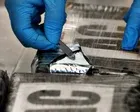
Cocaine seizures in Europe have increased more than fivefold over the last decade, reflecting a profound shift in the continent's security landscape. According to a four-month investigation by the Guardian, the quantity of cocaine intercepted by authorities rose by 471% between 2014 and 2024. This surge is directly linked to the growing footprint of Latin American criminal syndicates that are increasingly integrating with local European mafia organisations.
The intensification of trafficking is mirrored by the scale of production in South America. The UN Office on Drugs and Crime’s 2026 World Drug Report indicates that global cocaine production in 2024 reached between 3,800 and 4,700 tonnes, a figure more than four times higher than the levels recorded in 2014. This massive influx of supply has turned Europe into a primary target for traffickers, as the market offers significantly higher profit margins compared to the United States. Consequently, Europe now accounts for approximately one-quarter of global cocaine consumption.
The economic drivers of the drug trade
The shift toward Europe is not merely a matter of logistics but one of economics. While the US has historically been the primary market, the sheer volume of cocaine now being produced—reaching an estimated 4,100 tonnes in 2024—has forced criminal organisations to diversify their destinations. European markets provide a lucrative outlet that helps offset the risks associated with increasingly sophisticated law enforcement interventions. As a result, European police forces have begun confiscating more drugs than their American counterparts since the beginning of the decade.
Which criminal organisations are operating within Europe?
A diverse array of cartels and factions from across Latin America have been identified as active participants in the European criminal ecosystem. While official investigations have confirmed the presence of these groups in at least 12 countries, experts suggest the actual reach is much broader. These organisations often act as 'business emissaries,' establishing presence without necessarily maintaining massive, permanent cells in every location.
The identified groups include several high-profile entities:
- Mexico: The Sinaloa cartel and the Jalisco New Generation cartel (CJNG).
- Brazil: The Primeiro Comando da Capital (PCC) and Comando Vermelho (CV).
- Colombia: The Clan del Golfo, along with the ELN and dissident factions of the Farc.
- Venezuela: The Tren de Aragua gang.
- United States/Central America: The Barrio 18 and MS-13 gangs.
- Ecuador: The Lobos and Choneros factions.
According to Víctor Manuel Sánchez Valdés, an expert at the Autonomous University of Coahuila, the Sinaloa and CJNG cartels may have a presence in more than 20 European countries, though they often operate through brokers rather than large-scale local infrastructure.
Where are these criminal networks most active?
The geographical footprint of Latin American organised crime is expanding beyond traditional maritime gateway countries. While Spain, Portugal, the Netherlands, Belgium, and France remain central hubs due to their coastal access and major ports, the influence of these networks is moving deeper into the continent.
Recent intelligence and police operations have highlighted new areas of concern:
- Western and Southern Europe: Stronger presence in Spain, Portugal, France, and Belgium.
- Central and Eastern Europe: Growing activities in Germany, Romania, Croatia, Slovakia, and Bulgaria.
- The Balkan Route: Latin American groups are increasingly appearing in Romania and Bulgaria.
- Emerging Hubs: Recent operations have even uncovered Mexican-run methamphetamine labs in southern France, north-eastern Poland, and Brandenburg, south of Berlin.
Furthermore, an unpublished report from the São Paulo public prosecutor's office, which utilized data from the Brazilian intelligence agency (Abin), suggests that the PCC alone operates in 16 European countries. This list includes the UK, Ireland, Iceland, Serbia, Sweden, Switzerland, and Turkey, indicating a much wider distribution than previously documented.
What is the impact of rising drug production in South America?
The expansion of criminal networks in Europe is underpinned by a massive increase in the cultivation and processing of coca in South America. The sheer volume of raw material available has transformed the global drug trade into a high-output industry.
Key statistics regarding production include:
- Cultivation area: Coca cultivation has reached a record 385,000 hectares, which is three times the amount recorded in 2014.
- Production volume: Total production has grown roughly fourfold in ten years, with 2024 seeing record highs.
- Regional dominance: Colombia remains the primary producer, with current production levels exceeding the era of the Medellín and Cali cartels.
This surge in supply creates a feedback loop: as production increases, the ability of cartels to fund complex, transnational operations grows. This funding allows them to invest in the 'joint ventures' with European mafias that the Guardian investigation identified. These partnerships allow Latin American groups to exploit local expertise in logistics and money laundering, even in regions where they lack a physical, long-term presence.
FAQ: Latin American Organised Crime in Europe
How many European countries are affected by these cartels?
While police investigations have officially confirmed activity in at least 12 countries, intelligence suggests the number is higher. For instance, the Brazilian PCC is suspected to operate in 16 countries, including the UK, Ireland, and Turkey, while Mexican cartels may have emissaries in over 20 nations.
Why is Europe becoming a primary target for cocaine traffickers?
Europe offers significantly higher profit margins for drug traffickers compared to the United States. As production in South America reaches record highs, criminal organisations are shifting their focus to European markets to maximise their financial returns, leading to a rise in local consumption and seizures.
What are the main Latin American groups involved?
The most prominent groups include Mexico's Sinaloa and CJNG cartels, Brazil's PCC and Comando Vermelho, Colombia's Clan del Golfo, and Venezuela's Tren de Aragua. These groups use various methods, including 'joint ventures' with local European mafias, to move products.
Is the drug production in South America increasing?
Yes, production has seen a massive increase. According to the UNODC, global cocaine production in 2024 was between 3,800 and 4,700 tonnes, which is more than four times the amount produced in 2014. Coca cultivation has also tripled in that same period.
Are these groups only involved in drug trafficking?
While cocaine trafficking is a primary driver, Europol has noted that Latin American transnational criminal networks are also involved in other crimes. This includes organised property crime, where mobile criminal networks direct operations from within the European Union.
Key takeaways
- Cocaine seizures in Europe have increased by 471% between 2014 and 2024.
- Global cocaine production in 2024 reached between 3,800 and 4,700 tonnes.
- Latin American criminal networks are active in at least 12 to 16 European countries.
- Europe now represents approximately one-quarter of the world's cocaine consumption.
Conclusion
The expansion of Latin American organised crime into Europe represents a significant shift in global security dynamics. The combination of record-breaking cocaine production in South America and the high profit margins offered by European markets has created a powerful incentive for transnational syndicates. As these groups move beyond traditional gateway countries and establish ties with local mafias, the complexity of their operations increases. Addressing this challenge requires coordinated international intelligence and a deep understanding of how these networks leverage both new geographies and existing criminal infrastructures to sustain their growth.




