
Why is Russia threatening nuclear use regarding Kaliningrad?
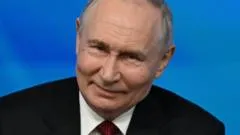
Russian President Vladimir Putin has stated that the use of all available military assets, including nuclear weapons, would be an immediate agenda item if the Kaliningrad exclave faces a direct attack or a Western blockade. Speaking at the Valdai foreign policy forum, Putin framed these comments not as unprovoked threats, but as a necessary defensive stance against Western provocations. He specifically pointed to NATO naval manoeuvres in the Baltic Sea as potential threats to the security of the territory.
The Russian leader argued that while Moscow has no intention of initiating conflict in the near future—citing years like 2029 or 2030—it must remain prepared for aggression. He emphasized that the Russian military arsenal remains unparalleled, even when compared to the nuclear capabilities of nations such as France and the United Kingdom. This rhetoric serves as a direct response to Western claims that Russia is preparing for large-scale warfare in the coming years.
How are hybrid warfare incidents affecting European security?
Western allies are experiencing an increase in hybrid warfare activities, which are widely attributed to Russian influence, particularly within Poland and the Baltic states. These incidents involve non-traditional military tactics designed to destabilize or intimidate, ranging from airspace violations to the presence of suspicious drones. Recent reports highlight the growing frequency and seriousness of these incursions.
Recent hybrid warfare examples in the Baltics and Poland
In the past week, Poland reported a Russian helicopter entering its airspace adjacent to the Kaliningrad border. Similarly, Lithuania has expressed that its population feels under constant threat due to frequent drone incursions into its sovereign airspace. These activities create a climate of psychological pressure and operational uncertainty for NATO members.
Germany has also heightened its alert levels following a significant incident in August, where a drone armed with explosives was discovered on the tarmac at Leipzig airport. German Chancellor Friedrich Merz noted that the country is actively preparing for further hybrid attacks, which he characterized as potentially "serious." This trend suggests that the battlefield is shifting toward civilian and dual-use infrastructure, complicating traditional defense strategies.
What is the strategic significance of the Suwalki Gap?
The Suwalki Gap is a critical piece of geography that Western military planners fear could become a primary flashpoint in a conflict between Russia and NATO. This narrow strip of land borders the Russian exclave of Kaliningrad and the Russian-allied state of Belarus, serving as the only land link between the Baltic states and their NATO allies in mainland Europe. Military analysts suggest that rather than a direct invasion of Kaliningrad, Russia might attempt to seize this corridor to create a land bridge to the exclave, effectively cutting off Lithuania and Estonia from the rest of the alliance.
In response to these potential vulnerabilities, Lithuania has taken proactive measures. The Lithuanian Prime Minister informed the BBC that the nation has developed specific evacuation plans in the event of a Russian invasion. Furthermore, the security of this corridor is reinforced by the presence of thousands of NATO troops stationed in the region to act as a deterrent against territorial seizure.
How has the conflict in Ukraine impacted the Russian economy?
The ongoing war in Ukraine has resulted in measurable economic strain for the Russian Federation, particularly as Ukraine targets critical energy infrastructure. President Putin admitted during his speech that Ukrainian strikes on Russian oil refineries have yielded results, contributing to a loss of approximately 1% of Russia's GDP. This admission highlights the effectiveness of Ukraine's strategy to diminish the Kremlin's ability to finance its military operations.
Russia has responded to these strikes by ramping up attacks on Ukrainian energy infrastructure, a tactic that has been consistently applied every winter since the full-scale invasion began in February 2022. The conflict has evolved into a war of attrition involving both economic targets and civilian infrastructure. For instance, a key bridge in Kyiv was recently targeted by drones, illustrating the continued focus on disrupting the daily lives and logistical capabilities of the Ukrainian state.
What are the risks of automated and digital warfare?
Vladimir Putin warned that the rapid advancement of artificial intelligence and the digitalization of combat could lead to the "gamification" of warfare, ultimately resulting in a descent into barbarity. He expressed concern that the automation of military decisions reduces human accountability and increases the volatility of international conflicts. This perspective suggests that the rules of modern engagement are becoming increasingly blurred by technological shifts.
Using a theatrical analogy, Putin compared the presence of advanced weaponry to a gun placed on a stage at the start of a play; he argued that if such weapons are present, their eventual use becomes almost inevitable. This outlook reflects a broader Russian sentiment that the current international order is shifting as "Western hegemony" weakens, potentially leading to more frequent and unpredictable global conflicts.
FAQ: Kaliningrad and Russian Security Threats
What is Kaliningrad's geographic position?
Kaliningrad is a Russian exclave situated on the Baltic Sea. It is separated from the main body of Russia and is bordered by Lithuania and Poland. This unique position makes it a strategic but vulnerable territory, especially regarding maritime access and land connections through the Suwalki Gap.
Why did Putin mention nuclear weapons?
Putin mentioned nuclear weapons to signal that Russia would use any means necessary to defend Kaliningrad from a blockade or direct attack. He framed this as a defensive necessity rather than an offensive threat, warning European citizens that Russia would respond to any perceived aggression with its full arsenal.
How has NATO responded to these threats?
NATO has maintained that its exercises and activities in the Baltic Sea are defensive in nature and pose no threat to Moscow. Secretary General Mark Rutte has characterized the Kremlin's recent messaging as unhelpful and unnecessary, emphasizing the alliance's role as a defensive organization.
What is hybrid warfare in this context?
Hybrid warfare refers to a blend of conventional military pressure and non-conventional tactics, such as cyberattacks, drone incursions, and disinformation. In the Baltic region, this has manifested as airspace violations by Russian aircraft and drones, aimed at creating instability without triggering a full-scale military response.
What impact has the war had on Russia's GDP?
According to President Putin, Russia has lost approximately 1% of its GDP due to the conflict. This economic impact is partly attributed to Ukrainian strikes on Russian oil refineries, which aim to disrupt the revenue streams used to fund the Russian military effort.
Key takeaways
- Putin warned that Russia will use all weapons, including nuclear, to defend Kaliningrad from blockades or attacks.
- The Suwalki Gap remains a critical strategic vulnerability for NATO's connection to the Baltic states.
- Hybrid warfare incidents, including drone and helicopter incursions, are increasing in Poland and Lithuania.
- Ukraine's strikes on Russian oil infrastructure have contributed to a 1% loss in Russia's GDP.
- Putin warned that the digitalization of warfare could lead to the "gamification" of conflict and increased barbarity.
The evolving landscape of Baltic security
The recent rhetoric from the Kremlin marks a significant escalation in the psychological dimension of the conflict between Russia and the West. By explicitly linking the defense of Kaliningrad to nuclear readiness, Moscow is attempting to redefine the boundaries of acceptable Western military activity in the Baltic Sea. While NATO continues to emphasize its defensive posture, the increasing frequency of hybrid incidents suggests that the tension is no longer confined to traditional military exercises. As the war in Ukraine continues to influence global economic and security structures, the stability of the Baltic region will depend heavily on how both sides interpret the threshold of "direct aggression" in an era of automated and hybrid warfare.