
Why has Delhi Police removed Jantar Mantar as a protest location?
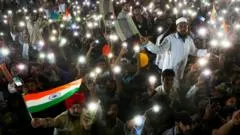
Delhi Police announced in October 2026 that the road beside the historic observatory would no longer host demonstrations. The decision followed weeks of large gatherings organised by the Cockroach Janta Party collective. One event drew tens of thousands of participants and preceded the resignation of the federal education minister. Police placed barricades and stationed paramilitary units at both ends of the street shortly afterwards. A later attempt by supporters to reach the site ended in a crackdown. Officials stated that the Supreme Court had recommended identifying alternative venues with adequate facilities. Critics argue the timing reflects concern over protests that directly challenged senior officials.
What are the new demonstration sites and their practical limitations?
Protesters have been directed to three replacement locations. Two lie several kilometres from parliament, while the third is the large Ramlila Ground. Unlike Jantar Mantar, which required no payment, each new site charges daily fees that can reach tens of thousands of rupees. The Ramlila Ground is frequently reserved months ahead. Activists note that these costs and distances reduce access for smaller groups and individuals who previously travelled from distant states. Public transport links to the farther sites are limited, and overnight stays face additional restrictions.
Cost and booking barriers for ordinary citizens
Many long-standing campaigners relied on the free, central location to sustain multi-week or multi-month actions. The requirement to pay for space and to book in advance excludes groups without institutional funding. Campaigners who once arrived with placards and limited resources now face immediate financial hurdles before any demonstration can begin.
How did Jantar Mantar become central to Indian activism?
The site gained its role in 1993 after authorities closed the Boat Club lawns opposite the old parliament building. Successive governments had gradually moved protest areas farther from the seat of power. At roughly three kilometres from parliament, Jantar Mantar allowed visibility while keeping crowds at a controlled distance. Over three decades it hosted farmers, students, survivors of industrial disasters and retired soldiers. Activists formed networks across different causes while using nearby press and political clubs for media access. The location also permitted quick movement to government offices for direct petitions.
What legal steps are challenging the new restrictions?
Petitions have been filed in the Supreme Court contesting the removal of Jantar Mantar from the approved list. Opposition figures and collective leaders have stated that the site belongs to the public and will be reclaimed. The court is scheduled to hear arguments on constitutional rights to free speech and peaceful assembly. Earlier rulings had upheld these rights when infrastructure complaints led to a temporary closure in 2017. The current case will test whether the new alternatives satisfy the same constitutional standards.
How do activists describe daily life during extended protests at the site?
Participants recall sharing tarpaulins during monsoon rains and using nearby public facilities for basic needs. The proximity to media offices and political clubs allowed rapid dissemination of information and occasional visits by elected representatives. Many first-time visitors from other states described the location as a temporary home where stories and strategies were exchanged. Recent rules prohibiting overnight stays have already disrupted this pattern for groups that require sustained presence to maintain pressure.
Frequently asked questions
What triggered the latest ban on protests at Jantar Mantar?
The decision followed large demonstrations by the Cockroach Janta Party collective that contributed to a federal minister's resignation. Police barricaded the site immediately afterwards and redirected future events elsewhere.
Are the new protest venues free to use?
No. Each alternative location charges daily fees that can reach tens of thousands of rupees, and advance booking is required. This replaces the previous free access at Jantar Mantar.
Can small groups still demonstrate near parliament?
The new sites lie farther away, and two lack direct proximity to government buildings. Smaller or resource-limited groups face greater logistical and financial obstacles.
Has the Supreme Court ruled on the change?
The court is currently hearing petitions that challenge the removal of Jantar Mantar. No final order has been issued at the time of reporting.
Did Jantar Mantar host only large events?
No. The site also accommodated individual protesters and small campaigns that lasted weeks or months, providing a visible platform when other avenues were closed.
Key takeaways
Delhi Police ended Jantar Mantar as an approved protest site in October 2026 after major demonstrations by the Cockroach Janta Party collective.
Three replacement venues now require advance booking and daily fees that many smaller groups cannot afford.
The site had hosted sustained campaigns by farmers, disaster survivors and students for more than thirty years.
Petitions challenging the decision are before the Supreme Court on grounds of free speech and assembly rights.
Activists report that overnight stays and direct access to media and officials have become more difficult under the new rules.
Conclusion
The removal of Jantar Mantar as a protest venue marks a significant shift in how public dissent can be expressed in India's capital. The new locations impose financial and geographic barriers that alter the accessibility previously offered by a central, free site. Legal proceedings will determine whether the alternatives meet constitutional requirements. In the meantime, campaigners must adapt their strategies to venues that are both costlier and more distant from the institutions they seek to influence. The long-term effect on the visibility and sustainability of grassroots movements remains to be seen.




