
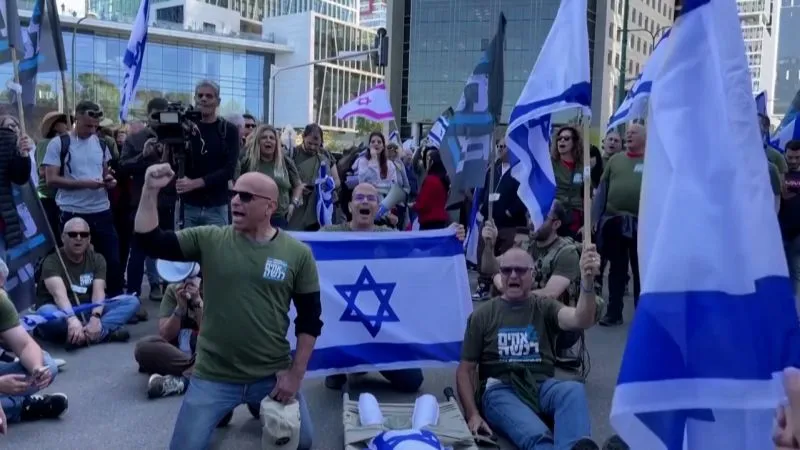
Why are military veterans participating in the protests?
Military veterans are participating in the protests because they view the proposed judicial overhaul as a fundamental threat to the democratic foundations of the state they served to protect. Unlike many other protest groups, veterans carry a unique level of domestic legitimacy and moral authority in Israeli society. Their involvement signals that the discontent is not merely political or partisan, but is perceived as an existential concern for the nation's institutional integrity.
The participation of these individuals often includes high-ranking former officers who command significant public respect. By stepping into the streets, they aim to communicate that the security of the country is inextricably linked to the strength of its legal and democratic institutions. Their presence serves to validate the grievances of the broader civilian population and elevates the discourse from a policy debate to a matter of national survival.
For these veterans, the duty to defend the state extends beyond the battlefield to the preservation of the legal frameworks that define the state itself. They argue that a country cannot remain secure if its internal governance mechanisms are perceived as compromised or unbalanced.
The weight of social legitimacy
The social capital held by veterans provides a shield against accusations that the protests are driven by narrow interest groups. When former members of the Israel Defense Forces (IDF) take to the streets, it forces the government and the public to confront the idea that the reforms are being questioned by those who have sacrificed the most for the state. This demographic is often viewed as the ultimate guardians of the national interest, making their dissent particularly difficult for the administration to dismiss.
This legitimacy acts as a bridge between various segments of the population. While the protests involve a wide array of civilians, the presence of veterans provides a unifying moral core that can resonate with even those who might otherwise be skeptical of mass demonstrations. Their involvement suggests that the concerns regarding the overhaul are shared by the very people responsible for the nation's physical defense.
What are the specific concerns regarding the judicial overhaul?
The primary concern regarding the judicial overhaul is the potential for the executive branch to gain unchecked power over the judiciary. Protesters argue that the reforms would dismantle the system of checks and balances that prevents the concentration of authority in the hands of the government. This fear is rooted in the belief that a weakened Supreme Court would leave citizens unprotected from potentially discriminatory or unconstitutional legislation.
Veterans and legal experts alike have expressed alarm over several specific components of the reform package, including:
- The ability of the government to appoint judges without significant oversight.
- The limitation of the Supreme Court's power to strike down laws deemed unconstitutional.
- The potential for political influence to dictate judicial decisions.
For those in the security sector, these changes are not just legal abstractions; they represent a shift in how the state operates under pressure. The concern is that a government with absolute legislative and judicial control could make decisions that compromise long-term strategic interests or social cohesion in the name of short-term political goals. They fear that the erosion of judicial independence could lead to a precedent where political expediency overrides the rule of law, potentially destabilizing the country's long-term strategic posture.
How do these protests impact Israel's national security?
The protests impact national security by creating significant internal social friction and potentially affecting the readiness and morale of the military. While the IDF is officially non-political, the deep division between the civilian leadership and the veteran community creates a complex environment for military cohesion. The perception of a fractured society can be viewed as a vulnerability by external adversaries, who may exploit internal instability to undermine national unity.
Furthermore, the mobilization of veterans—many of whom are reservists—raises questions about the availability of manpower for future conflicts. If a significant portion of the reserve force is preoccupied with domestic civil disobedience, the immediate operational readiness of the military could be impacted. The tension between the necessity of maintaining a strong defense and the need to address internal democratic crises remains a central challenge for the Israeli leadership. This internal friction risks distracting from external security threats and could lead to a degradation of the social contract between the military and the state.
What is the long-term outlook for the protest movement?
The long-term outlook for the protest movement depends on the government's willingness to engage in meaningful dialogue or pause the legislative process. Veterans have vowed to continue their demonstrations, suggesting that the movement has the stamina and the organizational backbone to sustain prolonged periods of civil unrest. The involvement of such a disciplined and respected demographic indicates that the protests are unlikely to dissipate quickly.
As the movement evolves, it may seek to form broader coalitions with labor unions, tech sectors, and other influential segments of the economy. The ability of the veterans to bridge the gap between military concerns and civilian democratic values will be a decisive factor in whether the movement can force a significant policy reversal or if it will lead to a deeper, more permanent schism in Israeli society. The persistence of the veteran-led movement suggests a high threshold for resolution, requiring more than just temporary concessions to satisfy the core concerns of the participants.
Frequently asked questions
What is the main goal of the Israeli military veterans in these protests?
The main goal of the veterans is to halt the judicial overhaul to preserve the democratic checks and balances within the Israeli government. They aim to protect the independence of the judiciary from political interference, which they believe is essential for the state's long-term stability and security.
Does the military officially support these demonstrations?
The Israel Defense Forces (IDF) maintains a policy of political neutrality. While the institution itself does not support the protests, the individual participation of veterans and reservists is a matter of personal civic engagement that reflects the internal tensions within the broader society.
How do the reforms affect the Supreme Court?
The proposed reforms aim to limit the Supreme Court's authority to review government decisions and strike down laws. Protesters argue this would effectively remove the court's ability to act as a check on executive and legislative power, potentially leading to unchecked governance.
Why are veterans considered a 'backbone' of the movement?
Veterans are considered the backbone because they possess high social credibility and moral authority. Their involvement transforms the protest from a standard political demonstration into a significant national movement that is difficult for the government to dismiss as purely partisan.
Can these protests impact Israel's international standing?
Yes, the protests and the resulting social instability can influence how international allies perceive Israel's stability and democratic health. Persistent internal unrest can lead to concerns regarding the country's ability to maintain consistent long-term strategic policies and social cohesion.
Key takeaways
- Veterans are driving protests because they view judicial reforms as a threat to democratic checks and balances.
- The movement leverages the high social and moral authority held by former military officers.
- Key concerns include the potential for unchecked executive power and the erosion of judicial independence.
- The protests pose a challenge to national security by increasing social friction and affecting military morale.
Conclusion
The involvement of military veterans in the protests against the judicial overhaul marks a critical turning point in Israel's domestic political landscape. By framing the debate around the survival of democratic institutions rather than mere policy preferences, veterans have lent the movement a level of legitimacy that is difficult to ignore. As the tension between the government's reform agenda and the concerns of the security establishment continues to escalate, the outcome will likely define the future of Israel's governance and its internal social stability for years to come.




