
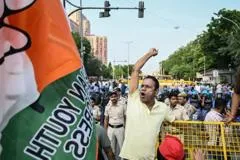
Why are protesters demanding the resignation of the election chief?
The core demand of the current demonstrations is the immediate resignation of Chief Election Commissioner Gyanesh Kumar following allegations of systemic electoral roll fraud. Opposition parties contend that a massive revision of voter lists has resulted in the removal of tens of millions of names, a process they claim disproportionately benefits Prime Minister Narendra Modi's ruling Bharatiya Janata Party (BJP).
The controversy centers on the integrity of the democratic process in India. While the Election Commission and the BJP have formally rejected these accusations of manipulation, opposition leaders argue that the scale of the deletions threatens the fundamental right to vote. During the "March for Democracy," supporters expressed fears that the removal of these names undermines the very fabric of the nation's democratic institutions.
The nature of the electoral roll allegations
The opposition's grievance is not merely about administrative error but suggests a targeted effort to alter the electorate. By challenging the revision process, leaders like Rahul Gandhi aim to highlight what they perceive as a structural vulnerability in how voter eligibility is maintained. The scale of the alleged deletions—reaching into the tens of millions—has turned a technical administrative matter into a high-stakes political crisis.
How is the Supreme Court responding to the legal challenges?
The Supreme Court of India has become the primary legal battleground for this dispute after Congress leader Rahul Gandhi and Congress President Mallikarjun Kharge submitted a formal petition. The petition specifically challenges the conduct of Gyanesh Kumar and seeks judicial intervention regarding the integrity of the voter rolls. In response to the petition, Chief Justice Surya Kant has maintained a cautious legal stance.
Chief Justice Kant noted that because the matter is now before the court, it is considered *sub judice*, preventing him from making public comments on the specific merits of the case. However, he provided a procedural assurance to the public and the petitioners, stating that any such petition would be heard at the earliest possible opportunity in accordance with established law. This judicial acknowledgement marks a critical step in determining whether the allegations of fraud will move from the streets of Delhi to a formal legal verdict.
What is the impact of the security crackdown in Delhi?
Massive security deployments and heavy-handed police tactics have significantly shaped the landscape of the protests in the capital. To manage the "March for Democracy," authorities implemented widespread restrictions, including the barricading of roads, the cancellation of trains, and the closure of several Delhi metro stations. These measures were designed to prevent large-scale gatherings at traditional protest sites like Jantar Mantar.
The crackdown has resulted in significant friction between law enforcement and civil society. Over the weekend, thousands of protesters were detained, and reports have emerged regarding the use of force. Footage captured by media outlets has shown police dragging individuals, including women, and instances of physical altercations inside transport vehicles used to move detainees. The Delhi police have not provided a formal response to inquiries regarding these allegations of violence against demonstrators.
Restrictions on public assembly and media freedom
The government's approach to managing dissent has also extended to the restriction of movement and the press. The Home Ministry recently announced that demonstrations will no longer be permitted at Jantar Mantar, the country's most prominent protest site, offering only three alternative locations that require specific permission. This shift significantly complicates the ability of groups like the Cockroach Janta Party (CJP) to organize effective public demonstrations.
Furthermore, the detention of journalists has drawn international condemnation. Reporters Without Borders stated that the detention of at least 16 Indian journalists is unacceptable, emphasizing that covering matters of public interest is a professional duty rather than a criminal act. The intersection of restricted assembly and pressured media creates a volatile environment where the flow of information is increasingly contested.
Who are the key actors driving the protests?
The protests are being propelled by a coalition of established political leaders and grassroots pressure groups. Rahul Gandhi, a prominent Congress leader, has been a central figure, mobilizing "all opposition parties and civil society groups" to join the march. His involvement has turned the protest into a high-profile political event, characterized by large crowds and significant media attention.
Alongside the formal political opposition, the Cockroach Janta Party (CJP) has played a pivotal role. Unlike registered political parties, the CJP operates as a pressure group and has a history of successful mobilization, including a summer protest that led to the resignation of India's federal education minister. The CJP's leadership, including founder Abhijeet Dipke and co-convenors Saurav Das and Ashutosh Ranka, has demonstrated a high level of commitment, with leaders even facing detention upon arrival in the capital.
What is the government's position on the demonstrations?
The ruling Bharatiya Janata Party (BJP) has maintained a stance of firm rejection regarding both the allegations of fraud and the motivations behind the protests. BJP President Nitin Nabin has characterized the demonstrations as an attempt to destabilize the country, suggesting that the opposition and the CJP are acting at the behest of unnamed "foreign forces."
By framing the protests as a threat to national stability rather than a legitimate expression of political grievance, the ruling party has positioned the movement as an externalized threat. This rhetoric contrasts sharply with the protesters' narrative, which views the movement as a defensive struggle to protect the democratic rights of Indian citizens. This fundamental disagreement on the legitimacy of the protests remains a primary driver of the ongoing political tension.
Frequently asked questions
Why is the Election Commission being accused of fraud?
The Election Commission is accused of facilitating the unlawful removal of tens of millions of names from the electoral rolls. Opposition leaders allege this revision is a targeted attempt to benefit the ruling BJP by disenfranchising specific segments of the electorate, thereby undermining the fairness of future elections.
What did Chief Justice Surya Kant say about the petition?
Chief Justice Surya Kant stated that the matter is currently sub judice, meaning he cannot comment on the specifics of the case. However, he assured the petitioners that the Supreme Court would hear the petition at the earliest possible opportunity, following all legal protocols and procedures.
How has the government responded to the protests?
The government has responded by implementing heavy security measures, including road barricades, metro station closures, and mass detainments. Additionally, the Home Ministry has banned protests at the traditional Jantar Mantar site, and BJP leadership has accused the protesters of attempting to destabilize India via foreign influence.
Who is the Cockroach Janta Party (CJP)?
The CJP is a pressure group, rather than a registered political party, known for organizing significant demonstrations. They have previously successfully pressured government officials to resign and are currently a leading force in demanding the resignation of the Chief Election Commissioner.
What are the allegations regarding police conduct?
There are numerous allegations of excessive force used by the Delhi police against protesters. Reports and video footage have suggested that police have used physical violence, including slapping detainees and forcibly dragging protesters, including women, into buses during the recent demonstrations.
Key takeaways
- Protesters are demanding the resignation of Chief Election Commissioner Gyanesh Kumar over alleged electoral roll fraud.
- Opposition leaders claim tens of millions of names have been removed from voter lists to benefit the BJP.
- The Supreme Court has acknowledged the petition but maintains the matter is sub judice.
- Authorities have implemented heavy security, including mass detainments and restrictions on traditional protest sites.
- Reporters Without Borders has condemned the detention of at least 16 journalists during the unrest.
The evolving landscape of Indian democracy
The current unrest in Delhi represents a significant moment of friction between the Indian state and its political opposition. The allegations regarding the integrity of the electoral rolls strike at the heart of democratic legitimacy, moving the conflict beyond mere policy disagreement into a debate over the fundamental right to participate in governance. As the Supreme Court prepares to hear the formal petitions, the outcome will likely set a major precedent for how electoral disputes and the right to protest are managed in India's complex political environment.




