
What are the details of the sexual harassment allegations?
Three female journalists have formally accused police officers of sexual harassment during recent demonstrations in India's capital, Delhi. The accusations specifically include inappropriate physical contact by officers during the course of the protests. According to the Delhi Police, the New Delhi District has received these complaints and subsequently transferred the matter to its crime branch to ensure a "fair and impartial" investigation.
The timing of these allegations is critical, as they occurred during a period of heightened tension between law enforcement and demonstrators. While the specific identities of the journalists have not been released in the initial police statement, the Press Club of India has already intervened, expressing that it is "shocked and dismayed" by the reported treatment of media professionals. The organization emphasized that such behavior must not be normalized within a democratic framework and asserted that journalists must be permitted to document public gatherings without facing fear or physical intimidation.
The response from media advocacy groups
The Press Club of India has demanded immediate and transparent action against the officers involved. Their statement highlights a broader concern regarding the safety of the press in India, arguing that the ability to report freely is a cornerstone of democracy. By demanding accountability, the Club seeks to prevent a precedent where police conduct during civil unrest becomes a tool for suppressing journalistic activity.
Why are protesters demanding the resignation of Gyanesh Kumar?
Protesters are calling for the immediate resignation of Chief Election Commissioner Gyanesh Kumar due to concerns over the integrity of India's electoral processes. The demonstrations, which have spread to major cities including Delhi and Mumbai, center on the controversial revision of voter rolls. Activists and opposition leaders argue that these changes are being manipulated to favor the ruling Bharatiya Janata Party (BJP), potentially disenfranchising large segments of the population.
The unrest was further fueled by reports regarding internal friction within the Election Commission. According to a report in The Indian Express, two fellow election commissioners, Sukhbir Singh Sandhu and Vivek Joshi, had reportedly filed formal objections at least 14 times over a ten-month period. These objections concerned decisions and orders that the commissioners claimed were issued without their knowledge. This internal dissent has provided significant ammunition for those questioning the transparency and unilateral nature of the current leadership under Kumar.
The role of the Cockroach Janta Party (CJP)
The protests have seen significant involvement from supporters of the Cockroach Janta Party (CJP), a group that originated as an online satirical movement but has transitioned into an influential political pressure group. The CJP has demonstrated a capacity for mobilizing public sentiment, having previously secured a major victory in July by forcing the resignation of Education Minister Dharmendra Pradhan following sustained protests regarding education reforms.
How does the Special Intensive Revision affect the voter rolls?
The Special Intensive Revision (SIR) is a large-scale administrative exercise intended to update India's electoral lists, but it has become the primary flashpoint for political instability. To date, the Election Commission has reported that 130 million names have been struck from the voter rolls. While the Commission defends the process as a necessary update, the scale and method of these removals have triggered intense scrutiny from opposition parties.
The Election Commission maintains that the revision is essential because the last major update occurred nearly twenty-five years ago. They argue the process is designed to ensure accuracy by removing entries for individuals who have passed away, moved to new addresses, or are registered in multiple jurisdictions. The Commission has dismissed allegations of bias, stating that any "differing views" expressed during the process are a standard part of the decision-making framework and that all final decisions are reached unanimously.
| Aspect of Revision | Election Commission Position | Opposition/Protester Position |
|---|---|---|
| Primary Objective | Remove duplicate and ineligible entries | Manipulate rolls to favor the BJP |
| Scale of Change | Necessary update after 25 years | Massive disenfranchisement (130m names) |
| Internal Consensus | Decisions are unanimous | Commissioners have formally objected 14 times |
What is the impact of police conduct on the ongoing demonstrations?
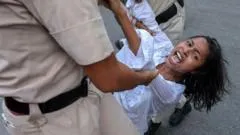
The conduct of the police during the protests has significantly escalated the intensity of the civil unrest and shifted the focus from electoral policy to human rights and safety. Beyond the sexual harassment allegations, there have been widespread reports of physical brutality. Activists, including JNU student Aahna Singh, have described scenes of police dragging protesters by their hair and using excessive force to clear sites like Jantar Mantar in central Delhi.
Political leaders have seized upon these reports to criticize the government's handling of civil dissent. Opposition leader Rahul Gandhi has publicly stated that women currently fear for their safety during these demonstrations and has called on the Home Ministry to provide answers regarding the conduct of law enforcement. This shift in narrative—from a debate over voter rolls to a debate over state-sponsored violence and gender-based harassment—has complicated the government's efforts to manage the protests.
The legal and political implications for the Home Ministry
The call for the Home Ministry to "answer for this" places significant pressure on the central government to oversee police reform and accountability. If the sexual harassment claims are substantiated by the crime branch, it could lead to a crisis of legitimacy for the Delhi Police and force a high-level investigation into the culture of the force during periods of civil unrest. The intersection of journalist safety, gender-based violence, and electoral integrity creates a multi-layered challenge for the administration.
Frequently asked questions
What triggered the protests in Delhi and Mumbai?
The protests were triggered by the Special Intensive Revision of voter rolls, which has seen 130 million names removed. Protesters, including supporters of the CJP, demand the resignation of Chief Election Commissioner Gyanesh Kumar, alleging the process is designed to benefit the BJP.
Who are the journalists accusing the police of harassment?
Three female journalists have made the accusations, though their specific identities have not been provided in the initial reports. The Press Club of India has stepped in to demand action, citing concerns for the safety and freedom of the press.
How has the Election Commission responded to claims of internal dissent?
The Election Commission has stated that differing views are a natural part of the decision-making process. They maintain that all decisions, including those regarding the voter roll revision, are ultimately taken unanimously by the commission.
What is the Special Intensive Revision (SIR)?
The SIR is an ongoing project to update India's electoral lists, which have not undergone a major revision in nearly 25 years. The goal is to remove deceased, relocated, or duplicate voters to ensure the accuracy of the rolls.
What has the Press Club of India demanded?
The Press Club of India has demanded immediate action against the officers accused of harassment. They argue that journalists must be allowed to work without fear and that such behavior is unacceptable in a democratic society.
Key takeaways
- Three female journalists have accused Delhi police of sexual harassment during recent protests.
- The Delhi Police crime branch is conducting an inquiry into the harassment complaints.
- Protesters are demanding Chief Election Commissioner Gyanesh Kumar's resignation over voter roll changes.
- 130 million names have been removed from voter lists during the Special Intensive Revision.
- The Press Club of India has called for immediate accountability for the treatment of journalists.
The intersection of electoral integrity and civil rights
The current situation in India represents a complex convergence of administrative reform and fundamental civil rights. While the Election Commission frames the Special Intensive Revision as a vital modernization of a quarter-century-old system, the scale of removals and the reported internal dissent suggest a deeper crisis of trust. When combined with allegations of sexual harassment and physical brutality against journalists and students, the protests have evolved into a broader critique of state conduct. The outcome of the crime branch inquiry and the government's response to the calls for accountability will likely determine the trajectory of public trust in India's electoral and law enforcement institutions.
