Why are India's street magicians losing their livelihoods?
The decline of street magic in India is driven by a convergence of shrinking public spaces, changing consumer tastes, and the digital revolution. For generations, performers such as jugglers, puppeteers, and acrobats relied on spontaneous crowds in bustling urban centers to sustain their families. Today, those crowds are increasingly absent or diverted toward different forms of engagement.
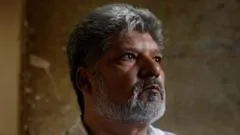
According to performers like Ishamuddin Khan, a 55-year-old veteran of the craft, the profession is currently "on a ventilator." This sentiment is echoed by the economic reality facing many practitioners. Where performers once commanded significant attention and steady income, they now struggle to find even minimal audiences in an era dominated by short-form digital entertainment. The transition from live, communal spectacle to individualized screen-based consumption has fundamentally altered the viability of the street performance model.
The impact of digital entertainment and shifting tastes
The rise of mobile technology and instant digital gratification has created a competitive landscape that traditional performers are ill-equipped to navigate. As Komita Dhanda, a researcher and performer, notes, the global interest in specific traditional acts, such as the legendary rope trick, has waned. While these acts once captured Western curiosity and international tours, modern audiences have different aesthetic preferences and much shorter attention spans.
How has the changing nature of urban spaces affected performers?
Urbanization and increased security measures in Indian cities have significantly reduced the available territory for street artists. The physical environments that once hosted vibrant performances are being replaced by gated communities and restricted zones.
Anurupa Roy, founder of the Katkatha Puppet Arts Trust, highlights that the proliferation of "closed" spaces is a primary driver of this decline. Residential societies and private parks often bar outsiders, effectively removing the very public squares necessary for street theatre and magic. Furthermore, researcher Komita Dhanda points out that heightened security in major town and city centers leaves little room for spontaneous gatherings. This spatial restriction forces performers away from high-traffic areas and into less profitable locations.
The shift to industrial zones
Because they can no longer access central urban hubs, many artists have been pushed to the fringes of society. Shahim Khan, a 42-year-old magician, illustrates this struggle. He has been forced to confine his performances to industrial areas, far from the crowds that once sustained him. This geographic displacement has had a devastating impact on his earnings. Before the pandemic, Khan could perform four or five shows daily, earning between 1,000 and 1,200 rupees. Currently, he manages only two shows, with daily earnings dropping to a mere 200 to 400 rupees.
What legal and regulatory hurdles do street performers face?
Unlike the United Kingdom, which maintains a federal framework for busking, India lacks a unified national system for street performers. This absence of a structured legal framework leaves artists navigating a complex web of state-level regulations.
Lawyer Kaushik Mitra explains that performers must contend with various municipal and police regulations regarding public order, noise, and the obstruction of walkways. Additionally, state-specific anti-begging laws often create a precarious legal environment for artists. Because most street performers rely on voluntary contributions from passersby, the line between professional performance and begging can become legally blurred, exposing artists to harassment or fines from authorities.
The impact of the COVID-19 pandemic
The 2020 lockdowns acted as a catastrophic catalyst for an already struggling sector. When public gatherings were banned, the primary source of income for street magicians vanished overnight. Komita Dhanda observes that the brunt of this disruption was felt most heavily by street magicians, many of whom chose to return to their ancestral villages rather than face the uncertainty of urban life. This mass exodus has led to a permanent reduction in the number of active performers in India's metropolitan areas.
Who are the Madari and what is their cultural significance?
The Madari community represents one of the most significant traditional lineages of performers in India, with skills passed down through centuries of family heritage. While there are no official government statistics on the exact population, Ishamuddin Khan notes that community records identify approximately 400 Madari families in Delhi, with hundreds more residing in states such as Rajasthan, Telangana, and Uttar Pradesh.
Historian Ashok Mathur explains that Madari traditions are deeply embedded in Indian folklore and mythology. For these families, magic is not merely a job but a generational legacy. Ishamuddin Khan's own journey began at age 12, learning the craft from his father and uncles. His mastery of the "impossible" rope trick—where a rope appears to rise into the air for a boy to climb—brought him international fame, including performances in the UK, France, Germany, and Japan. However, the decline of the community threatens the survival of these unique cultural artifacts.
The breakdown of generational skill transfer
The survival of traditional magic depends entirely on the willingness of the next generation to undergo years of rigorous training. As economic stability vanishes, the incentive to learn these difficult skills diminishes. This is evident in the case of Altamash, the son of Ishamuddin Khan. Although he performed as a teenager, he has since moved into party decoration. The loss of regular practice has led to a decay in technical ability; during a demonstration for the BBC, Altamash struggled to maintain the rhythm of his juggling, noting that he is "slowly forgetting all the tricks." When the chain of oral and practical tradition is broken, the art form effectively ceases to exist.
Key takeaways
- Urbanization and gated communities are physically displacing street performers from high-traffic public areas.
- The lack of a federal busking framework in India leaves artists vulnerable to unpredictable municipal and anti-begging laws.
- The COVID-19 pandemic caused a significant permanent decline in the number of performers in urban centers.
- Generational skill transfer is failing as younger family members seek more stable, modern livelihoods.
- Economic earnings for many street magicians have dropped by as much as 75% compared to pre-pandemic levels.
FAQ: India's street magicians
Why is street magic disappearing in India?
Street magic is disappearing due to the shrinking of public performance spaces, the rise of digital entertainment, and stricter urban regulations. As cities become more privatized and security increases, performers lose access to the crowds necessary to earn a living, making the profession economically unviable.
What is the Madari community?
The Madari community is a traditional group of traveling performers in India with roots in ancient folklore and mythology. They have historically passed down skills like magic, juggling, and puppetry through family lineages, maintaining a significant cultural presence in states like Delhi, Rajasthan, and Telangana.
How do Indian laws affect street performers?
Unlike countries with formal busking laws, India lacks a national framework. Performers must navigate various state-level rules concerning public order, noise, and obstruction. They also face the risk of being categorized under anti-begging laws because they rely on voluntary public donations.
How did COVID-19 impact these artists?
The 2020 lockdowns halted all public performances, stripping magicians of their only income source. This caused many performers to abandon their craft and return to their home villages, leading to a long-term decline in the number of active street artists in major cities.
Can traditional magic tricks be lost forever?
Yes, traditional magic relies on oral and practical transmission from one generation to the next. If younger family members do not learn and practice these specific techniques, the skills and the unique cultural heritage they represent will eventually vanish entirely.
Conclusion
The vanishing of India's street magicians is a symptom of a broader cultural shift toward privatization and digital consumption. As public squares become restricted and traditional livelihoods become economically precarious, the ancestral knowledge held by communities like the Madari is at risk of permanent extinction. The transition of performers from celebrated artists to marginalized laborers highlights the tension between modern urban management and the preservation of intangible cultural heritage. Without a formal framework to protect and provide space for these artists, a vital chapter of Indian folklore may soon be relegated to history books and old photographs.