
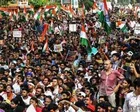
Why has the Special Intensive Revision sparked such widespread anger?
The Special Intensive Revision (SIR) process has become the primary catalyst for unrest due to its unprecedented impact on voter registration. According to reports, the exercise has resulted in the removal of 130 million individuals from the electoral rolls, a figure that has stunned citizens and political leaders alike. Critics argue that the process has shifted from a traditionally inclusive model to a hostile, exclusionary system that places the most marginalised populations at risk of being disenfranchised.
The controversy is compounded by investigative findings suggesting internal friction within the Election Commission of India (ECI). An investigation by the Indian Express reported that two other commissioners, Sukhbir Singh Sandhu and Vivek Joshi, had raised significant concerns regarding changes to registration procedures, digital systems, and the overall integrity of the electoral rolls. While the ECI issued a statement claiming that "differing views" are a standard part of the decision-making process, the lack of transparency has fueled suspicions of systemic irregularities.
The shift in electoral philosophy
Historically, the ECI has operated under a mandate of proactive inclusion. Former election commissioner Ashok Lavasa noted that for over seven decades, the Commission's duty was to ensure every eligible citizen was enrolled. This differs significantly from many other democracies where enrollment is a proactive application-based requirement. The current SIR process is viewed by experts as a departure from this established norm, creating a "Kafkaesque limbo" for voters who find themselves stripped of their rights without clear recourse.
How has the government responded to the demonstrations?
The state response to the protests has been characterised by a massive security presence and significant restrictions on civil liberties. In Delhi, the capital has been transformed into a militarised zone featuring barricades, road closures, and the deployment of paramilitary forces. Authorities have utilised a variety of tactics to prevent demonstrations, including the cancellation of 245 trains, the closure of 45 metro stations, and the suspension of internet services in central areas of the city.
The crackdown has targeted a wide spectrum of society, including political leaders, activists, and journalists. Notable incidents include:
- The detention of opposition leaders, including Rahul and Priyanka Gandhi, amidst chaotic scenes.
- The removal of Cockroach Janta Party founders from an Air India flight upon arrival in Delhi.
- The detention of Tushar Gandhi, great-grandson of Mahatma Gandhi, in Mumbai to prevent his participation in local protests.
- The manhandling and arrest of students, activists, and even a Supreme Court lawyer during police operations.
In response to the unrest, the Delhi police have moved to denotify Jantar Mantar as a designated protest site, recommending alternative locations instead. This move is seen by activists as a further attempt to stifle the right to public assembly.
What are the political implications of the crackdown?
The ferocity of the state's response suggests that the ruling Bharatiya Janata Party (BJP) views the current unrest as a direct threat to its political legitimacy. Government spokesperson Ravi Shankar Prasad has defended the actions, accusing the opposition of attempting to incite anarchy and asserting that the country must be governed by Parliament rather than through street protests.
However, political analysts suggest the stakes are much higher than mere public order. Activist Yogendra Yadav has argued that the controversy surrounding the SIR and the role of Gyanesh Kumar are central to a broader process of "democratic capture." Yadav pointed to a 2023 law that provides election commissioners with legal immunity for official actions—a protection he claims is broader than that afforded to judges—as a factor that undermines accountability.
The struggle for electoral independence
The core of the political tension lies in the perceived erosion of the ECI's independence. If the electorate believes that the mechanism for choosing leaders is being manipulated to ensure the survival of the ruling regime, the very foundation of the democratic process is called into question. As opposition parties, civil society, and student groups find common ground, the government faces a growing dilemma: continued suppression may lead to even higher political stakes.
Where is the movement headed next?
The momentum of the protests shows no signs of immediate abatement, with various sectors of society vowing to continue their resistance. In Kerala, the state assembly has already passed a resolution seeking the removal of Chief Election Commissioner Gyanesh Kumar. Simultaneously, opposition parties are pursuing legal avenues, marching toward the Supreme Court to demand intervention.
The resistance is manifesting in several distinct strands:
- Political Opposition: Parties like the Cockroach Janta Party and the Congress party are leading large-scale marches and legislative challenges.
- Student and Leftist Movements: Student leaders, such as Danish Ali, have declared that citizens are no longer willing to live in fear and will continue to assert their fundamental right to protest.
- Civil Society and Legal Challenges: Lawyers and human rights advocates are working to challenge the legality of the SIR and the methods used by security forces.
As these groups coalesce, the pressure on the central government is expected to intensify, potentially leading to a prolonged period of political instability.
Frequently asked questions
Who is the primary target of the current protests?
The protests are primarily directed at Chief Election Commissioner Gyanesh Kumar. Demonstrators are demanding his resignation following allegations of voter-roll irregularities and the controversial Special Intensive Revision (SIR) process that has removed millions of voters from the register.
What is the Special Intensive Revision (SIR)?
The SIR is a recent electoral exercise conducted by the Election Commission of India. It has come under intense scrutiny for reportedly removing 130 million people from the voter rolls and for being a departure from the Commission's traditional, inclusive approach to voter enrolment.
How has the government restricted movement during the protests?
Authorities have implemented several measures to curb demonstrations, including cancelling hundreds of trains, shutting down metro stations, and imposing internet blackouts. In Delhi, paramilitary forces and barricades have been used to militarise the city and restrict access to protest sites.
Has the ruling party commented on the unrest?
Yes, the ruling Bharatiya Janata Party has defended its actions. Spokesperson Ravi Shankar Prasad stated that the government is preventing anarchy and maintained that democratic governance should occur through Parliament rather than through street-level demonstrations.
What role does the 2023 law play in this controversy?
The 2023 law provides election commissioners with legal immunity for actions taken in their official capacity. Critics, including political activist Yogendra Yadav, argue that this immunity is excessively broad and makes it difficult to hold officials accountable for controversial decisions like the SIR.
Key takeaways
- The Special Intensive Revision (SIR) has reportedly removed 130 million people from India's voter rolls.
- Protesters are demanding the immediate resignation of Chief Election Commissioner Gyanesh Kumar.
- Authorities have implemented significant restrictions, including internet blackouts and the cancellation of 245 trains.
- The controversy involves allegations of internal dissent within the Election Commission of India.
- Opposition parties and student groups are increasingly coordinating to challenge the electoral process.
Conclusion
The electoral revision protests in India represent a significant challenge to the country's democratic stability. The scale of the voter roll changes, combined with the heavy-handed state response to dissent, has created a profound crisis of confidence in the Election Commission of India. While the government maintains that its actions are necessary to prevent anarchy, the growing alignment between opposition parties, civil society, and student movements suggests that the demand for electoral transparency and accountability will only intensify. The resolution of this conflict will likely determine the future trajectory of democratic independence in the region.




