
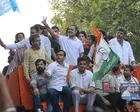
Why are protesters demanding the resignation of Gyanesh Kumar?
The central demand of the current wave of India election protests is the immediate removal of Chief Election Commissioner Gyanesh Kumar. This demand stems from his oversight of the Special Intensive Revision (SIR), a process designed to verify and "purify" the nation's electoral rolls. However, the implementation of this revision has sparked widespread allegations of voter suppression and targeted disenfranchisement.
According to reports, the SIR process has led to the removal of more than 130 million names from voter lists since last year. Critics argue that these deletions are not merely administrative errors but are part of a calculated effort to consolidate the power of the ruling Bharatiya Janata Party (BJP) and Prime Minister Narendra Modi's government. The scale of these deletions is immense, with the number of removed voters surpassing the entire population of Japan.
Opposition leaders, including Rahul Gandhi, have characterized the process as "vote chori" (cheating). Gandhi has gone as far as to label Kumar a "thief," accusing the commission of facilitating the theft of democratic rights. The controversy gained significant momentum following an investigation by the Indian Express, which highlighted multiple irregularities within the SIR framework managed by Kumar.
The impact of voter roll deletions
The deletions have disproportionately affected specific demographics, leading to fears of a shift in the country's political landscape. Civil society groups and opposition parties allege that Muslim voters and other minority communities, who traditionally do not support the BJP, have been the primary targets of these purges. By removing these voters from the rolls, the opposition argues that the government is effectively engineering an electoral advantage before the next round of voting occurs.
How did the Delhi police respond to the opposition march?
Delhi police implemented significant security measures to obstruct the march, including the closure of metro stations and the deployment of heavy barricades. As opposition leaders attempted to lead the procession toward the Supreme Court on Monday, authorities established a perimeter that prevented thousands of protesters from approaching within 600 meters of the judicial building. This escalation follows a weekend of significant unrest involving the Gen Z-led Cockroach Janta party (CJP), where protesters faced mass detentions and reports of police harassment.
The security crackdown has created a tense atmosphere in the capital. On Monday, several central Delhi metro stations were shut down to limit the movement of demonstrators. While lawyers representing the opposition confirmed that a petition was successfully submitted to the Supreme Court on behalf of Rahul Gandhi, the physical access to the court remained heavily restricted by security personnel. Despite these obstacles, Gandhi managed to break through the police lines late in the evening to reach the court gates.
The police response has been a focal point of criticism from opposition lawmakers. Following a weekend where thousands were detained, the continued use of barricades and station closures has been framed by critics as an attempt to stifle legitimate democratic dissent. The tension between the state's duty to maintain order and the citizens' right to protest has reached a critical juncture in the capital.
What are the political implications of the ongoing unrest?
The ongoing protests have provided a much-needed catalyst for beleaguered opposition parties that have struggled to counter the electoral dominance of the BJP. The issue of the Special Intensive Revision has galvanized support across various sectors, including student groups and youth movements. For leaders like Rahul Gandhi, the movement represents a chance to unify disparate opposition elements under a single cause: the protection of the Indian Constitution.
Mahua Moitra, an opposition Member of Parliament, has highlighted the localized impact of these national policies. She alleged that in her own constituency in West Bengal, more than 10,000 voters were unjustly removed from the rolls. Moitra's rhetoric suggests that the opposition views this as an existential struggle, stating that the government's legitimacy is fundamentally compromised if the electoral process cannot be trusted.
However, the ruling BJP has maintained a firm stance, accusing opposition leaders of attempting to undermine India's democratic stability. The BJP argues that the questioning of legitimate electoral processes is a tactic used by rivals to delegitimize lawful outcomes. This clash of narratives—one of "voter theft" versus one of "democratic sabotage"—sets the stage for a prolonged political confrontation that could influence future election cycles.
The role of the Supreme Court
The Supreme Court of India finds itself at the center of this political storm. While the opposition is petitioning the court to intervene and remove the Election Commissioner, some lawmakers have directed their criticism toward the judiciary itself. Mahua Moitra accused the court of providing a "stamp of approval" to the SIR process, suggesting that the judiciary has failed in its role as a check on executive overreach. This criticism places immense pressure on the Supreme Court to provide a transparent and decisive ruling on the legality of the voter roll revisions.
What is the role of the Cockroach Janta party in these protests?
The Cockroach Janta party (CJP) and its associated youth movements, such as the "Gen Z Cockroach movement," have emerged as key drivers of the recent street demonstrations. Unlike traditional political parties, these groups have mobilized a younger demographic that is increasingly vocal about electoral integrity. Their involvement has added a layer of unpredictable energy to the protests, characterized by direct action and a refusal to be deterred by police presence.
The CJP has been actively seeking formal recognition for their right to protest. On Monday, leaders from the party approached the Delhi police to request a sanctioned date for future demonstrations. Their strategy appears to be one of persistent pressure; they have explicitly stated that if the police continue to obstruct their activities, their supporters will return to the streets in even larger numbers. This suggests that the unrest is not a singular event but part of a sustained campaign of civil disobedience.
Frequently asked questions
Who is the main figure being targeted by the protesters?
The protesters are demanding the resignation of Gyanesh Kumar, India's Chief Election Commissioner. They hold him responsible for the Special Intensive Revision (SIR) process, which has resulted in the removal of over 130 million voters from the electoral rolls, a move they claim is politically motivated.
How many voters have been removed from the rolls?
According to reports, more than 130 million names have been deleted from India's voter lists since last year through the Special Intensive Revision process. This number is significant as it exceeds the total population of Japan, raising serious concerns regarding mass disenfranchisement.
What is the "Cockroach Janta party"?
The Cockroach Janta party (CJP) is a movement involving student groups and young people, often referred to as the Gen Z Cockroach movement. They have been central to the recent street protests in Delhi, demanding electoral reforms and the resignation of the Election Commissioner.
Has the Election Commission responded to these allegations?
Yes, the Election Commission has denied any bias toward any political party. Officials have stated that any voters who were wrongly deleted during the revision process are permitted to re-enrol, maintaining that the process is a legitimate effort to ensure the accuracy of electoral data.
What is the BJP's position on the protests?
The Bharatiya Janata Party (BJP) has accused opposition leaders of trying to undermine India's democracy. They argue that the protests and the questioning of the Special Intensive Revision are attempts to discredit legitimate electoral processes and destabilize the country's political framework.
Key takeaways
- Over 130 million voters have been removed from Indian electoral rolls via the Special Intensive Revision.
- Opposition leader Rahul Gandhi is leading marches to demand the resignation of Gyanesh Kumar.
- Delhi police have utilized barricades and metro closures to obstruct large-scale demonstrations.
- The Cockroach Janta party is mobilizing youth-led protests against alleged voter disenfranchisement.
- The Supreme Court is being petitioned to investigate the legality of recent voter roll changes.
The future of Indian electoral integrity
The current unrest in Delhi represents a significant challenge to the perceived neutrality of India's electoral institutions. As the opposition continues to mobilize both in the streets and through legal petitions, the outcome of the Supreme Court's review will be critical. Whether the Special Intensive Revision is viewed as a necessary administrative purification or a tool for political engineering will likely define the political climate of India for years to come. The persistence of the youth-led movements suggests that the demand for electoral transparency will remain a central pillar of Indian political discourse.




