
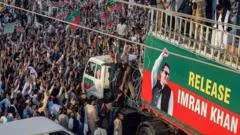
Why are supporters marching to Islamabad?
The primary driver for the current mobilization is the demand for the immediate release of former Prime Minister Imran Khan and urgent medical intervention for his declining health. Supporters argue that the 73-year-old politician, who served as Prime Minister from 2018 to 2022, is being denied adequate care while serving a 17-year sentence for corruption. Khan's family has raised specific alarms, claiming he has lost the majority of his vision in his right eye due to the failure of prison authorities to provide necessary medical attention.
The march is not merely a protest against his incarceration but a reaction to the perceived political targeting of the former cricket captain. Khan maintains that the more than 100 legal cases against him, which range from leaking state secrets to the mishandling of state gifts, are entirely politically motivated. The movement seeks to highlight these grievances and pressure the current administration to address the legal and physical well-being of the PTI leader. This mobilization follows a pattern of high-stakes demonstrations that have previously led to deadly violence and significant state crackdowns.
The scale and route of the movement
The demonstration originated in Lakki Marwat, situated approximately 275km from Islamabad. After pausing for rest on Sunday, the march was scheduled to resume around midday on Monday. Sohail Afridi, the chief minister for the Khyber Pakhtunkhwa province—which is governed by the PTI—has indicated that the movement is expected to reach a town roughly 80km west of the capital by Thursday.
Afridi has framed the march as a national phenomenon, suggesting that the movement will eventually reach every corner of the country, turning every local square into a center of political activity. He has urged the public to play an active role in the political process as the march progresses. The scale of this movement reflects the enduring influence Khan maintains over his base, even while behind bars, as the marchers attempt to bring their demands directly to the seat of government power.
How did the government-PTI negotiations fail?
Negotiations between the Pakistani government and the Pakistan Tehreek-e-Insaf (PTI) collapsed after both sides reached a fundamental impasse regarding access and medical rights. The PTI stated that the talks ended in a deadlock because authorities refused their request to allow party leaders to consult with Khan on critical national and political issues. Furthermore, the party insisted that Khan be granted an immediate, comprehensive medical examination by independent physicians.
The government, however, has presented a different perspective on the breakdown of these discussions. Interior Minister Mohsin Naqvi accused Sohail Afridi of sabotaging the negotiation process. According to local media reports, Naqvi alleged that the Khyber Pakhtunkhwa provincial government had failed to uphold previous commitments regarding counter-terrorism measures, thereby undermining the possibility of a peaceful resolution. This disagreement over whether the deadlock was caused by medical access demands or a failure in counter-terrorism cooperation remains a central point of contention between the two sides.
What is the current state of Imran Khan's health?
Concerns regarding Imran Khan's physical condition have intensified following reports of vision loss and general deterioration while in custody. Although he was briefly transferred to a state-run hospital in August for medical treatment, the intervention was met with skepticism by his legal and family teams. While doctors at the state facility deemed him "medically fit," the PTI and Khan's family criticized the move, noting that authorities had defied a court order requiring him to be examined by specific physicians at a private hospital.
The tension surrounding his health is compounded by the legal status of his family members. His wife, Bushra Bibi, was also imprisoned last year, adding to the personal strain on the former leader. The demand for independent medical oversight remains a central pillar of the PTI's protest strategy, as they seek to ensure that his health is not being compromised by his period of incarceration, which began in August 2023. The discrepancy between state medical assessments and the claims made by Khan's family continues to fuel the protesters' urgency.
What are the security implications for Islamabad?
In anticipation of the protesters' arrival, authorities in Islamabad have implemented significant security measures to prevent unrest. This includes the strategic placement of shipping containers to block key access routes leading into the capital city. These barriers are intended to limit the ability of large crowds to penetrate the central administrative zones of the city.
The history of such demonstrations in Pakistan suggests that these security measures are a response to a pattern of significant volatility. When Khan was first arrested in May 2023, the resulting protests were marked by extreme violence. During those events, supporters targeted high-profile locations, including the corps commander's residence in Lahore, leading to significant property damage. The intensity of those previous clashes, which resulted in at least eight deaths and necessitated military intervention, remains a primary concern for the current administration as they prepare for the arrival of the PTI marchers.
The history of political unrest surrounding Khan
The volatility of the current situation is rooted in the massive scale of the protests that followed Khan's initial arrest. The 2023 riots were characterized by widespread ransacking of government and military-linked properties. During the unrest in Lahore, supporters smashed chandeliers and made away with furniture, paintings, and even peacocks from the corps commander's residence. These incidents demonstrated the deep-seated loyalty of his supporters and the potential for localized protests to escalate into national security crises.
The deployment of the army to quell such violence highlights the fragile balance between political expression and civil order in the country. Furthermore, the legal pressure on Khan's inner circle has increased; on 20 September, his sister Aleema Khanum was arrested in Lahore. The arrest order claimed she was mobilizing people to create law and order situations and raising objectionable slogans against the government. This history of arrest and subsequent riot underscores the high stakes of the current march.
Frequently asked questions
Why is Imran Khan currently in prison?
Imran Khan was sentenced to 17 years in prison on corruption charges last year. He currently faces over 100 legal cases, including allegations of leaking state secrets and selling state gifts. Khan and his supporters maintain that all these legal proceedings are politically motivated attempts to remove him from politics.
What is the status of the PTI march?
The march began in Lakki Marwat and is moving toward Islamabad. After a pause on Sunday, the movement is expected to continue toward the capital, aiming to reach the outskirts of Islamabad by Thursday. The march follows the failure of government-PTI talks to reach a consensus.
Has there been a response to Khan's health concerns?
While Khan was transferred to a state-run hospital in August for medical examination, the PTI and his family rejected the findings. They argue that authorities ignored court orders to provide examinations by private physicians and expressed concern over his reported loss of vision in one eye.
Who is involved in the political deadlock?
The deadlock involves the Pakistani government and the Pakistan Tehreek-e-Insaf (PTI) party. Key figures include Interior Minister Mohsin Naqvi, who accused the PTI of sabotage, and Sohail Afridi, the Khyber Pakhtunkhwa chief minister, who is leading the movement to support Khan.
What security measures are in place in Islamabad?
Authorities have utilized shipping containers to block major access routes into Islamabad. These measures are designed to prevent protesters from entering the capital and to manage the potential for large-scale demonstrations that have historically led to violence and required military intervention.
Key takeaways
- Imran Khan supporters are marching from Lakki Marwat to Islamabad to demand his release.
- Negotiations between the PTI and the government ended in a deadlock over medical and access rights.
- Khan's family reports he has suffered significant vision loss in his right eye while in prison.
- Security forces have blocked Islamabad access routes with shipping containers to prevent unrest.
The broader political landscape in Pakistan
The ongoing march and the legal battles surrounding Imran Khan represent a period of intense political friction in Pakistan. The ability of the government to maintain order in Islamabad while addressing the grievances of the PTI will likely determine the stability of the current administration. As the march progresses, the intersection of judicial decisions, medical concerns, and mass mobilization continues to challenge the country's political and security frameworks. The appeals from former international cricket captains to Prime Minister Shehbaz Sharif for proper medical care further highlight the high-profile nature of this political crisis.
