
What is the human toll of Hurricane Isaias?
Four fatalities have been confirmed as Hurricane Isaias battered the southern United States with destructive winds and intense rainfall. The deaths are distributed between the states of Alabama and Florida, with two reported in each location. These casualties highlight the immediate dangers posed by falling debris and structural failures during extreme weather events. As the storm moved through, the combination of high winds and heavy rain created a lethal environment for residents in the path of the cyclone.
Fatalities in Florida
In Florida's Escambia County, local authorities confirmed two specific deaths related to the storm. Sheriff Chip Simmons reported that a woman lost her life when a tree fell onto her residence. Another tragic incident involved a man who died from carbon monoxide poisoning. This occurred after he operated a generator inside a garage that lacked proper ventilation. Four other individuals present in the same home required hospitalization following this incident.
The human cost was further illustrated by the experience of Joey Williams, who told NewsNation that his wife died during the storm. Williams explained that they had gone outside to take photographs of the damage caused by the weather. However, when they attempted to return to their home, a tree fell through the roof, trapping them both. While Williams was able to squeeze out of the wreckage, his wife did not survive the impact.
Fatalities in Alabama
Alabama has also recorded two deaths, according to Governor Kay Ivey. While specific details regarding the circumstances of these deaths were not provided in her official statement on X, the state remains on high alert. The governor also noted the danger of spinoff tornadoes, which can be triggered by the intense wind and rain patterns associated with the hurricane's movement. In a separate incident, an Alabama sheriff was injured when a tree fell on him while he was responding to a car crash.
Governor Ivey urged residents to seek reliable information as conditions develop, particularly for those with weekend travel plans. The threat of these spinoff tornadoes remains a significant concern for officials managing the aftermath of the storm's passage through the state.
How much damage has the storm caused to infrastructure?
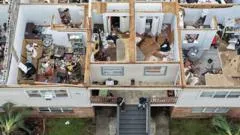
The physical impact of Hurricane Isaias has been extensive, particularly regarding the electrical grid and residential structures. As of Saturday evening, an estimated 500,000 people across several states were without power, according to data from the tracker PowerOutage. The storm's force was sufficient to rip roofs off buildings and fell large trees, which in turn caused significant disruptions to local utility services.
The widespread nature of the outages reflects the scale of the storm's impact across multiple states. As trees were felled and buildings were damaged, the infrastructure required to maintain electrical service was severely compromised, leaving a massive portion of the population in the dark as the storm moved through the region.
Flooding and emergency rescues
Flooding has emerged as a critical secondary threat. In Florida, the National Guard was deployed to assist those trapped by rising waters. Soldiers reportedly had to swim to a submerged vehicle in a flood ditch to pull its occupants to safety, an action documented by the Florida National Guard through shared images of the rescue.
Florida Governor Ron DeSantis has characterized the current situation as "very hazardous," warning that flooding risks continue to escalate as the storm progresses. The ability of water to rise quickly and trap residents in vehicles has necessitated high-stakes rescue operations by emergency personnel and National Guard soldiers alike.
Impact on South Carolina
In Charleston, South Carolina, the threat of coastal flooding has prompted officials to urge residents to remain indoors. High tide levels were expected to reach 7.5ft (2.3m) on Saturday night. Local authorities warned that navigating flooded streets after dark is extremely dangerous, as the depth of the water is nearly impossible to judge from inside a vehicle.
The city's warning emphasizes the invisibility of hazards once night falls, as floodwater becomes much harder to see, making it impossible for drivers to determine if a road is passable or if they are heading into deep, life-threatening water.
What is the meteorological profile of Hurricane Isaias?
Hurricane Isaias made landfall in Florida late on Friday, characterized by maximum sustained winds of 105mph (168km/h). Although the storm has since been downgraded to a post-tropical cyclone, its remnants continue to pose significant meteorological risks to the eastern United States. The National Oceanic and Atmospheric Administration (Noaa) has issued warnings regarding heavy rainfall that could reach up to 10 inches (25cm) in parts of Georgia and the Carolinas.
While the wind speeds may decrease as the system moves northeast, the potential for inland flooding remains a primary concern. The transition to a post-tropical cyclone does not diminish the threat posed by the massive amounts of moisture the system carries.
A delayed hurricane season
The emergence of Isaias marks a notable event in the Atlantic hurricane season. This particular season has seen significant delays in activity, a phenomenon largely attributed to El Niño conditions currently affecting the Pacific Ocean. Isaias represents the first hurricane of this season to make a significant impact on the mainland.
The influence of El Niño on Atlantic hurricane development is a key factor in why this season has been characterized by a lack of major landfalling systems until now. The arrival of Isaias serves as a reminder of the volatility inherent in tropical weather patterns, even during delayed seasons.
Are there other tropical threats currently active?
While the Atlantic coast deals with the aftermath of Isaias, the Pacific Ocean is seeing simultaneous tropical activity. Two distinct systems are currently threatening landfalls in different regions, necessitating coordinated emergency responses across multiple maritime territories.
Hurricane Simon in Mexico
Hurricane Simon is currently approaching the Pacific coast of Mexico. The storm has intensified into a category four hurricane and is projected to make landfall sometime overnight. The high intensity of Simon suggests a high potential for significant wind damage and storm surges upon impact.
Tropical Storm Rachel in California
In addition to Simon, Tropical Storm Rachel is also active in the Pacific. This system is expected to reach southern California later on Saturday. While likely less intense than the category four hurricane in Mexico, Rachel still presents weather risks to the California coastline.
Frequently asked questions
How many people lost their lives due to Hurricane Isaias?
Four people have died as a direct result of the storm. Two deaths occurred in Florida, including a woman killed by a falling tree and a man who died from carbon monoxide poisoning. Two additional deaths were reported in the state of Alabama.
How many people are without electricity?
Approximately 500,000 people were reported to be without power across several states as of Saturday evening. This figure was provided by the PowerOutage tracker and reflects the widespread damage to utility infrastructure caused by the hurricane's winds.
What are the primary weather risks in the Carolinas?
The primary risk for the Carolinas and Georgia involves heavy rainfall. The National Oceanic and Atmospheric Administration (Noaa) warned that these regions could experience up to 10 inches (25cm) of rain, which increases the likelihood of significant flooding.
Why is the Atlantic hurricane season delayed?
The Atlantic hurricane season has experienced delays primarily due to El Niño conditions. These atmospheric conditions in the Pacific Ocean have historically influenced weather patterns in a way that suppresses hurricane development in the Atlantic region.
What safety precautions were advised in South Carolina?
Officials in Charleston, South Carolina, advised residents to stay home on Saturday night. This precaution was taken due to expected high tides of 7.5ft (2.3m) and the extreme difficulty of judging water depth during nighttime flooding.
Key takeaways
- Four fatalities were confirmed in Alabama and Florida due to Hurricane Isaias.
- Approximately 500,000 people lost power across multiple US states.
- Hurricane Isaias made landfall in Florida with 105mph sustained winds.
- Hurricane Simon has strengthened to a category four in the Pacific.
- Noaa warns of up to 10 inches of rain in Georgia and the Carolinas.
The evolving landscape of tropical activity
The impact of Hurricane Isaias demonstrates the multifaceted dangers of tropical cyclones, ranging from direct wind damage to secondary hazards like carbon monoxide poisoning and flash flooding. As the storm transitions into a post-tropical system, the focus shifts from landfall intensity to the broad geographical reach of its rainfall. Simultaneously, the presence of Hurricane Simon and Tropical Storm Rachel highlights a period of heightened global tropical activity, requiring vigilance across both the Atlantic and Pacific basins.




