
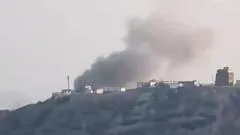
What exactly occurred during the Aden palace attack?
Five ballistic missiles struck al-Maashiq Palace in the southern port city of Aden on 15 October 2026. The palace serves as the base for Yemen's internationally recognised government. Officials reported five deaths and sixteen injuries among guards and civilian employees. Prime Minister Shaya Zindani and cabinet members remained unharmed. The strike took place while the government continued operations against Houthi positions on the south-western Red Sea coast.
Why did the Houthis claim responsibility for the strike?
Houthi military spokesman Yahya Sarea stated that the group targeted what it described as the Saudi enemy's military operations headquarters in Aden. The Houthis have conducted repeated missile and drone launches against Saudi-linked targets since the informal ceasefire began to collapse in July. They frame these actions as retaliation for a Saudi blockade and an earlier air strike on Sanaa airport.
Previous Houthi operations against Saudi territory
The group has fired missiles and drones at airports, oil facilities and military sites inside Saudi Arabia. On 10 October a Houthi missile killed thirteen people at Riyadh international airport, the deadliest such incident in more than a decade. Saudi forces intercepted another cruise missile over the Medina region on the same day as the Aden attack.
How has the Saudi-backed government responded?
Prime Minister Shaya Zindani condemned the Aden strike as cowardly and a continuation of criminal behaviour. He stated that government forces would maintain pressure on Houthi positions. Saudi Arabia's deputy foreign minister Rayed Krimly accused Iran of arming and training the Houthis in violation of UN Security Council resolutions and of encouraging the latest escalation.
What is the current state of the Yemen conflict?
Yemen's civil war began in 2014 when the Houthis ousted the recognised government from Sanaa. A Saudi-led coalition intervened in 2015 to restore the government. An informal ceasefire held for four years until July 2026, when Houthi forces announced a maritime embargo and launched attacks on Red Sea shipping lanes and Saudi infrastructure. Pro-government forces, supported by Saudi air strikes, recently regained territory overlooking the Bab al-Mandab Strait.
Frequently asked questions
Did the prime minister survive the attack?
Yes. Information Minister Moammar al-Eryani confirmed that Prime Minister Shaya Zindani and other ministers were unhurt after the five missiles struck the palace.
How many people died in the Aden strike?
Officials reported five deaths and sixteen injuries. The victims included guards and civilian employees working at the site.
Has Iran responded to the Saudi accusations?
No immediate response came from Iran's government. Iran has previously denied supplying weapons and stated it offers only political support to the Houthis.
What is the death toll since fighting resumed in August?
The government's health ministry recorded at least 1,282 killed and 5,890 injured in Yemen since 6 August. The UN additionally reports 201,000 new displacements and rising cholera cases.
Where is the Bab al-Mandab Strait and why does it matter?
The strait lies at Yemen's south-western Red Sea coast and forms a key global shipping chokepoint. Houthi advances there contributed to higher oil prices during recent regional tensions.
Key takeaways
Five people died and sixteen were injured in the 15 October missile strike on Aden's al-Maashiq Palace.
Prime Minister Shaya Zindani and the cabinet escaped unharmed according to Information Minister Moammar al-Eryani.
The Houthis stated they targeted a Saudi military operations centre; the government called the attack cowardly.
At least 1,282 people have been killed in Yemen fighting since 6 August per the health ministry.
The UN has recorded 201,000 new displacements and a surge in suspected cholera cases.
Conclusion
The missile strike on Aden's presidential palace adds another layer to Yemen's renewed conflict. Both sides continue to trade accusations while civilian casualties and displacement mount. International efforts to revive talks remain stalled, and the humanitarian situation shows further deterioration. Continued monitoring of front-line developments and diplomatic signals will determine whether the current escalation can be contained.




