
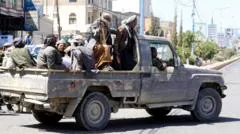
What happened during the attacks on Saudi airports?
The attacks on Saudi Arabian aviation infrastructure occurred on 6 and 7 October, targeting two major transport hubs. The Saudi General Authority of Civil Aviation (Gaca) confirmed that the strikes resulted in a total of three fatalities and 36 injuries across the two locations.
The first incident took place at Abha International Airport, situated near the border with Yemen. This attack caused the deaths of two women, identified as being of Moroccan and Algerian nationality, and left 28 individuals wounded. The second strike targeted King Khalid International Airport in the capital, Riyadh, resulting in the death of a Sudanese male resident and leaving eight others injured.
While Gaca provided the casualty figures and the locations, the authority did not officially name the perpetrators in its initial statement. However, the Houthi military spokesperson, Yahya Saree, claimed responsibility for the strikes, stating that the group's armed forces utilized both drones and ballistic missiles to target the airports. Saree also noted that the Houthis had attacked Aden's International Airport in Yemen on Wednesday, a critical gateway for areas outside of Houthi control.
Casualty breakdown of the airport strikes
The impact of the strikes varied by location, affecting both civilian personnel and residents. The Abha attack was particularly lethal in terms of injuries, with 28 people wounded, whereas the Riyadh attack resulted in a single fatality and eight injuries. The diversity of the victims' nationalities—including Moroccan, Algerian, and Sudanese—highlights the international nature of the populations present at these major transit hubs.
The timing of these strikes, occurring on 6 and 7 October, has contributed to a rapid intensification of the regional conflict. While the specific timing for each individual airport was not detailed by Gaca, the cumulative effect of these attacks has drawn immediate condemnation from international bodies, including the UN Secretary General, who expressed deep concern over the sharp escalation in fighting.
Why has the conflict between the Houthis and Saudi-led forces escalated?
The recent surge in violence is driven by a rapid offensive by the Houthis to seize strategic territories along the Red Sea coast. This movement has reignited the long-standing war between the Iran-backed Houthi movement and the Saudi-backed Yemeni government forces.
According to Houthi military spokesperson Yahya Saree, the attacks on Saudi airports were a direct response to what he described as "Saudi aggression." Saree claimed that the Houthi forces faced 60 airstrikes and missile attacks within a 24-hour period prior to their retaliatory strikes. This cycle of escalation has transformed the border region into an active combat zone once again.
The Saudi-led coalition has responded to these developments with significant military force. In a statement issued late on Wednesday, a spokesperson for the coalition declared that the Houthi attacks "will not go unpunished." The coalition reported that it has targeted more than 80 Houthi military sites across several Yemeni governorates, including Saada, Al Hudaydah, Al Jawf, and Ma'rib. This response follows the coalition's formation in 2015, which aimed to prevent the Houthis from taking over Yemen from the internationally recognised government.
What is the strategic importance of the Red Sea and Bab al-Mandab?
The fighting has centered heavily on the control of maritime chokepoints, specifically the Bab al-Mandab Strait, which is essential for global commerce. The Houthis have recently gained ground in the north-west of Yemen, capturing critical stretches of the coastline.
A key development in the recent offensive was the Houthi seizure of the port of Mokha. Located on the Bab al-Mandab Strait, this area represents one of the narrowest points of the Red Sea and serves as a vital chokepoint for international shipping lanes. Control over this territory provides significant leverage over global trade routes.
However, the conflict remains highly contested. Yemeni pro-government forces, supported by Saudi Arabia, have claimed to have "secured" the southern end of the Red Sea at the Bab al-Mandab Strait. These forces have declared an all-out war intended to reclaim all territory currently held by the Houthi movement, leading to intense combat in these maritime corridors. The struggle for these coastal stretches remains a primary driver of the renewed hostilities.
How has the conflict impacted the humanitarian situation in Yemen?
The escalation of fighting has triggered a severe humanitarian crisis, with hundreds of people reported killed on both sides as the Houthi advance continues. The instability has led to massive population shifts and increased vulnerability for civilians.
The United Nations has expressed grave concern regarding the situation. UN Secretary General Antonio Guterres condemned the ongoing Houthi cross-border attacks and noted his deep concern regarding the "sharp escalation in fighting." The scale of the displacement is particularly significant; the UN reported on Wednesday that more than 200,000 people have been displaced due to the latest surge in violence.
This current wave of violence follows years of instability. Although a temporary ceasefire was brokered in 2022 after years of air strikes and ground fighting led to the deaths of hundreds of thousands of people, the failure to maintain long-term peace has left the region susceptible to renewed large-scale warfare. The recent military movements have exacerbated one of the world's most severe humanitarian emergencies, as displaced populations struggle to find safety amidst the airstrikes and ground combat.
FAQ: Houthi attacks on Saudi Arabia airports
Who is responsible for the attacks on the Saudi airports?
The Houthi military spokesperson, Yahya Saree, has claimed responsibility for the attacks. He stated that Houthi armed forces used ballistic missiles and drones to strike both Abha International Airport and King Khalid International Airport in Riyadh.
How many people were killed in the recent strikes?
A total of three people were killed in the attacks. According to Gaca, two women (of Moroccan and Algerian nationality) died at Abha International Airport, and one Sudanese male resident was killed at King Khalid International Airport.
What was the impact on injuries during these attacks?
The attacks resulted in 36 total injuries. Specifically, 28 people were wounded during the strike at Abha International Airport, while eight people were wounded during the incident at King Khalid International Airport in Riyadh.
What was the Houthi justification for the attacks?
Yahya Saree stated that the attacks were a response to Saudi aggression. He claimed the Houthis were retaliating against 60 airstrikes and missile attacks that had targeted their positions within a 24-hour window.
What is the Saudi-led coalition's response to the strikes?
The Saudi-led coalition stated that the attacks "will not go unpunished." In response, the coalition has targeted more than 80 Houthi military sites across the Yemeni governorates of Saada, Al Hudaydah, Al Jawf, and Ma'rib.
Key takeaways
- Three people were killed and 36 wounded in Houthi strikes on Saudi airports.
- Attacks targeted Abha International Airport and King Khalid International Airport.
- The Houthis used ballistic missiles and drones in the coordinated strikes.
- Over 200,000 people have been displaced by the recent escalation.
- The conflict involves strategic control of the Bab al-Mandab Strait.
Conclusion
The Houthi attacks on Saudi Arabian airports mark a dangerous turning point in the Yemeni civil war, moving the conflict directly into high-profile civilian infrastructure. The death of three individuals and the wounding of dozens more underscore the immediate human cost of this escalation. As the Saudi-led coalition responds with strikes on military sites and the Houthis continue their offensive toward the Red Sea, the risk to global shipping through the Bab al-Mandab Strait grows. With over 200,000 people displaced, the humanitarian situation remains critical, requiring urgent international attention to prevent further loss of life.




