
What do the latest attack figures show?
UK Maritime Trade Operations recorded twelve vessel attacks in the week ending 11 October 2026. Six incidents occurred on a single Sunday, establishing a one-day peak. Four further strikes were logged early the following week. BBC Verify compiled the timeline from official incident reports, noting that dates sometimes reflect the attack and sometimes the reporting day. The previous week had already seen ten reports, indicating a sustained rise. Experts interpret the pattern as Tehran seeking greater influence over the waterway while US forces increase escorted transits.
How have oil shipments responded to the strikes?
Trade intelligence from Kpler shows Middle East oil exports through the strait at 12.6 million barrels per day on 13 October. This volume is below the 15 million barrels recorded at the end of September and well under the pre-conflict baseline of roughly 17 million barrels. Iranian exports have halted entirely due to the US port blockade. A shuttle system using smaller tankers near Oman's coast has sustained some flows from Gulf Arab states, yet overall recovery has stalled as attack frequency rose.
What role do assisted transits play?
US Navy data indicate an 85 percent increase in vessels receiving navigation assistance during the first ten days of October compared with August. These escorted movements helped lift September volumes closer to earlier levels. Iran has labelled the Oman-coast route unauthorised and has expanded strikes beyond the immediate strait area in response.
Which vessels and crews were directly affected?
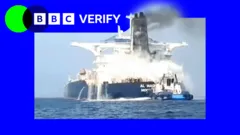
Verified footage captured the Nicaragua-flagged tanker Petro Dolphin on fire after a drone strike near Sohar Anchorage, more than 250 km from the strait. Eleven Indian crew members were rescued while two remain missing according to the Forward Seamen's Union of India. The container ship GFS Pride sank after an unknown projectile hit on Tuesday; all 21 crew were evacuated. Iran's Islamic Revolutionary Guard Corps released footage of the sinking and accused the vessel of carrying contraband on an unauthorised route.
Where else are strikes occurring?
Attacks have extended into the Gulf of Oman and waters near Gulf Arab states. A tanker north of Qatar suffered multiple projectile hits on 8 October, more than 500 km from the strait, with casualties reported. Another vessel was struck near Al-Jazirah al-Hamra in the UAE on 9 October. Martin Kelly of Orbital Risk Intelligence stated that Iran has widened its operations to deter traffic on routes outside direct Iranian control.
Frequently asked questions
What is the highest weekly attack total recorded?
Twelve vessels reported attacks in the week of 5-11 October 2026, the largest weekly figure since the conflict began according to UKMTO data compiled by BBC Verify.
How much have oil flows declined?
Daily volumes fell to 12.6 million barrels on 13 October from 15 million at end-September and a pre-war level near 17 million, per Kpler trade intelligence.
Are Iranian exports still moving?
No. Iranian oil shipments have stopped completely because of the US blockade of ports and vessels.
Where did the Petro Dolphin incident occur?
The strike took place near Sohar Anchorage in Oman, over 250 km from the Strait of Hormuz, according to maritime intelligence firm Vanguard.
Has the IRGC expanded its operational area?
Yes. State media reported a new deployment formation and statements that strikes would not be limited to the Strait of Hormuz.
Key takeaways
Twelve vessels reported attacks in the week ending 11 October, the highest weekly total since the conflict started.
Oil shipments through the strait stood at 12.6 million barrels per day on 13 October, down from 15 million at end-September.
US-assisted transits rose 85 percent in early October compared with August.
Two Indian seafarers remain missing after the Petro Dolphin drone strike near Oman.
Iran has conducted strikes more than 500 km from the strait, including waters north of Qatar.
Assisted shuttle routes near Oman have sustained some Gulf Arab oil exports despite the attacks.
Conclusion
The record weekly attack count and the corresponding drop in oil volumes illustrate how maritime security and energy flows remain tightly linked in the Strait of Hormuz. Expanded US protection has enabled some recovery for Gulf Arab exporters, yet Iranian countermeasures have widened the geographic scope of strikes. Crew safety incidents and halted Iranian exports add further pressure. Continued monitoring of weekly UKMTO reports and Kpler volume data will show whether the current pattern of elevated risk and reduced throughput persists into late 2026.




