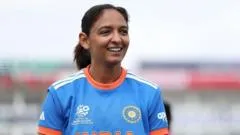
Why did the BCCI decide to change the Indian women's cricket captaincy?
The Board of Control for Cricket in India (BCCI) opted for a leadership change to prioritize youth and long-term stability, appointing 30-year-old Smriti Mandhana to lead the side across all formats. While Harmanpreet Kaur, 37, expressed a desire to continue captaining the One-Day International (ODI) and Test sides to mentor younger players, the BCCI remained committed to a full transition of power to a younger leader.
The decision follows a period of intense scrutiny regarding the team's performance and Kaur's individual form. After a disappointing showing at the T20 World Cup in England, questions were raised about whether the current leadership could meet the escalating demands of a rapidly globalizing women's game. The move mirrors recent shifts in the men's game, such as the replacement of Suryakumar Yadav with Shreyas Iyer in the T20 format.
The debate over leadership transition
The transition was not without internal tension. Reports indicate that Kaur was prepared to step down from T20 duties immediately but sought to retain her responsibilities in longer formats. However, the governing body's vision for a younger helm necessitated Mandhana's appointment to all roles. This strategic pivot aims to prepare the squad for the next decade of international competition.
How did the cricketing community react to Harmanpreet Kaur's departure?
Opinions regarding the end of the Harmanpreet Kaur captaincy era remain deeply divided among former players and analysts. The debate centers on the balance between the necessity of fresh leadership and the invaluable tactical experience that a veteran like Kaur provides to a developing squad.
Two distinct perspectives emerged from the legends of the game:
- The Case for Change: Former cricketer Diana Edulji suggested that Kaur had fulfilled her mandate and that the timing was right for a new era under a younger captain.
- The Case for Experience: Former captain Anjum Chopra argued that Kaur's presence as a leader was still vital for the team's stability and growth.
Ultimately, sensing the BCCI's firm stance, Kaur chose to step down during a formal review meeting. She later shared her decision via an emotional social media post, stating that she had given her "blood, sweat, and sacrifice" to the team and was now ready to focus on playing for the love of the game rather than the pressures of leadership.
What is the impact of Harmanpreet Kaur's career on Indian cricket?
Harmanpreet Kaur's career has been a primary catalyst in shifting women's cricket from a niche interest to a mainstream sporting phenomenon in India. Her influence began in earnest during the 2017 Women's ODI World Cup, where her legendary century against Australia fundamentally altered the public's perception of the sport.
Kaur's journey from a modest background in Moga, Punjab, to becoming a national icon is a testament to her resilience. Her development was significantly accelerated by her move to Mumbai and her association with the Railways, a transition facilitated by Diana Edulji. This professionalization allowed her to hone the explosive middle-order batting and crafty off-spin that became her trademarks.
A legacy of major milestones
Kaur's leadership era was defined by an aggressive, fearless approach that helped India overcome long-standing psychological hurdles against dominant teams like Australia. Key highlights of her tenure include:
- 2017 World Cup: A transformative semi-final century against Australia that sparked nationwide interest.
- 2025 ODI World Cup: Leading India to a historic semi-final victory over Australia, supported by an 89-run knock.
- World Cup Triumph: Guiding India to their first-ever women's World Cup trophy after defeating South Africa in the final.
By instilling a culture of ambition in her teammates, Kaur transformed India from perennial contenders into genuine world champions.
What does the future hold for Harmanpreet Kaur and Smriti Mandhana?
The departure of Kaur from the captaincy leaves the BCCI with a complex decision regarding her continued presence in the national squad. Unlike the men's team, where veteran captains often lose their playing spots during transitions, the women's game faces different structural realities.
While Kaur's recent batting form has been described as modest, the depth of the talent pipeline in women's cricket is not yet as vast as in the men's game. This makes the potential exclusion of a player of her stature and experience a sensitive issue for selectors. Kaur has clearly indicated her intention to continue playing, seeking to rediscover her joy for the sport without the burden of captaincy.
For Smriti Mandhana, the challenge lies in emulating the high standards set by her predecessor. As she takes the reins across all formats, she inherits a team that has tasted ultimate success but must now navigate the transition from a veteran-led squad to one defined by a new generation of talent. The success of this transition will likely depend on how effectively the team integrates Kaur's experience with Mandhana's fresh leadership.
Frequently asked questions
Who is the new captain of the Indian women's cricket team?
Smriti Mandhana has been appointed as the captain of the Indian women's cricket team across all formats. This decision was ratified during a BCCI review meeting involving team officials and coaching staff, marking a shift toward a younger leadership structure for the national side.
Why did Harmanpreet Kaur step down as captain?
Harmanpreet Kaur stepped down following a BCCI decision to move toward younger leadership. While she initially hoped to continue leading in Test and ODI formats to mentor players, she ultimately accepted the transition to allow the team to move into a new era under Smriti Mandhana.
What was Harmanpreet Kaur's most significant achievement?
Her most defining moment was her century against Australia in the 2017 Women's ODI World Cup semi-final. This innings is credited with transforming the popularity of women's cricket in India, turning Kaur into a household name and inspiring a new generation of female athletes.
Will Harmanpreet Kaur continue to play for India?
Yes, Harmanpreet Kaur has expressed a strong desire to continue playing for the national team. Following her departure from the captaincy, she stated her intention to focus on her individual performance and play for the pure love of the game once again.
How does the women's team transition compare to the men's team?
The transition is more complex in the women's game because the talent pipeline is not as deep as in men's cricket. While the men's team can more easily replace veteran captains like Suryakumar Yadav, the BCCI must carefully manage Kaur's experience given the current squad depth.
Key takeaways
- Smriti Mandhana has been appointed as India's women's cricket captain across all formats.
- Harmanpreet Kaur relinquishes leadership after nearly a decade and a historic World Cup win.
- The BCCI's decision focuses on rejuvenating the squad with younger leadership.
- Kaur intends to continue her playing career despite stepping down from captaincy.
Conclusion
The end of the Harmanpreet Kaur captaincy era marks a pivotal moment for Indian women's cricket. Kaur leaves behind a legacy of unprecedented success, having transitioned the sport from a secondary interest to a major national attraction. As Smriti Mandhana takes over, the focus shifts from the era of individual dominance and aggressive breakthroughs to a period of sustained professional growth. The challenge for the BCCI will be to balance this necessary rejuvenation with the immense tactical wealth that a player of Kaur's experience still offers the squad.