
Why are Israeli strikes still occurring despite the ceasefire?
Israeli military operations continue within the Gaza Strip despite the formal ceasefire agreement that was established on 10 October 2025. While the cessation of large-scale bombardment initially provided substantial relief and allowed for an increase in humanitarian aid and medical supplies entering the territory, recent reports indicate that strikes are still being carried out almost every day. In a single week, more than 30 people were killed, according to figures from Gaza's Hamas-run health ministry.
The Israel Defense Forces (IDF) maintain that these actions are targeted specifically at Hamas operatives. The Israeli military has also accused Hamas of committing ongoing violations of the ceasefire terms. This cycle of targeted strikes and accusations of violations has created a volatile environment where civilians remain at high risk, even in areas designated as safer or under different levels of control. For many families, the ceasefire has felt like a facade; Ahed, the husband of a woman killed in a recent strike, stated that the agreement is "all lies" because of the daily presence of death and shooting.
The 'Yellow Line' and high-risk zones
A significant portion of the ongoing violence occurs near the so-called 'Yellow Line,' a boundary that separates areas occupied by the Israeli military from those controlled by Hamas in the west. These zones are identified as particularly dangerous because they are frequent sites of kinetic activity and gunfire. Residents and observers note that Israeli forces have frequently opened fire in these areas, making them some of the most hazardous locations in the strip.
Because the population of Gaza is increasingly squeezed into a shrinking territory, many civilians find themselves living in close proximity to these high-tension zones with little room to relocate. The population is currently compressed into under 40% of the territory's area, which is controlled by Hamas. This density, combined with the proximity to military-occupied zones, means that even those attempting to find safety through displacement often find themselves within range of active combat zones.
What is the human impact of the continued violence?
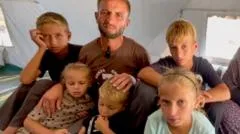
The human toll of the ongoing strikes is evidenced by the deaths of civilians, including women and children, who are living in temporary shelters. For many families, the ceasefire has not brought the promised security. In central Gaza, families living in tents have reported being targeted by gunfire from military vehicles and quadcopters, even within displacement camps. One family recounted how a mother of five, Fida al-Toutah, was killed by a gunshot wound to the head while in her tent, an incident the IDF said they had no record of.
The scale of the loss is substantial. Since the ceasefire commenced, more than 300 children have been killed, according to the Gaza health ministry. This includes cases like 14-year-old Ismail al-Bardawil, who was shot while fishing near the shore in Rafah. The total death toll from the conflict, which began three years ago, has surpassed 74,000 people. For those surviving in the territory, the struggle has shifted from escaping heavy bombardment to a daily fight for basic survival in precarious, often violent, conditions.
Displacement and living conditions
The majority of Gaza's 2.1 million residents have been displaced multiple times throughout the conflict. This mass movement has forced much of the population into tent cities or unsafe, makeshift structures. Many families, such as Ibrahim's, have moved up to seven times, yet they report that "death is following us." These living environments are often subject to extreme weather; during winter months, flooding becomes a critical threat, particularly in camps built below sea level.
For vulnerable populations, the lack of stable shelter and warmth poses a direct threat to life. Architect Amal Alabadla, who now lives in a coastal tent, described the constant fear of wind destroying her shelter and the difficulty of keeping her son, who suffers from epilepsy, dry and warm during the cold. The lack of permanent housing and the constant threat of environmental hazards have turned the lives of many into a singular focus on day-to-day survival.
How has the peace deal reached an impasse?
The October 2025 peace deal, which was meant to serve as a roadmap for the reconstruction of Gaza, is currently stalled due to disagreements over its second phase. While the first phase facilitated the exchange of hostages and Palestinian prisoners, the transition to long-term stability has been blocked by fundamental disagreements between Israeli leadership and Hamas regarding security and territorial control.
A primary point of contention involves the disarmament of Hamas. While international proposals, including plans from US President Donald Trump, have suggested a framework for disarming the group, these have met resistance. Israeli Prime Minister Benjamin Netanyahu has stated that no military withdrawal will occur until Hamas is "genuinely" disarmed. Conversely, Hamas maintains that the handover of heavy weaponry is strictly contingent upon a complete Israeli withdrawal and an end to all forms of military aggression. This deadlock ensures that the transition from a ceasefire to a permanent peace remains out of reach.
Barriers to reconstruction
Even as diplomatic talks stall, the physical rebuilding of Gaza is prevented by strict controls on the movement of goods. Israel maintains rigorous oversight of all materials and machinery entering the territory, citing essential security requirements. This control, combined with the political deadlock, means that the reconstruction promised by the peace deal has yet to materialize, leaving the population in a state of permanent limbo.
The uncertainty is compounded by the shifting territorial landscape. Following directives from Prime Minister Netanyahu in May 2025 to increase the area under Israeli military control to 70%, the remaining territory remains under the tight grip of Hamas, which continues to recruit fighters and clamp down on dissent. This fragmentation makes any large-scale, coordinated reconstruction effort nearly impossible under current conditions.
What is the current geopolitical landscape in Gaza?
The territorial control within Gaza is highly contested and characterized by extreme density. With the population squeezed into a fraction of the original land area, the humanitarian pressure is immense. International efforts to provide financial relief are also underway, but they face significant hurdles. For instance, the Trump Board of Peace has proposed a $2.45 billion recovery plan for Gaza.
However, without a functional political agreement to allow for the safe implementation of such funds and the entry of construction equipment, these financial injections remain theoretical rather than practical solutions. As residents like Amal Alabadla observe, there is deep skepticism that the truth is being told regarding the possibility of rebuilding a safe future. The gap between international financial proposals and the reality of controlled borders and active combat zones remains a primary obstacle to recovery.
Frequently asked questions
How many people have died in Gaza since the ceasefire began?
According to the Gaza health ministry, more than 1,400 people have been killed in Israeli attacks since the ceasefire started on October 10, 2025. This figure includes more than 300 children, highlighting the significant impact on the civilian population during this period.
Why is reconstruction in Gaza not happening?
Reconstruction is stalled because of a political impasse regarding the second phase of the October 2025 peace deal. Additionally, Israel maintains strict control over the entry of construction materials and machinery into Gaza, citing security concerns as the primary reason for these restrictions.
What are the main obstacles to a final peace agreement?
The primary obstacles include the disagreement over the disarmament of Hamas and the terms of Israeli military withdrawal. Hamas requires a full withdrawal and an end to aggression before disarming, while Israel insists that disarmament must happen before any military pull-out occurs.
What is the status of the Gaza population's displacement?
Most of Gaza's 2.1 million residents have been displaced multiple times. They are currently squeezed into less than 40% of the territory's original area, often living in overcrowded tent cities or structures that are highly vulnerable to flooding and extreme weather.
Is there international funding available for Gaza's recovery?
Yes, there are international proposals, such as the $2.45 billion recovery plan proposed by the Trump Board of Peace. However, these funds cannot be effectively utilized until the political deadlock is resolved and a mechanism for safe reconstruction is established.
Key takeaways
- Over 1,400 people have been killed in Gaza since the October 2025 ceasefire began.
- The total death toll from the three-year conflict exceeds 74,000 people.
- A political impasse over the second phase of the peace deal has halted reconstruction.
- More than 300 children have died in Gaza since the ceasefire was implemented.
- Disagreements over Hamas disarmament and Israeli withdrawal remain the main diplomatic hurdles.




