
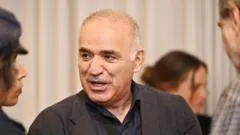
Why was Garry Kasparov warned about his personal safety?
Garry Kasparov received warnings from both US and Lithuanian security services that his life was in danger, according to his own recent statements. While he clarified in his publication, *The Next Move*, that he was not explicitly told he was a primary target, he confirmed that both he and Free Russia Forum co-founder Ivan Tyutrin were advised to implement safety measures. These warnings suggest a heightened level of surveillance or intent by actors linked to the Russian state.
The urgency of these warnings appears to be linked to a broader pattern of activity identified by Western intelligence. Reports from the Spanish newspaper *El Mundo* suggest that Kasparov has been under enhanced protection since the summer of 2026. This period of increased security coincides with the unsealing of a significant US indictment involving a network of individuals allegedly working on behalf of the Kremlin to target Russian dissidents and defectors globally.
The scope of security measures for Kasparov
The enhanced protection described by *El Mundo* marks a significant shift in the security posture for the former chess champion. Since moving to the United States, Kasparov has remained a vocal critic of the Russian administration, a stance that has made him a high-profile figure of interest to Moscow. The implementation of these measures reflects the gravity with which security services are treating the potential for physical attacks against high-profile exiles.
What is the RIS Network and how is it linked to the Kremlin?
The RIS Network is described by the US Justice Department as a group of individuals working for Russian intelligence services that has been active since at least 2024. According to the Justice Department, this network has been involved in conspiring to conduct attacks and murders against Russian dissidents and defectors across various countries, including the United States. The network operates as a tool for the Kremlin to silence opposition from abroad.
The US indictment unsealed earlier this month specifically names five individuals allegedly involved in these operations. Assistant Attorney General for national security John A. Eisenberg stated that these individuals were operating as part of a "global assassination network" that sought to recruit both US citizens and foreigners to carry out killings at the behest of the Kremlin. The indictment characterizes the network's activities as a coordinated effort to reach into foreign territories to eliminate political threats.
The individuals named in the US indictment
The five alleged members of the network currently remain at large. The US Justice Department has identified them as:
- Yuri Khrameev
- Kirill Khrameev
- Oemis Romagoza Durruthy
- Yaidel Delgado Suarez
- Angel Eduardo Castro
The involvement of these individuals suggests a sophisticated attempt to utilize local actors or foreign nationals to provide a layer of deniability for the Russian state while executing lethal operations on foreign soil.
Who are the other dissidents targeted in these plots?
Ilya Ponomarev is another prominent Russian opposition figure who has been linked to these security warnings. Ponomarev, who was the only Russian MP to vote against the 2014 annexation of Crimea and subsequently lives in exile in Ukraine, has been identified by *El Mundo* as a potential target. While Ponomarev declined to confirm or deny the specific tips received from authorities to the *Moscow Times*, he described the allegations as representing "a new level of escalation" by the Russian government.
The targeting of figures like Kasparov and Ponomarev highlights a specific focus on those who possess significant political influence or historical standing within the Russian opposition. These individuals are not merely political commentators; they are often leaders of movements that directly challenge the legitimacy of the current Russian leadership. This makes them prime candidates for the type of extrajudicial actions the US Justice Department is investigating.
What is the history and legal status of Garry Kasparov in Russia?
Garry Kasparov transitioned from a world-class chess career to political activism in 2005, eventually founding movements that openly opposed the administration of Vladimir Putin. After fleeing Russia in 2013, he has remained in exile, refusing to return to a country where his political activities have led to severe legal repercussions. The Russian state has moved to criminalize his status through multiple legal designations.
Following the full-scale invasion of Ukraine in 2022, Russia officially classified Kasparov as a "foreign agent." This designation was further escalated in 2024 when he was added to a list of terrorists and extremists. Kasparov has rejected these categorizations, viewing them as politically motivated attempts to delegitimize his opposition and justify potential actions against him. His refusal to hide, despite the perceived risks, remains a central tenet of his political identity.
How has the Kremlin responded to these allegations?
The Kremlin has maintained a stance of official skepticism regarding the US Justice Department's findings. When the indictment was unsealed, Kremlin spokesman Dmitry Peskov stated that the Russian government would not comment on the specific charges until it had been presented with "any credible evidence" or "tangible facts." This response is consistent with previous denials regarding allegations of state-sponsored assassinations or intelligence operations targeting exiles.
This denial highlights the ongoing tension between Western intelligence assessments and the official Russian narrative. While the US authorities present specific names and a documented network of activity, the Russian government continues to demand a level of evidentiary proof that is often difficult to provide in the context of clandestine intelligence operations. This impasse leaves the security of Russian dissidents in a state of perpetual uncertainty.
Frequently asked questions
Who is the RIS Network?
The RIS Network is a group of individuals allegedly working for Russian intelligence services. According to the US Justice Department, this network has been active since 2024 and is involved in planning attacks and murders against Russian dissidents and defectors on a global scale, including within the United States.
Which individuals have been charged in the US indictment?
The US Justice Department has named five individuals allegedly responsible for organizing these plots: Yuri Khrameev, Kirill Khrameev, Oemis Romagoza Durruthy, Yaidel Delgado Suarez, and Angel Eduardo Castro. All five individuals are currently at large and have not been apprehended by authorities.
Has Garry Kasparov confirmed he was a target?
Garry Kasparov has not confirmed that he was explicitly named as a target, but he has stated that he and Ivan Tyutrin were warned by security services about their safety. He has also indicated that he has been under enhanced protection since the summer of 2026.
What is Garry Kasparov's legal status in Russia?
In Russia, Garry Kasparov is officially designated as a "foreign agent" and has been added to a list of terrorists and extremists. Kasparov rejects these labels, which were applied following the invasion of Ukraine and his continued political opposition to the Kremlin.
How has the Kremlin reacted to the US allegations?
The Kremlin has declined to comment on the specifics of the indictment. Spokesman Dmitry Peskov stated that the government would only address the charges if provided with "tangible facts" or "credible evidence" regarding the alleged activities of the RIS Network.
Key takeaways
- Garry Kasparov received safety warnings from US and Lithuanian security services.
- The US Justice Department indicted five people linked to the RIS Network.
- The RIS Network is allegedly targeting Russian dissidents and defectors globally.
- Kasparov has been under enhanced security protection since summer 2026.
- The Kremlin has demanded tangible evidence before commenting on the indictment.
Conclusion
The warnings issued to Garry Kasparov underscore a growing and dangerous trend of extraterritorial repression by the Russian state. The US Justice Department's indictment of the RIS Network provides a formal legal framework for understanding how these operations are allegedly conducted through global networks. As high-profile dissidents like Kasparov and Ilya Ponomarev face increasing threats, the international community faces the challenge of protecting political exiles from state-sponsored violence. The ongoing tension between Western intelligence findings and Kremlin denials suggests that the security of the Russian opposition will remain a critical point of geopolitical friction for the foreseeable future.