Why did Francis Halzen win the Nobel Prize in Physics?
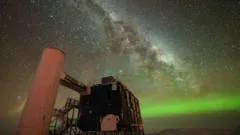
Francis Halzen was awarded the Nobel Prize for his fundamental role in establishing the IceCube Neutrino Observatory, a massive scientific instrument located at the geographic South Pole. The Royal Swedish Academy of Sciences credited his vision and scientific leadership as the essential drivers behind the project's success. Halzen, a US citizen at the University of Wisconsin–Madison, first proposed the concept of using the Antarctic ice sheet for neutrino detection as early as 1988.
The achievement represents the culmination of decades of international collaboration between researchers and engineers. According to Prof Mark Pearce, Chair of the Nobel Committee for Physics, Halzen’s tenacity and vision have effectively created a new discipline within astronomy. While the initial concept was viewed by many as an audacious and perhaps unworkable idea, the observatory has proven to be a transformative tool for high-energy astrophysics.
A journey from vision to reality
The path to the Nobel Prize was not without skepticism. During a news conference, Halzen admitted that while the scientific community recognized the potential of the idea, very few—including himself—initially believed the project would function as intended. His ability to lead an international team through the logistical and technical challenges of building a massive detector in one of Earth's most extreme environments was central to the Academy's decision.
How does the IceCube Neutrino Observatory detect neutrinos?
The IceCube Observatory functions by utilizing a cubic kilometre of clear Antarctic ice as a massive detection medium. Because neutrinos are subatomic particles that rarely interact with matter, detecting them requires an immense volume of material to increase the probability of an encounter. The observatory consists of thousands of sensitive light sensors mounted on long cables, which are drilled deep into the ice and then frozen into place.
The detection process relies on a rare physical interaction. Most neutrinos pass through the Earth and the ice without any effect, but occasionally, a high-energy neutrino will strike an atomic nucleus within the ice. This collision produces fast-moving charged particles that travel through the frozen medium. As these particles move, they emit a distinct blue glow known as Cherenkov radiation.
The sensitive sensors embedded in the ice capture these flashes of light. By analyzing the specific pattern and the precise timing of the light signals, scientists can calculate the trajectory of the particles. This allows them to work backward and determine the exact direction from which the neutrino arrived, effectively pointing back to its source in the deep cosmos.
What makes neutrinos unique astronomical messengers?
Neutrinos are uniquely suited for deep-space observation because they possess characteristics that bypass the limitations of light-based astronomy. Unlike photons, which can be blocked by dense clouds of gas or dust, neutrinos can pass through almost any material unimpeded. This allows them to carry information from the most obscured and violent regions of the universe directly to our detectors.
Furthermore, neutrinos have no electric charge. This lack of charge means they are not deflected by magnetic fields as they travel through space. While charged particles from distant galaxies are often bent by cosmic magnetic fields—making it difficult to trace them to their origin—neutrinos travel in essentially straight lines. This provides astronomers with a direct, unbent path to the high-energy phenomena that produced them.
Comparing traditional telescopes and neutrino detectors
Traditional telescopes rely on electromagnetic radiation, such as visible light, X-rays, or radio waves. While powerful, these methods are limited by the opacity of certain cosmic structures and the interference of magnetic fields. Neutrino astronomy, as pioneered by Halzen, provides a complementary "window" that sees through these barriers, offering a view of the universe's most energetic and mysterious processes, such as the environments surrounding giant black holes and the mechanics of exploding stars.
What are the scientific implications of these discoveries?
The ability to detect high-energy neutrinos has opened a new frontier in understanding the fundamental processes of the cosmos. Scientists are now able to investigate how extreme environments accelerate particles to extraordinary energies. The IceCube Observatory has provided evidence of high-energy events that were previously theoretical or entirely invisible to conventional observational methods.
Louis Barson, director of science at the Institute of Physics in London, noted that the observatory has enabled astronomers to study phenomena that conventional telescopes simply cannot reach. These discoveries are helping to solve long-standing mysteries regarding the most energetic processes in the universe. By studying these "ghost particles," researchers are gaining insights into the lifecycle of stars and the behavior of matter under extreme conditions.
The impact of Halzen's work is perhaps best described by the perspective of Prof Subir Sarkar from the University of Oxford. Referencing the philosopher Marcel Proust, Sarkar suggested that Halzen has provided humanity with "other eyes" to behold the universe. This ability to see through a different medium has fundamentally expanded the scope of human knowledge regarding the celestial landscape.
Frequently asked questions
What are neutrinos often called in popular science?
Neutrinos are frequently referred to as "ghost particles." This nickname stems from their incredibly elusive nature; they have almost no mass and rarely interact with matter, allowing billions of them to pass through a human fingernail every second without detection.
Why was Antarctica chosen for the IceCube project?
Antarctica was selected because it provides a vast, naturally occurring, and extremely clear volume of ice. This enormous scale is necessary to increase the chances of a neutrino colliding with an atomic nucleus, which is a very rare event.
Can neutrinos help us see black holes?
Yes, neutrinos can provide clues about the environments around giant black holes. Because they can escape dense regions that light cannot, they carry information about the high-energy processes occurring near these gravitational giants, which are otherwise difficult to observe.
Is the IceCube observatory only located at the South Pole?
The IceCube Neutrino Observatory is specifically located at the geographic South Pole to take advantage of the unique ice conditions. The project involves an international collaboration of researchers and engineers working at this specific site.
How does the light from a neutrino strike help scientists?
When a neutrino strikes a nucleus, it creates charged particles that emit a blue light. The timing and pattern of this light allow scientists to calculate the neutrino's direction, which helps them identify the cosmic source of the particle.
Key takeaways
- Francis Halzen won the Nobel Prize for his leadership of the IceCube Neutrino Observatory.
- IceCube uses a cubic kilometre of Antarctic ice to detect elusive, high-energy neutrinos.
- Neutrinos act as cosmic messengers because they are not deflected by magnetic fields.
- The observatory detects neutrinos by capturing the blue light produced during rare atomic collisions.
- This technology allows scientists to observe high-energy cosmic events invisible to light-based telescopes.
Conclusion
The recognition of Francis Halzen by the Nobel Committee underscores a paradigm shift in how humanity observes the cosmos. By transforming the Antarctic ice sheet into a sophisticated scientific instrument, Halzen has moved astronomy beyond the limits of light. The IceCube Neutrino Observatory does more than just detect subatomic particles; it provides a direct link to the most violent and energetic events in the distant universe. As researchers continue to decode the signals from these "ghost particles," our understanding of black holes, exploding stars, and the fundamental mechanics of the universe will undoubtedly continue to expand.